College of First Clinical Medicine, Shandong University of Traditional Chinese Medicine, Jinan, Shandong, China (mainland).
Department of Oncology, Affilited Hospital of Weifang Medical University, Weifang, Shandong, China (mainland).
Med Sci Monit. 2018 Aug 15;24:5668-5688. doi: 10.12659/MSM.908756.
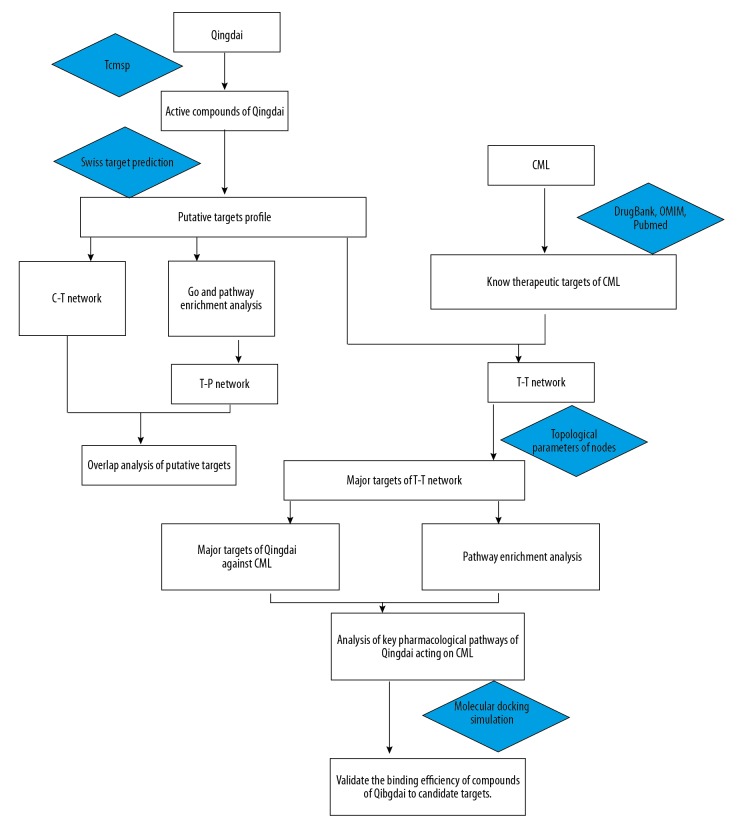
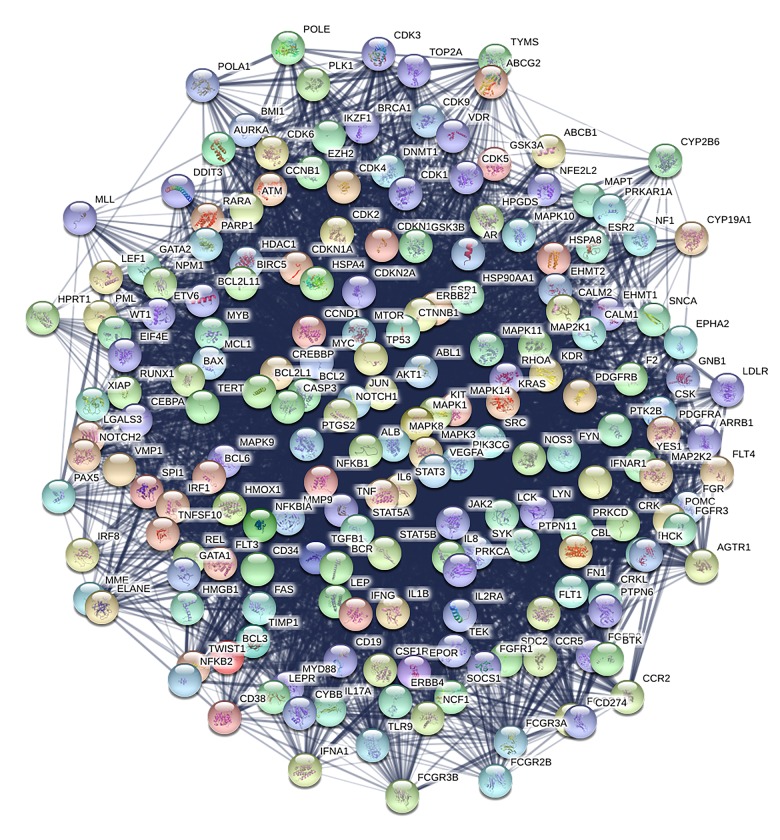
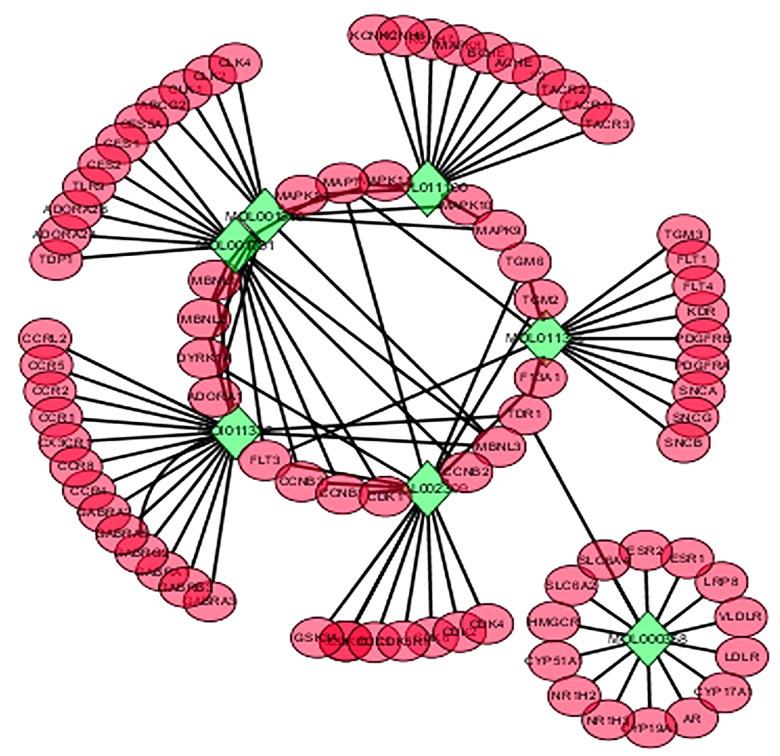
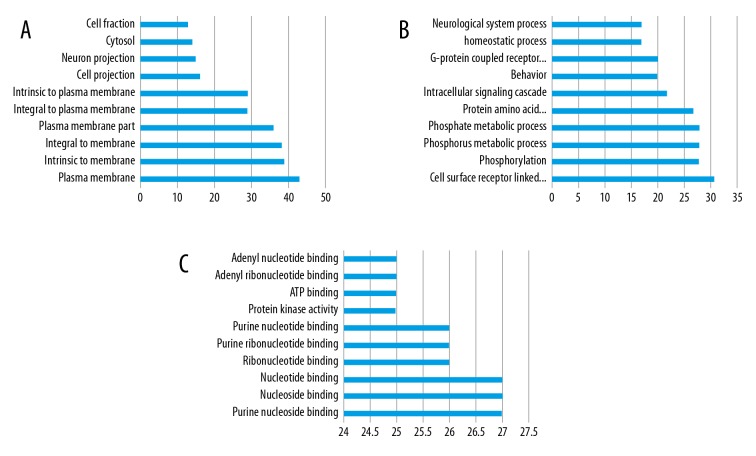
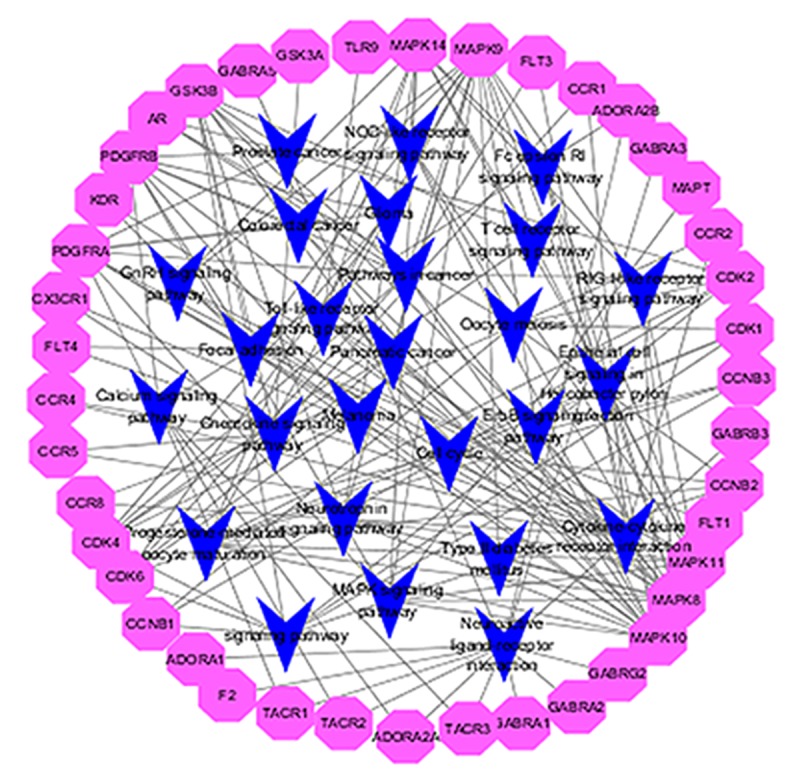
Qingdai, a traditional Chinese medicine (TCM) used for the treatment of chronic myeloid leukemia (CML) with good efficacy, has been used in China for decades. However, due to the complexity of traditional Chinese medicinal compounds, the pharmacological mechanism of Qingdai needs further research. In this study, we investigated the pharmacological mechanisms of Qingdai in the treatment of CML using network pharmacology approaches. First, components in Qingdai that were selected by pharmacokinetic profiles and biological activity predicted putative targets based on a combination of 2D and 3D similarity measures with known ligands. Then, an interaction network of Qingdai putative targets and known therapeutic targets for the treatment of chronic myeloid leukemia was constructed. By calculating the 4 topological features (degree, betweenness, closeness, and coreness) of each node in the network, we identified the candidate Qingdai targets according to their network topological importance. The composite compounds of Qingdai and the corresponding candidate major targets were further validated by a molecular docking simulation. Seven components in Qingdai were selected and 32 candidate Qingdai targets were identified; these were more frequently involved in cytokine-cytokine receptor interaction, cell cycle, p53 signaling pathway, MAPK signaling pathway, and immune system-related pathways, which all play important roles in the progression of CML. Finally, the molecular docking simulation showed that 23 pairs of chemical components and candidate Qingdai targets had effective binding. This network-based pharmacology study suggests that Qingdai acts through the regulation of candidate targets to interfere with CML and thus regulates the occurrence and development of CML.
清代,一种用于治疗慢性髓性白血病(CML)的中药,具有良好的疗效,已在中国使用了几十年。然而,由于中药化合物的复杂性,清代的药理机制需要进一步研究。在这项研究中,我们使用网络药理学方法研究了清代治疗 CML 的药理机制。首先,根据二维和三维相似性测量与已知配体的组合,选择清代中具有药代动力学特征和生物活性的成分,预测可能的靶点。然后,构建了清代潜在靶点和已知治疗慢性髓性白血病的靶点的相互作用网络。通过计算网络中每个节点的 4 个拓扑特征(度、介数、接近度和核心度),根据网络拓扑重要性确定候选清代靶点。通过分子对接模拟进一步验证了清代的复合化合物和相应的主要候选靶点。从清代中选择了 7 种成分,确定了 32 种候选清代靶点;这些靶点更频繁地参与细胞因子-细胞因子受体相互作用、细胞周期、p53 信号通路、MAPK 信号通路和免疫系统相关途径,这些途径都在 CML 的进展中起着重要作用。最后,分子对接模拟表明,23 对化学成分和候选清代靶点具有有效的结合。这项基于网络的药理学研究表明,清代通过调节候选靶点来干扰 CML,从而调节 CML 的发生和发展。