Department of Anesthesiology, Weill Cornell Medical College, 1300 York Avenue, New York, NY, 10065, USA.
Korea Brain Research Institute (KBRI), Daegu, Republic of Korea, 41068.
Nat Commun. 2018 Aug 14;9(1):3251. doi: 10.1038/s41467-018-05724-1.
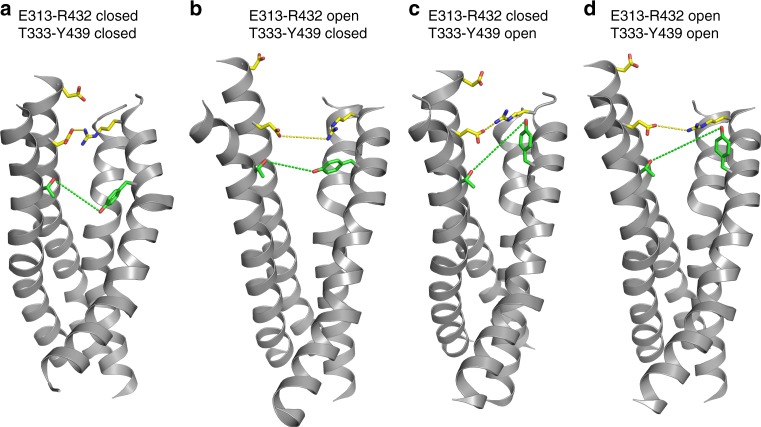
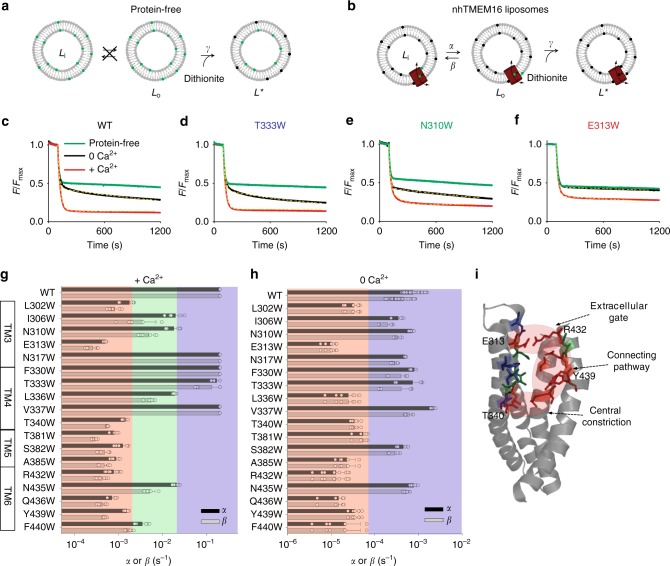
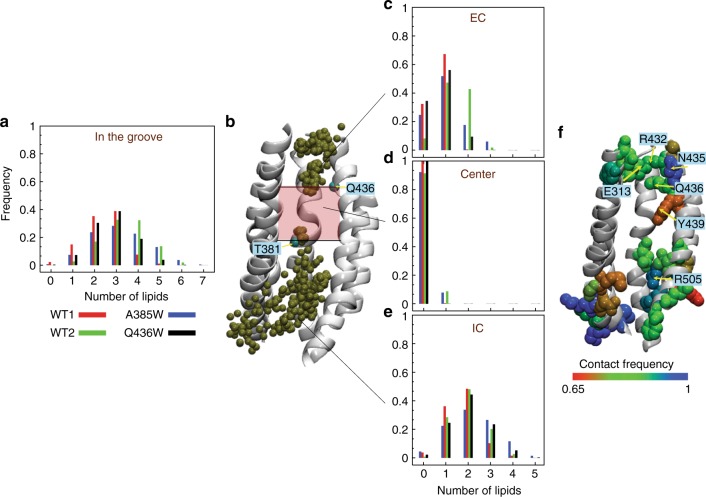
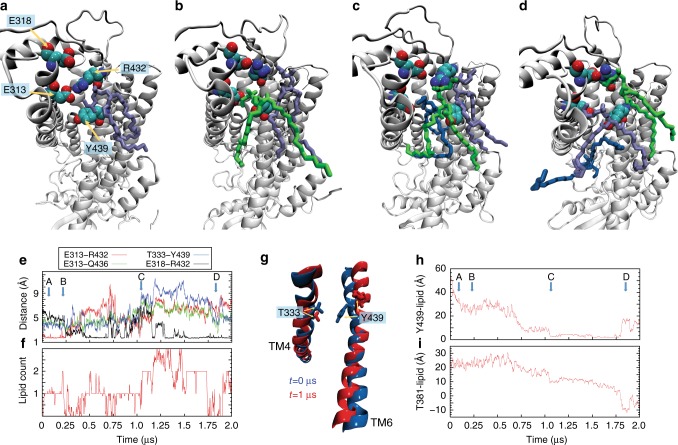
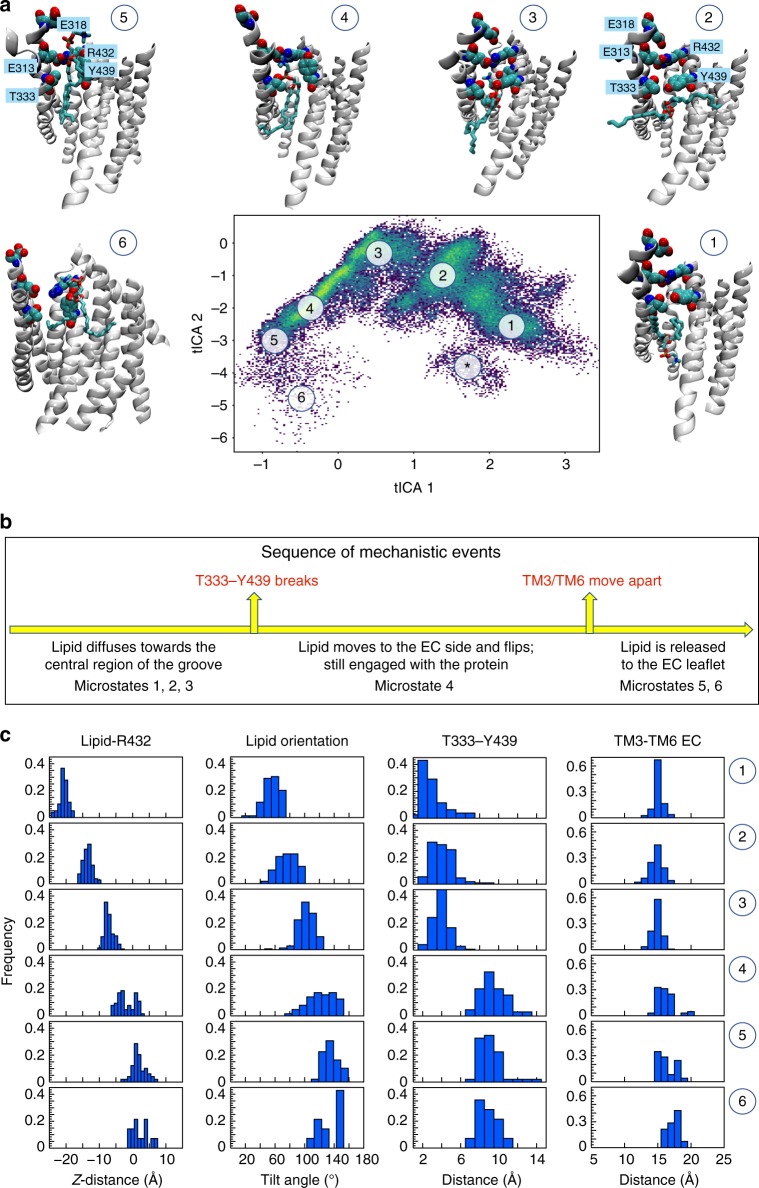
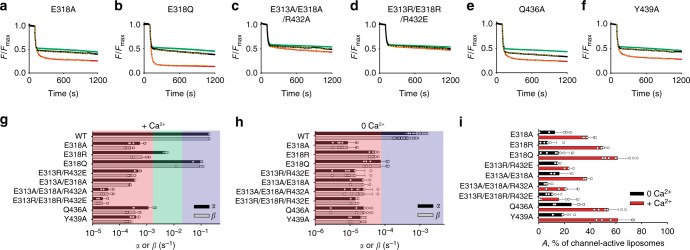
Members of the TMEM16/ANO family of membrane proteins are Ca-activated phospholipid scramblases and/or Cl channels. A membrane-exposed hydrophilic groove in these proteins serves as a shared translocation pathway for ions and lipids. However, the mechanism by which lipids gain access to and permeate through the groove remains poorly understood. Here, we combine quantitative scrambling assays and molecular dynamic simulations to identify the key steps regulating lipid movement through the groove. Lipid scrambling is limited by two constrictions defined by evolutionarily conserved charged and polar residues, one extracellular and the other near the membrane mid-point. The region between these constrictions is inaccessible to lipids and water molecules, suggesting that the groove is in a non-conductive conformation. A sequence of lipid-triggered reorganizations of interactions between these residues and the permeating lipids propagates from the extracellular entryway to the central constriction, allowing the groove to open and coordinate the headgroups of transiting lipids.
TMEM16/ANO 家族膜蛋白成员是 Ca 激活的磷脂翻转酶和/或 Cl 通道。这些蛋白质中的一个暴露于膜的亲水性槽作为离子和脂质的共享转运途径。然而,脂质进入和穿过槽的机制仍知之甚少。在这里,我们结合定量翻转测定和分子动力学模拟来确定调节脂质通过槽运动的关键步骤。脂质翻转受到两个由进化上保守的带电和极性残基定义的限制,一个在细胞外,另一个在膜中点附近。这两个限制之间的区域无法被脂质和水分子进入,这表明槽处于非传导构象。一系列由脂质触发的这些残基与渗透脂质之间相互作用的重排从细胞外入口传播到中央限制,允许槽打开并协调转运脂质的头基。