Department of Life Sciences, University of Siena, Via A. Moro 4, 53100, Siena, Italy.
Laboratory of Immunophysiology of Reproduction, Institute of Biomedical Sciences, Federal University of Uberlândia, Av. Pará 1720, 38405320, Uberlândia, Brazil.
Sci Rep. 2018 Aug 14;8(1):12150. doi: 10.1038/s41598-018-29797-6.
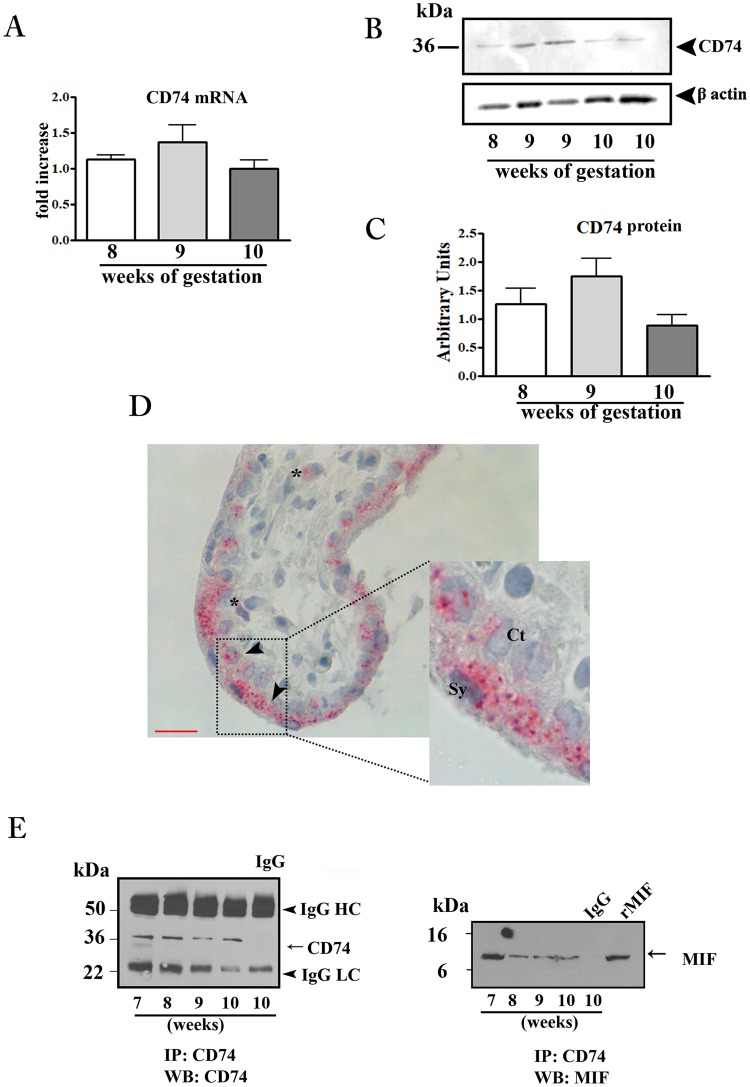
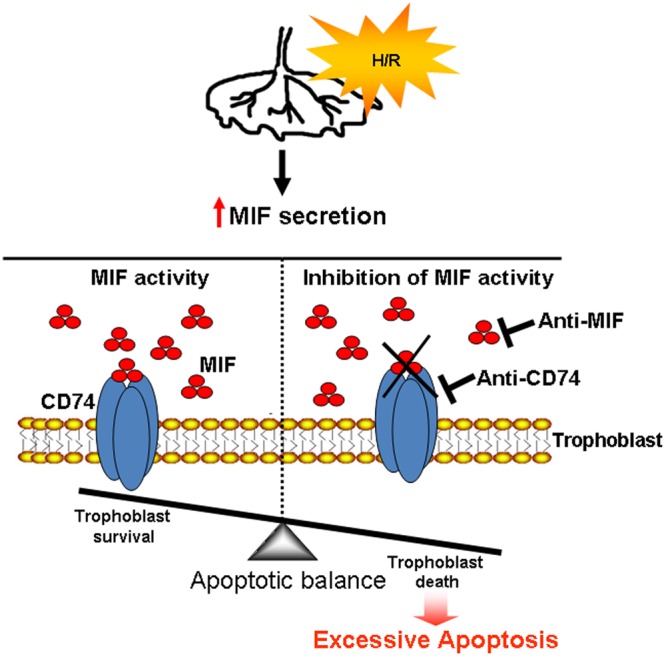
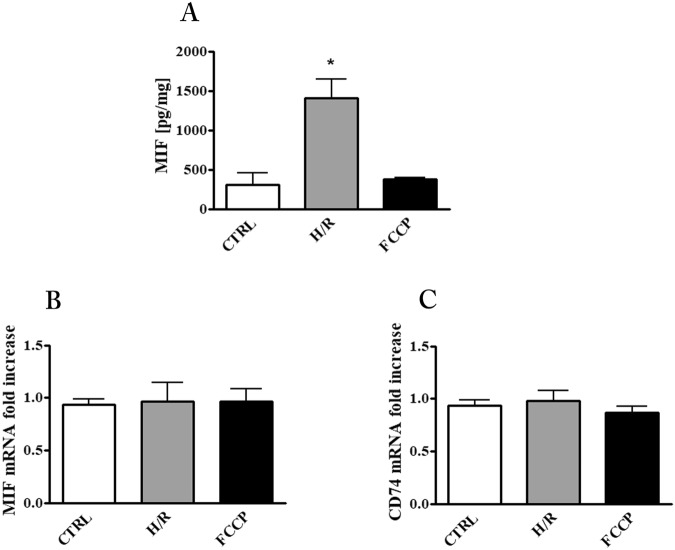
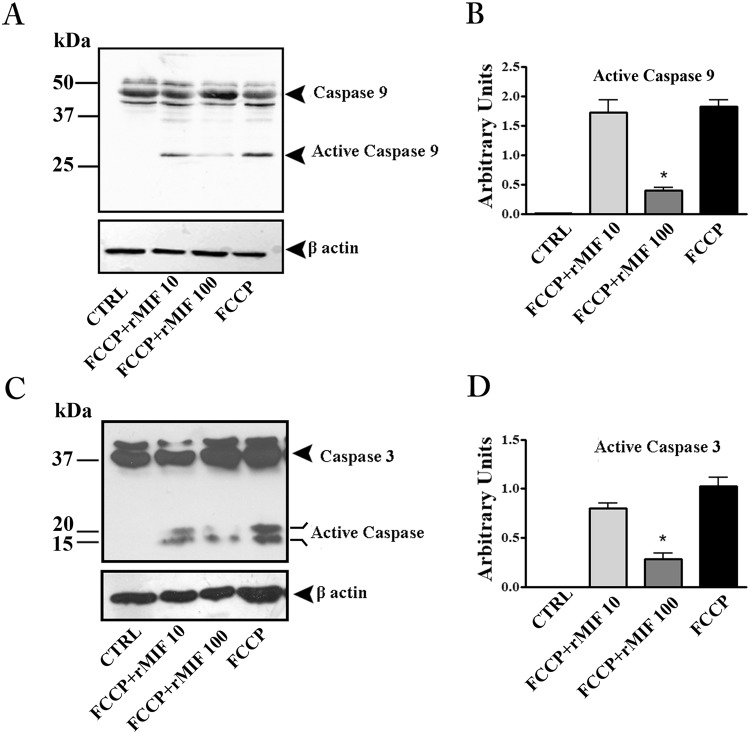
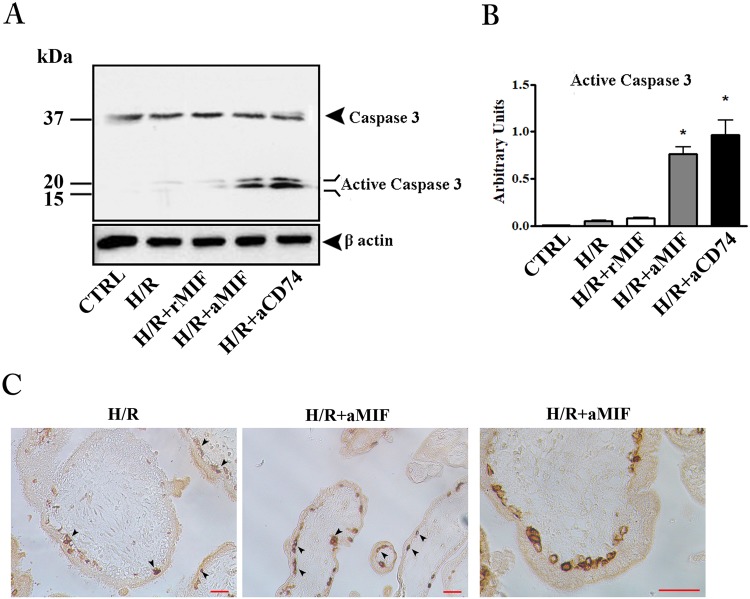
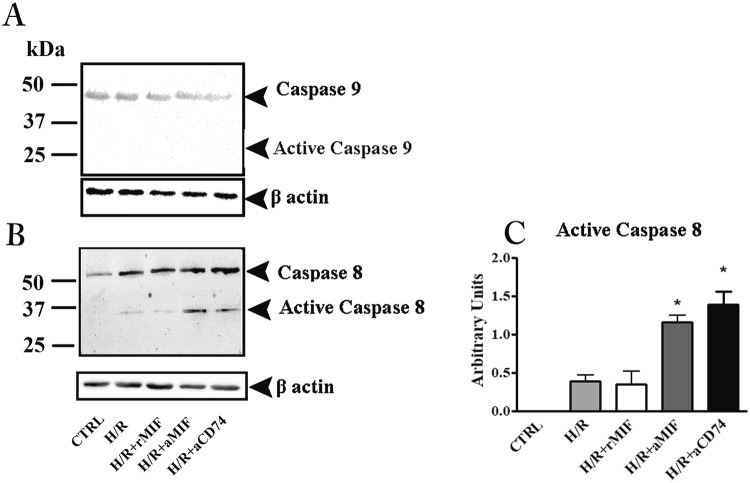
Macrophage Migration Inhibitory Factor (MIF) is a multifunctional molecule highly secreted by human placenta mainly in the early phases of pregnancy. Studies in different cells show that MIF is a pro-survival factor by binding to its receptor CD74. By using the in vitro model of placental explants from first trimester pregnancy, we investigated the role of MIF in the survival of placental cells under induced stress conditions that promote apoptosis or mimic the hypoxia/re-oxygenation (H/R) injury that placenta could suffer in vivo. We demonstrated that recombinant MIF (rMIF) treatment was able to reduce caspase-3 activation when cultures were challenged with the apoptosis-inducer Carbonyl cyanide 4-(trifluoromethoxy)phenylhydrazone (FCCP) while, in the cultures exposed to H/R, the treatment with rMIF did not show any effect. However, a significant increase in caspase-3 and caspase-8 activation was found when H/R-exposed cultures, were treated with anti-MIF or anti-CD74 antibody. We also observed that under H/R, a significant amount of endogenous MIF was released into the medium, which could account for the lack of effect of rMIF added to the cultures. Our results demonstrate for the first time that the MIF/CD74 axis contributes to maintain trophoblast homeostasis, by preventing abnormal apoptotic death.
巨噬细胞移动抑制因子(MIF)是一种多功能分子,主要由人胎盘在妊娠早期大量分泌。在不同细胞中的研究表明,MIF 通过与其受体 CD74 结合成为一种促生存因子。通过使用来自妊娠早期的胎盘外植体的体外模型,我们研究了 MIF 在诱导应激条件下胎盘细胞存活中的作用,这些应激条件可促进细胞凋亡或模拟胎盘在体内可能遭受的缺氧/再复氧(H/R)损伤。我们证明,当培养物受到凋亡诱导剂羰基氰化物 4-(三氟甲氧基)苯腙(FCCP)的挑战时,重组 MIF(rMIF)处理能够减少半胱天冬酶-3 的激活,而在暴露于 H/R 的培养物中,rMIF 的处理没有显示出任何效果。然而,当暴露于 H/R 的培养物用抗 MIF 或抗 CD74 抗体处理时,发现半胱天冬酶-3 和半胱天冬酶-8 的激活显著增加。我们还观察到,在 H/R 下,大量内源性 MIF 被释放到培养基中,这可能解释了添加到培养物中的 rMIF 缺乏效果的原因。我们的结果首次表明,MIF/CD74 轴通过防止异常凋亡性死亡,有助于维持滋养层的稳态。