Li Jie, Gong Xia, Jiang Rong, Lin Dan, Zhou Tao, Zhang Aijie, Li Hongzhong, Zhang Xiang, Wan Jingyuan, Kuang Ge, Li Hongyuan
Department of Endocrine and Breast Surgery, The First Affiliated Hospital of Chongqing Medical University, Chongqing, China.
Molecular Oncology and Epigenetics Laboratory, The First Affiliated Hospital of Chongqing Medical University, Chongqing, China.
Front Pharmacol. 2018 Jul 31;9:772. doi: 10.3389/fphar.2018.00772. eCollection 2018.
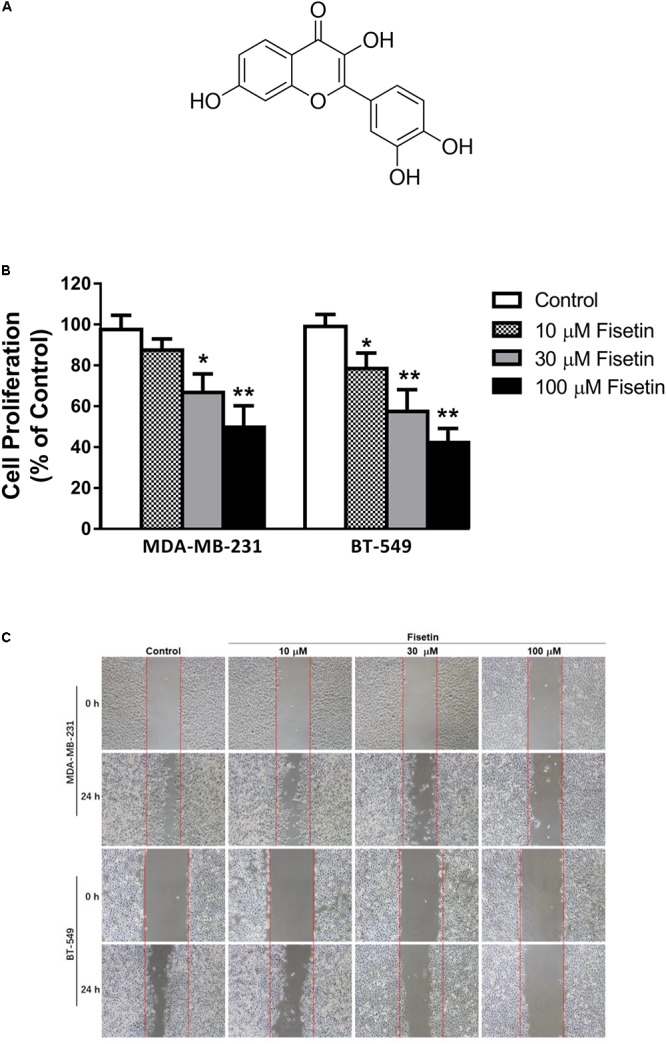
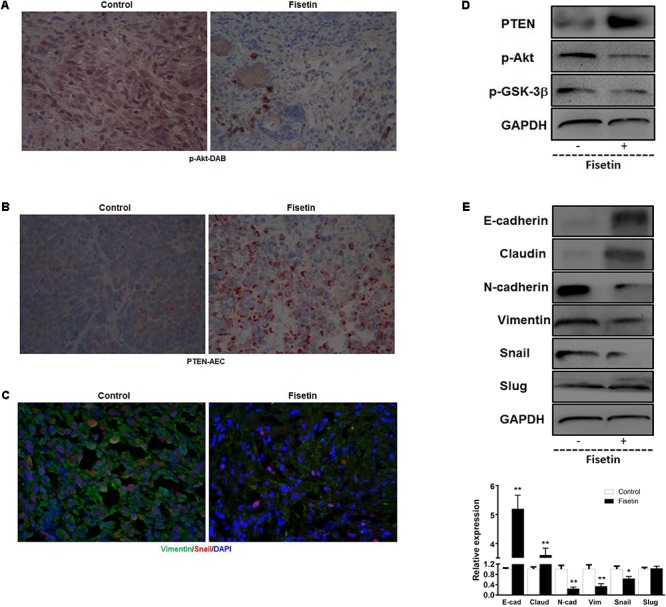
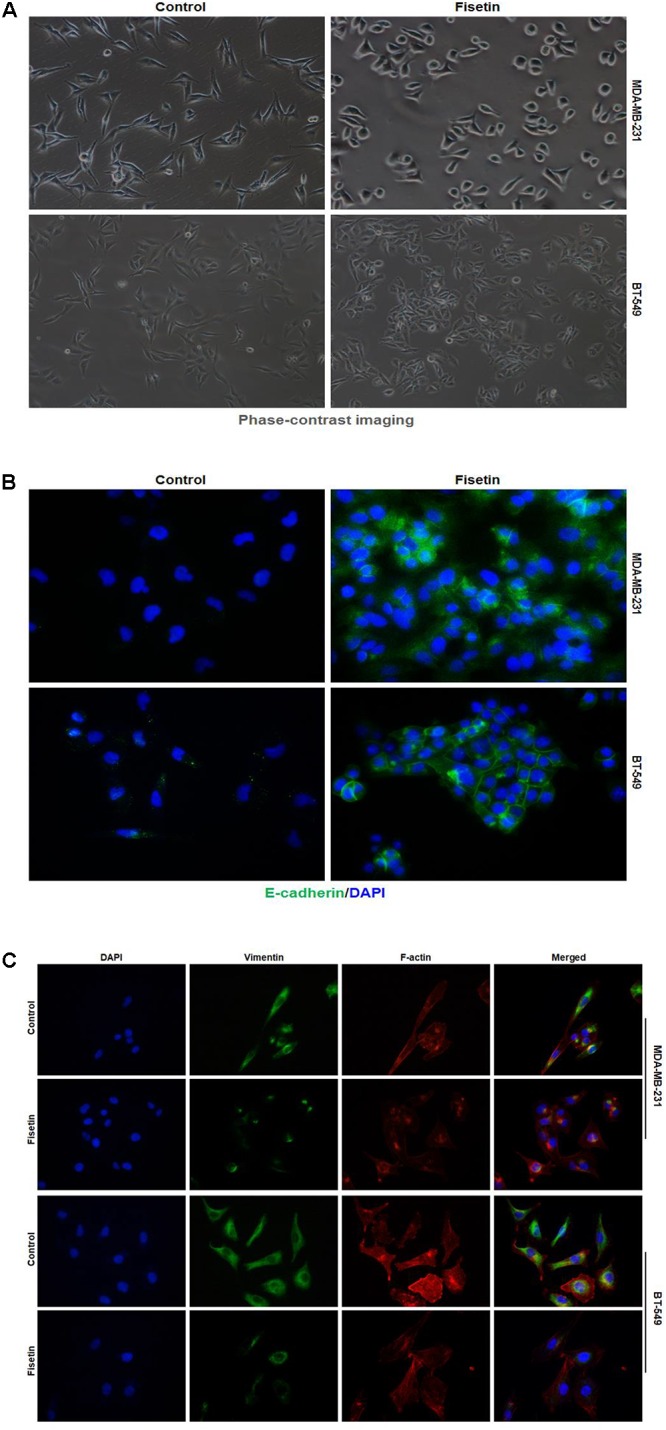
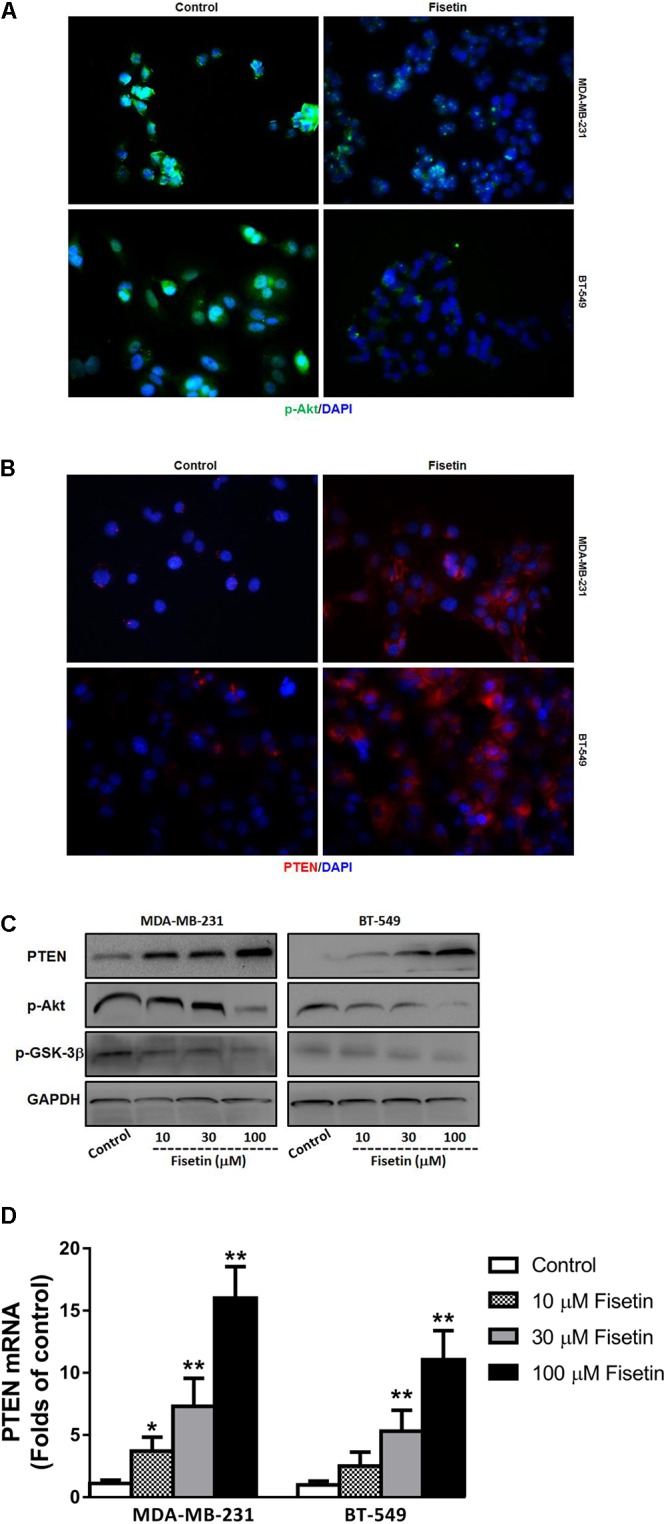
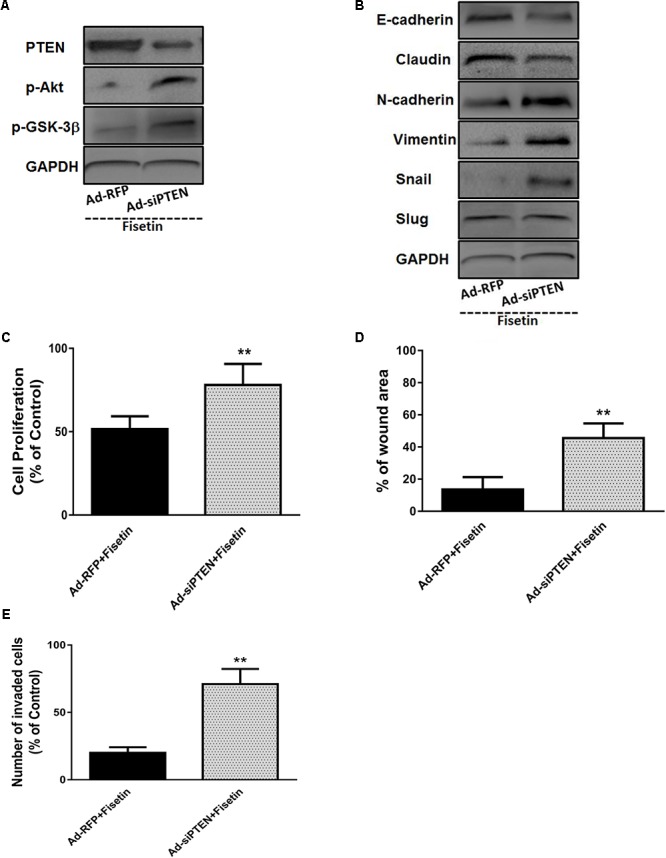
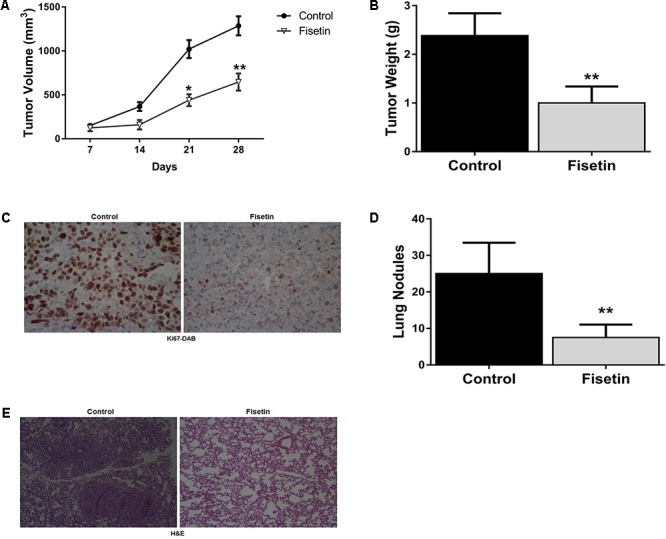
Triple negative breast cancer (TNBC), characterized by its highly aggressive and metastatic features, is associated with poor prognosis and high mortality partly due to lack of effective treatment. Fisetin, a natural flavonoid compound, has been demonstrated to possess anti-cancer effects in various cancers. However, the effects and mechanisms of fisetin on metastasis of TNBC remain uncovered. In this study, we found that fisetin dose-dependently inhibited cell proliferation, migration and invasion in TNBC cell lines MDA-MB-231 and BT549 cells. In addition, fisetin reversed epithelial to mesenchymal transition (EMT) as evaluated by cell morphology and EMT markers in MDA-MB-231 and BT549 cells. Furthermore, fisetin suppressed phosphoinositol 3-kinase (PI3K)-Akt-GSK-3β signaling pathway but upregulated the expression of PTEN mRNA and protein in a concentration-dependent manner. Further, silence of PTEN by siRNA abolished these benefits of fisetin on proliferation and metastasis of TNBCs. , using the metastatic breast cancer xenograft model bearing MDA-MB-231 cells, we found that fisetin dramatically inhibited growth of primary breast tumor and reduced lung metastasis, meanwhile, the expression of EMT molecules and PTEN/Akt/GSK-3β in primary and metastatic tissues changed in the same way as those experiments. In conclusion, all these results indicated that fisetin could effectively suppress proliferation and metastasis of TNBC and reverse EMT process, which might be mediated by PTEN/Akt/GSK-3β signaling pathway.
三阴性乳腺癌(TNBC)具有高度侵袭性和转移性,预后较差且死亡率高,部分原因是缺乏有效的治疗方法。漆黄素是一种天然黄酮类化合物,已被证明在多种癌症中具有抗癌作用。然而,漆黄素对TNBC转移的影响和机制仍未明确。在本研究中,我们发现漆黄素在TNBC细胞系MDA-MB-231和BT549细胞中呈剂量依赖性抑制细胞增殖、迁移和侵袭。此外,通过细胞形态和MDA-MB-231及BT549细胞中的上皮-间质转化(EMT)标志物评估,漆黄素可逆转EMT。此外,漆黄素抑制磷酸肌醇3-激酶(PI3K)-Akt-GSK-3β信号通路,但以浓度依赖性方式上调PTEN mRNA和蛋白的表达。进一步研究发现,用siRNA沉默PTEN可消除漆黄素对TNBC增殖和转移的这些有益作用。利用携带MDA-MB-231细胞的转移性乳腺癌异种移植模型,我们发现漆黄素显著抑制原发性乳腺肿瘤的生长并减少肺转移,同时,原发性和转移性组织中EMT分子以及PTEN/Akt/GSK-3β的表达变化与上述实验相同。总之,所有这些结果表明,漆黄素可有效抑制TNBC的增殖和转移并逆转EMT过程,这可能由PTEN/Akt/GSK-3β信号通路介导。