Department of Molecular Medicine, USA.
Kindex Pharmaceuticals, 800 Fifth Avenue, Seattle, WA, 98104, USA.
Mol Metab. 2018 Oct;16:76-87. doi: 10.1016/j.molmet.2018.07.013. Epub 2018 Aug 4.
Extracts of the hops plant have been shown to reduce weight and insulin resistance in rodents and humans, but elucidation of the mechanisms responsible for these benefits has been hindered by the use of heterogeneous hops-derived mixtures. Because hop extracts are used as flavoring agents for their bitter properties, we hypothesized that bitter taste receptors (Tas2rs) could be mediating their beneficial effects in metabolic disease. Studies have shown that exposure of cultured enteroendocrine cells to bitter tastants can stimulate release of hormones, including glucagon-like peptide 1 (GLP-1). These findings have led to the suggestion that activation of Tas2rs may be of benefit in diabetes, but this tenet has not been tested. Here, we have assessed the ability of a pure derivative of a hops isohumulone with anti-diabetic properties, KDT501, to signal through Tas2rs. We have further used this compound as a tool to systematically assess the impact of bitter taste receptor activation in obesity-diabetes.
KDT501 was tested in a panel of bitter taste receptor signaling assays. Diet-induced obese mice (DIO) were dosed orally with KDT501 and acute effects on glucose homeostasis determined. A wide range of metabolic parameters were evaluated in DIO mice chronically treated with KDT501 to establish the full impact of activating gut bitter taste signaling.
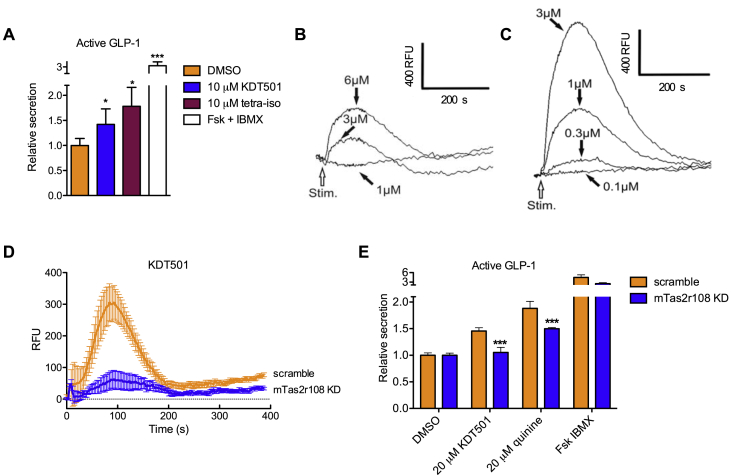
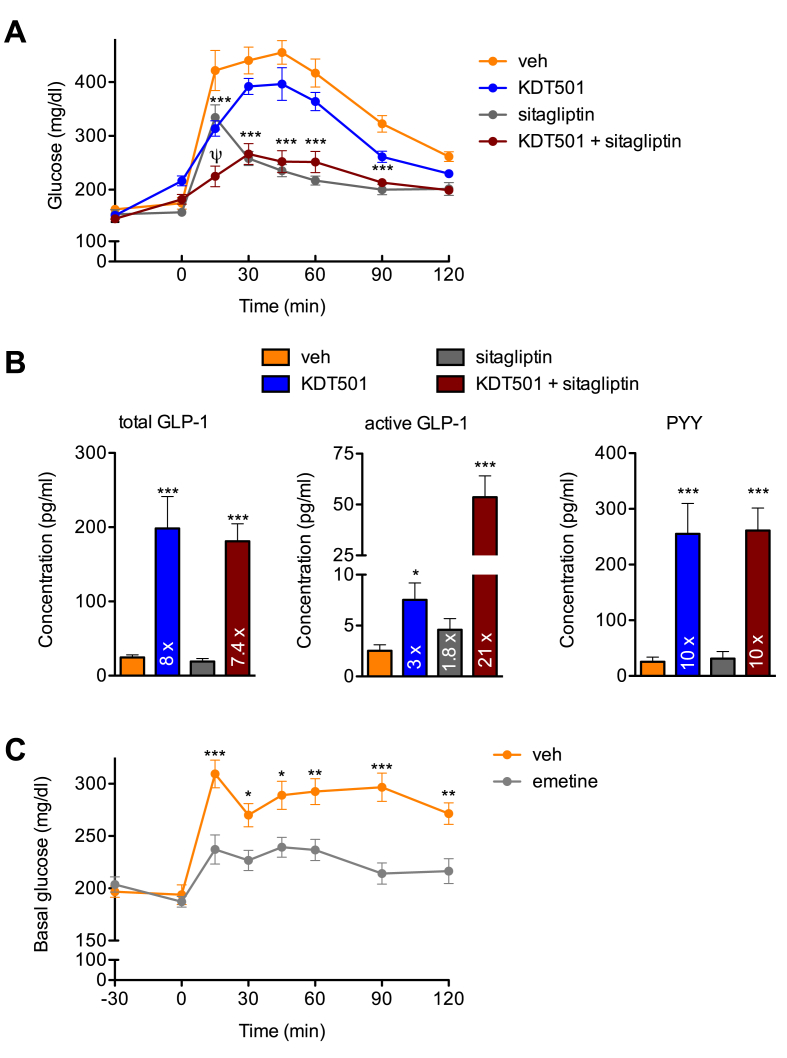
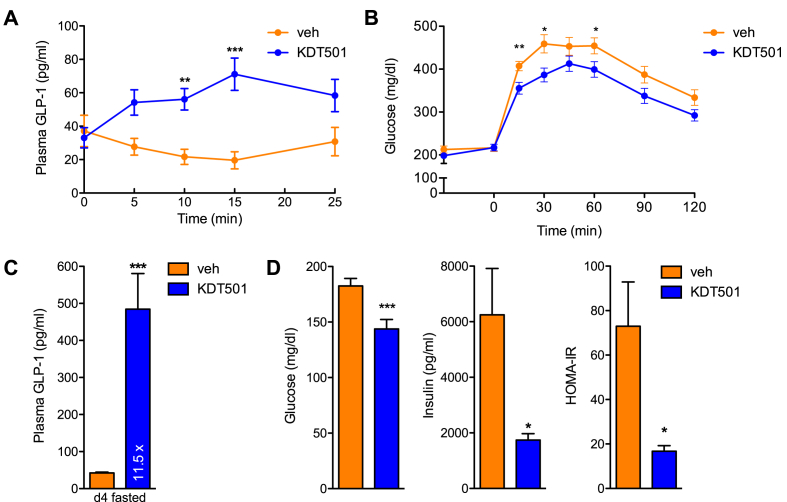
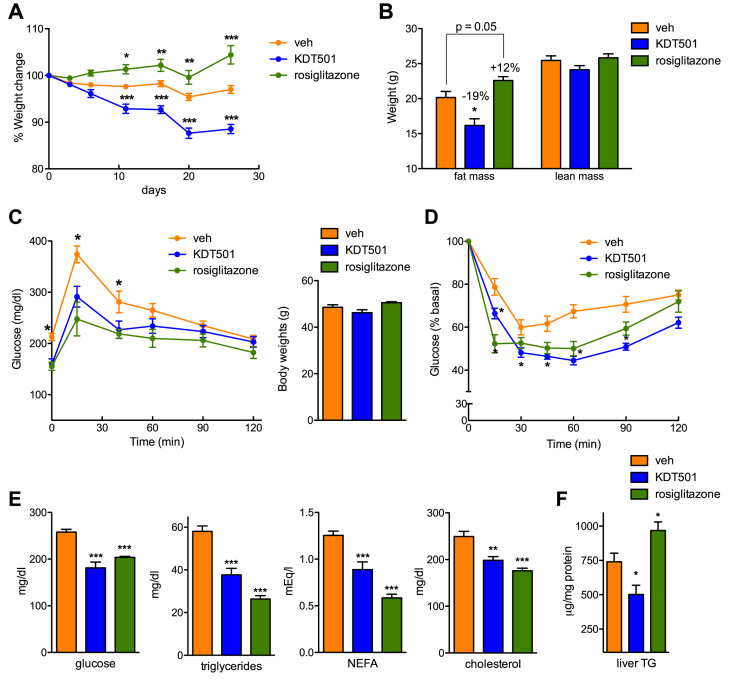
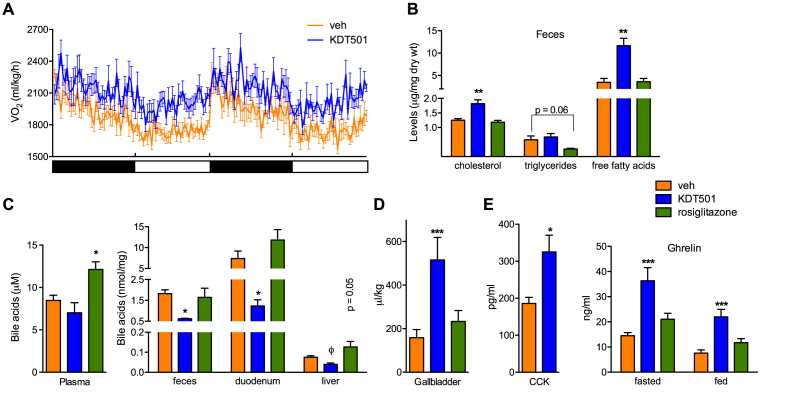
We show that KDT501 signals through Tas2r108, one of 35 mouse Tas2rs. In DIO mice, acute treatment stimulated GLP-1 secretion and enhanced glucose tolerance. Chronic treatment caused weight and fat mass loss, increased energy expenditure, enhanced glucose tolerance and insulin sensitivity, normalized plasma lipids, and induced broad suppression of inflammatory markers. Chronic KDT501 treatment altered enteroendocrine hormone levels and bile acid homeostasis and stimulated sustained GLP-1 release. Combined treatment with a dipeptidyl peptidase IV inhibitor amplified the incretin-based benefits of this pure isohumulone.
Activation of Tas2r108 in the gut results in a remodeling of enteroendocrine hormone release and bile acid metabolism that ameliorates multiple features of metabolic syndrome. Targeting extraoral bitter taste receptors may be useful in metabolic disease.
从啤酒花植物中提取的物质已被证明可以减轻啮齿动物和人类的体重和胰岛素抵抗,但由于使用了异质的啤酒花衍生混合物,阐明这些益处的机制受到了阻碍。因为啤酒花提取物因其苦味而被用作调味剂,所以我们假设苦味受体(Tas2rs)可能介导了它们在代谢疾病中的有益作用。研究表明,培养的肠内分泌细胞暴露于苦味味觉剂可刺激激素释放,包括胰高血糖素样肽 1(GLP-1)。这些发现导致了这样一种观点,即激活 Tas2rs 可能对糖尿病有益,但这一原则尚未得到检验。在这里,我们评估了具有抗糖尿病特性的一种纯啤酒花异α-酸衍生物 KDT501 通过 Tas2rs 信号传递的能力。我们还使用这种化合物作为工具,系统地评估了激活肠道苦味受体在肥胖-糖尿病中的影响。
在苦味受体信号转导分析的小组中测试 KDT501。用 KDT501 对饮食诱导肥胖(DIO)小鼠进行口服给药,并测定其对葡萄糖稳态的急性影响。用 KDT501 对 DIO 小鼠进行慢性治疗,评估广泛的代谢参数,以确定激活肠道苦味信号的全部影响。
我们表明,KDT501 通过 Tas2r108 信号传递,Tas2r108 是 35 种小鼠 Tas2rs 之一。在 DIO 小鼠中,急性治疗刺激 GLP-1 分泌并增强葡萄糖耐量。慢性治疗导致体重和脂肪量减轻,增加能量消耗,增强葡萄糖耐量和胰岛素敏感性,使血浆脂质正常化,并诱导广泛的炎症标志物抑制。慢性 KDT501 治疗改变肠内分泌激素水平和胆汁酸稳态,并刺激持续的 GLP-1 释放。与二肽基肽酶 IV 抑制剂联合治疗增强了这种纯异α-酸的基于肠促胰岛素的益处。
肠道中 Tas2r108 的激活导致肠内分泌激素释放和胆汁酸代谢的重塑,改善了代谢综合征的多种特征。靶向口腔外苦味受体可能对代谢性疾病有用。