Department of Health Promotion, School of Public Health, Sackler Faculty of Medicine, Tel Aviv University, Ramat Aviv, Israel.
School of Psychological Sciences, Tel Aviv University, Ramat Aviv, Israel.
BMC Public Health. 2018 Aug 20;18(1):1031. doi: 10.1186/s12889-018-5928-1.
It is estimated that around 40% of children worldwide are exposed to tobacco smoke, largely by their parents. Discrepancies between biochemical measures of exposure and parental report imply that parents may be under-reporting children's exposure. Previous research has shown that there may be a fundamental misunderstanding among smoking parents as to what exactly exposure is and in what circumstances it occurs.
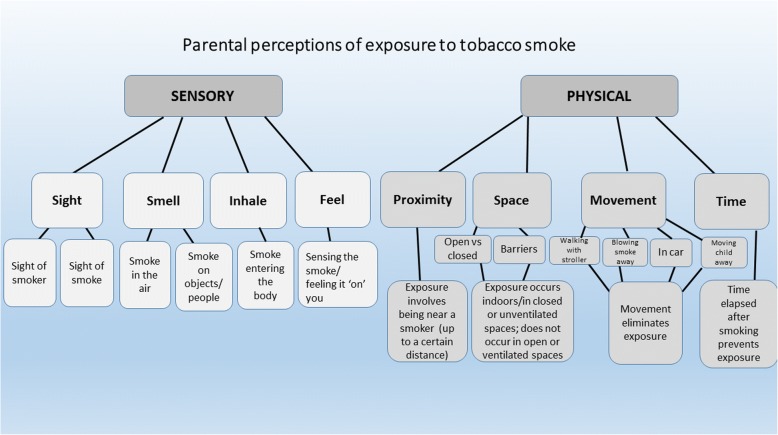
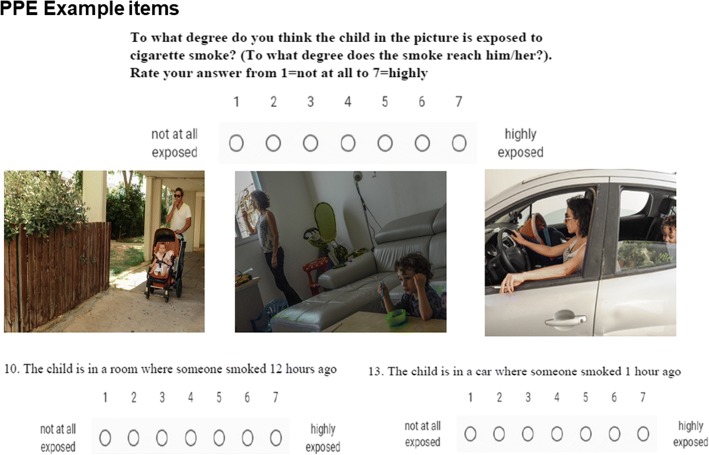
We aimed to develop and validate a measure to assess parental perceptions of exposure (PPE) regarding child tobacco smoke exposure (TSE). A model was developed based on a qualitative study of smoking parents and a questionnaire constructed using pictures and vignettes to assess parental rating of children's exposure in hypothetical situations. The questionnaire was completed online by 220 Israeli parents recruited via social media. Exploratory factor analysis was performed, and reliability and internal consistency were assessed using test-retest reliability and Cronbach's alpha coefficient.
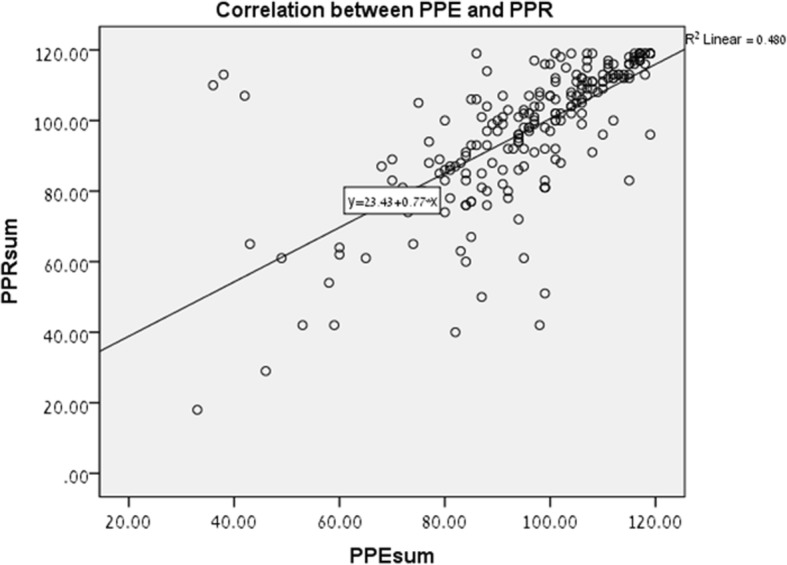
Factor analysis produced 6 factors for PPE which explained a cumulative total variance of 76.3%. Factors were termed: 1) second-hand exposure; 2) third-hand exposure; 3) perceived knowledge/certainty; 4) sensory perceptions; 5) time perceptions; and 6) distance perceptions. All sub-scales showed good internal consistency and variance. Test-retest reliability was high (r = 0.856, p = .001). Total PPE score and subscales were highly correlated with risk perceptions r = 0.766. Smokers scored significantly lower on PPE than non-smokers, defining fewer situations as involving greater exposure (p < 0.001). Logistic regression showed PPE was able to discriminate smoking status.
Results provide supporting evidence for the PPE as a reliable and valid construct, which can be feasibly measured. Smokers perceived exposure less frequently than non-smokers. This new measure can shed light on parental smoking behaviour and may help us to increase parental awareness of exposure in order to potentially reduce children's exposure to tobacco smoke.
据估计,全球约有 40%的儿童暴露于烟草烟雾中,主要是通过其父母。暴露的生化测量值与父母报告之间的差异表明,父母可能对儿童的暴露情况报告不足。先前的研究表明,吸烟父母可能对暴露的确切含义以及在何种情况下发生存在根本误解。
我们旨在开发和验证一种评估父母对儿童烟草烟雾暴露(TSE)的暴露感知(PPE)的测量方法。该模型基于对吸烟父母的定性研究和使用图片和情景来评估父母在假设情况下对儿童暴露情况的评分的问卷而建立。通过社交媒体招募的 220 名以色列父母在线完成了问卷。进行了探索性因素分析,并通过测试-重测信度和克朗巴赫 α 系数评估了可靠性和内部一致性。
因素分析得出了 6 个 PPE 因素,这些因素解释了 76.3%的累积总方差。这些因素分别是:1)二手烟暴露;2)三手烟暴露;3)感知知识/确定性;4)感官感知;5)时间感知;和 6)距离感知。所有子量表均表现出良好的内部一致性和方差。测试-重测信度较高(r=0.856,p=0.001)。PPE 总分和子量表与风险感知高度相关(r=0.766)。吸烟者在 PPE 上的得分明显低于非吸烟者,将较少的情况定义为涉及更大的暴露(p<0.001)。逻辑回归显示 PPE 能够区分吸烟状况。
结果为 PPE 作为一种可靠且有效的结构提供了支持性证据,该结构可以通过合理的测量来进行测量。吸烟者比非吸烟者更频繁地感知到暴露。这种新的测量方法可以揭示父母吸烟行为的本质,并可能帮助我们提高父母对暴露的认识,以潜在减少儿童对烟草烟雾的暴露。