Department of Infectious Diseases, College of Veterinary Medicine, University of Georgia, Athens, Georgia, United States of America.
Center for Tropical and Emerging Global Diseases, University of Georgia, Athens, Georgia, United States of America.
PLoS Negl Trop Dis. 2018 Aug 22;12(8):e0006733. doi: 10.1371/journal.pntd.0006733. eCollection 2018 Aug.
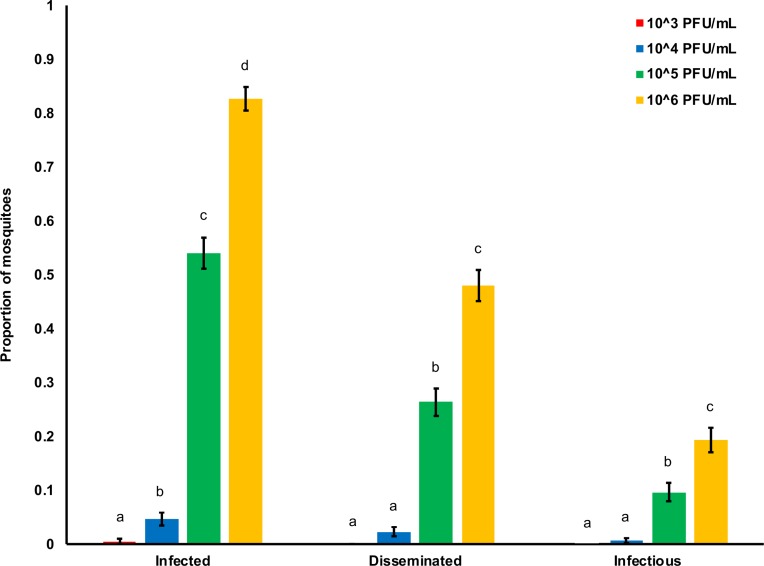
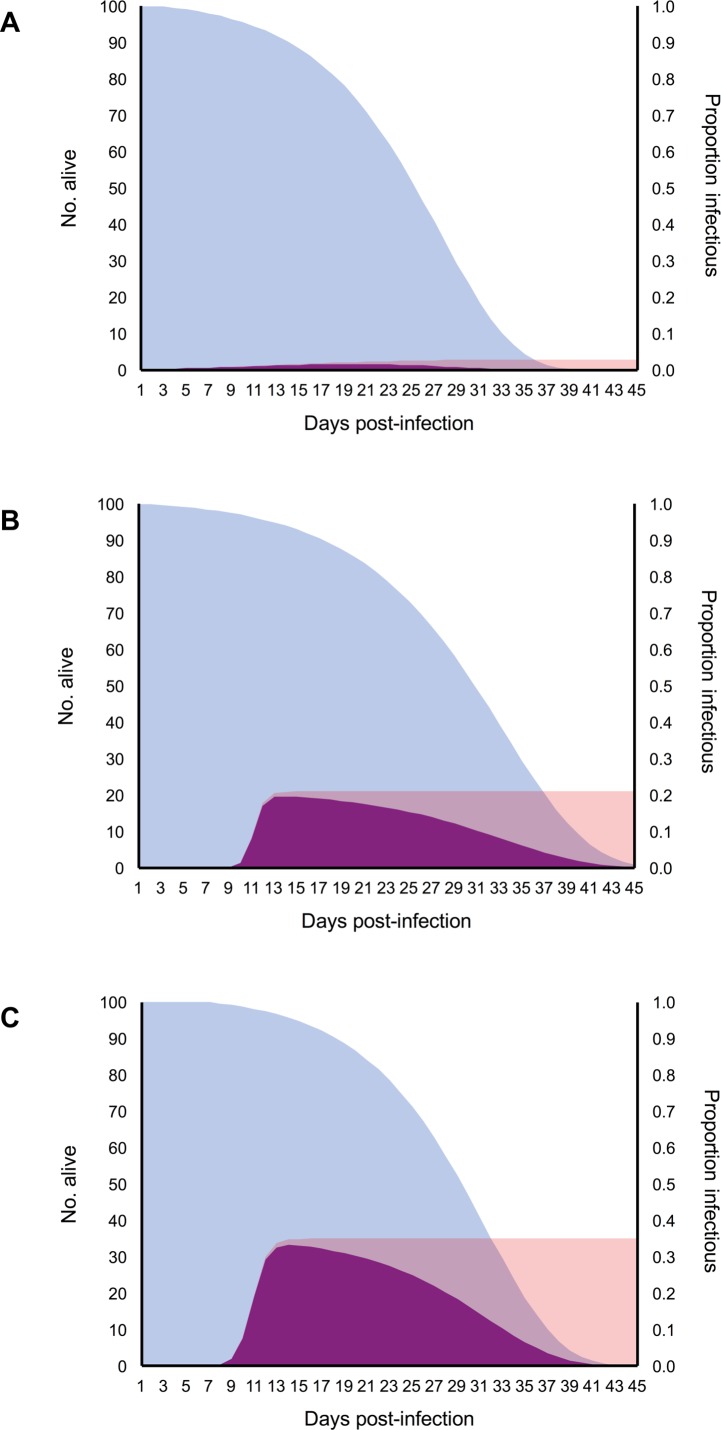
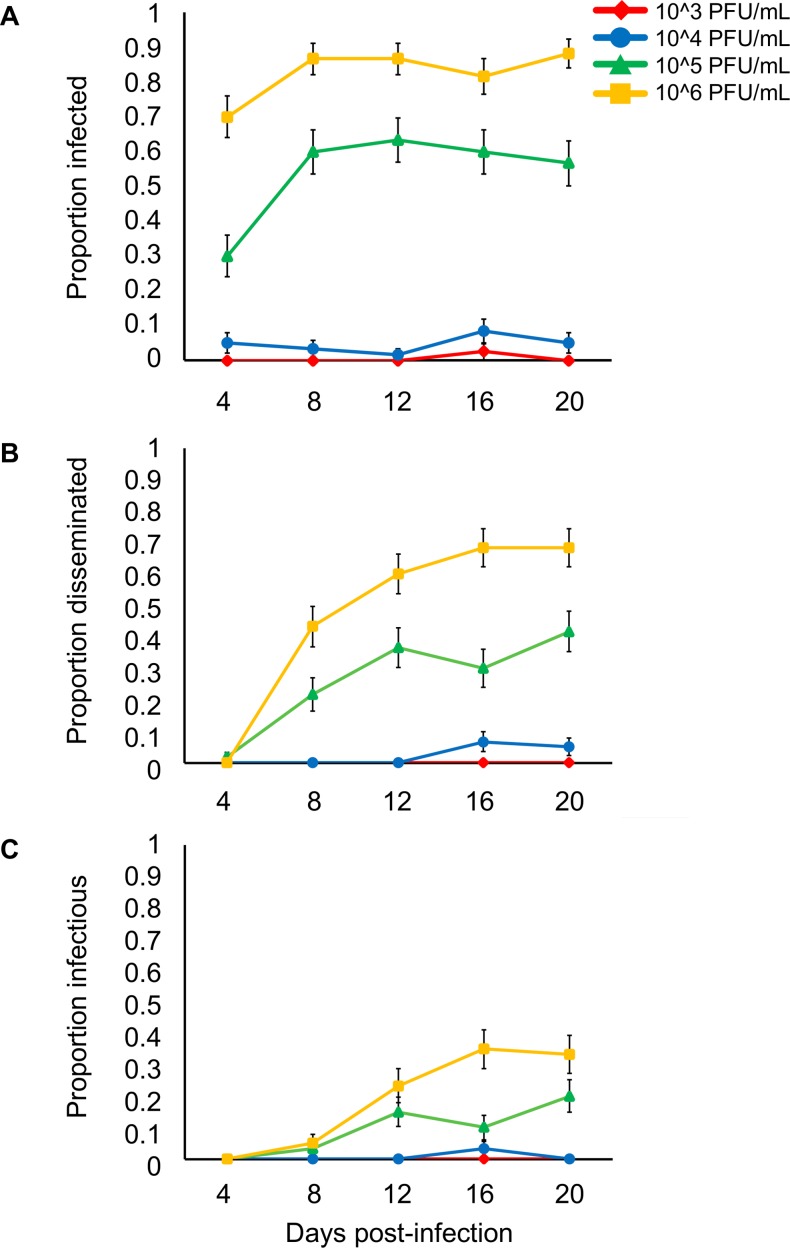
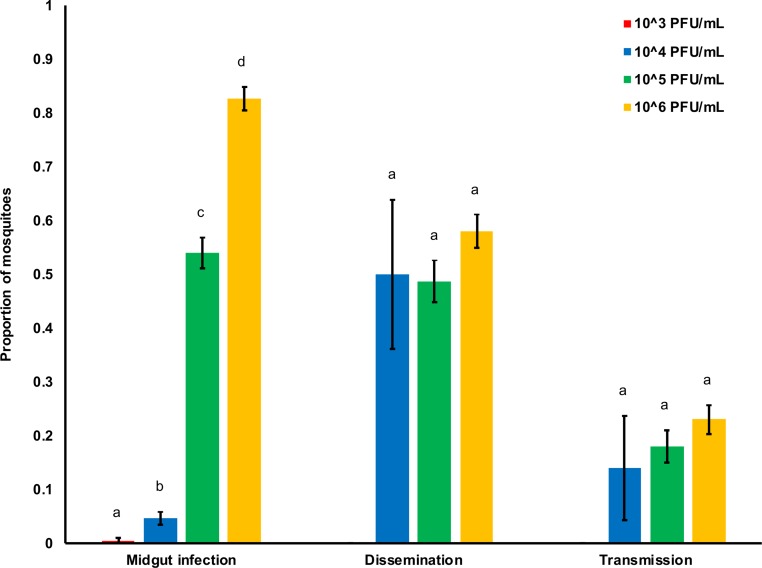
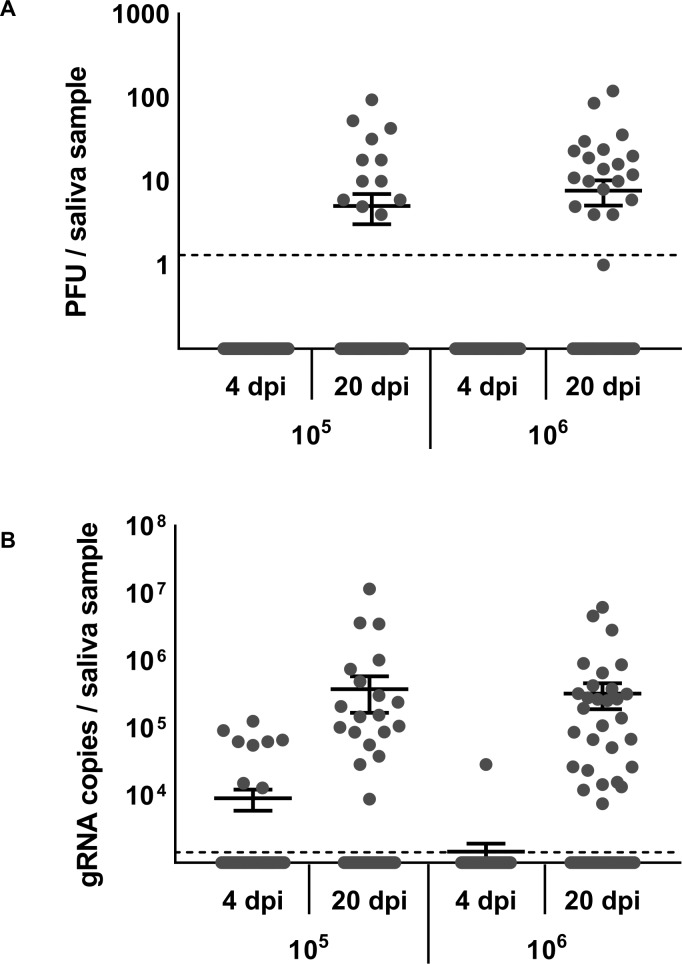
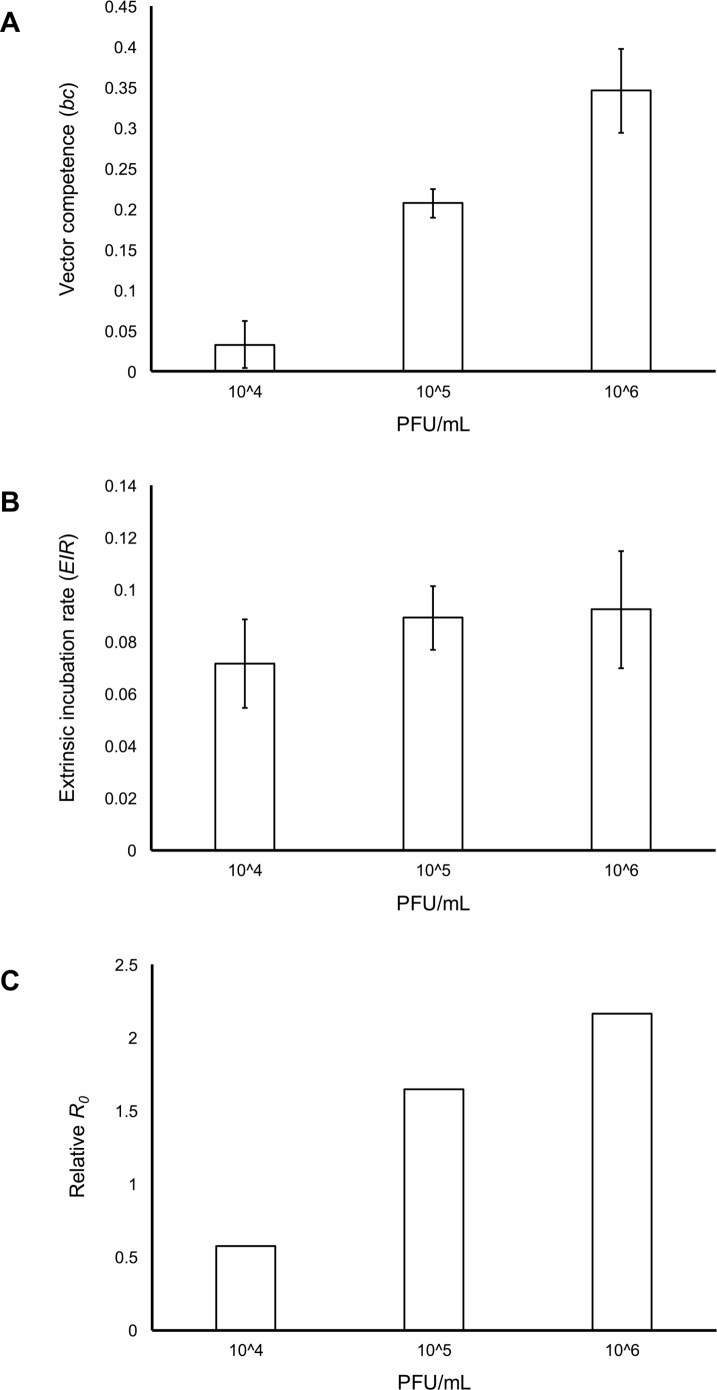
Zika virus (ZIKV) is an arbovirus primarily transmitted by Aedes mosquitoes. Like most viral infections, ZIKV viremia varies over several orders of magnitude, with unknown consequences for transmission. To determine the effect of viral concentration on ZIKV transmission risk, we exposed field-derived Ae. aegypti mosquitoes to four doses (10(3), 10(4), 10(5), 10(6) PFU/mL) representative of potential variation in the field. We demonstrate that increasing ZIKV dose in the blood-meal significantly increases the probability of mosquitoes becoming infected, and consequently disseminating virus and becoming infectious. Additionally, we observed significant interactions between dose and days post-infection on dissemination and overall transmission efficiency, suggesting that variation in ZIKV dose affects the rates of midgut escape and salivary gland invasion. We did not find significant effects of dose on mosquito mortality. We also demonstrate that detecting virus using RT-qPCR approaches rather than plaque assays potentially over-estimates key transmission parameters, including the time at which mosquitoes become infectious and viral burden. Finally, using these data to parameterize an R0 model, we showed that increasing viremia from 10(4) to 10(6) PFU/mL increased relative R0 3.8-fold, demonstrating that variation in viremia substantially affects transmission risk.
寨卡病毒(ZIKV)是一种主要通过埃及伊蚊传播的虫媒病毒。与大多数病毒感染一样,寨卡病毒血症的变化幅度很大,对传播的影响尚不清楚。为了确定病毒浓度对寨卡病毒传播风险的影响,我们用四种剂量(10^3、10^4、10^5、10^6 空斑形成单位/毫升)的野外来源的埃及伊蚊进行了实验,这四种剂量代表了野外病毒浓度的潜在变化。我们证明,血餐中寨卡病毒剂量的增加显著增加了蚊子感染的概率,从而导致病毒传播和感染。此外,我们还观察到剂量与感染后天数之间在传播和整体传播效率上存在显著的相互作用,这表明病毒剂量的变化影响了中肠逃逸和唾液腺入侵的速度。我们没有发现剂量对蚊子死亡率的显著影响。我们还证明,使用 RT-qPCR 方法检测病毒可能会高估关键的传播参数,包括蚊子感染的时间和病毒载量。最后,我们使用这些数据来参数化一个 R0 模型,结果表明,从 10^4 到 10^6 空斑形成单位/毫升的病毒血症增加使相对 R0 增加了 3.8 倍,这表明病毒血症的变化极大地影响了传播风险。