Department of Chemistry and Biochemistry , University of Maryland , College Park , Maryland 20742 , United States.
Chem Rev. 2018 Sep 12;118(17):8359-8413. doi: 10.1021/acs.chemrev.8b00238. Epub 2018 Aug 24.
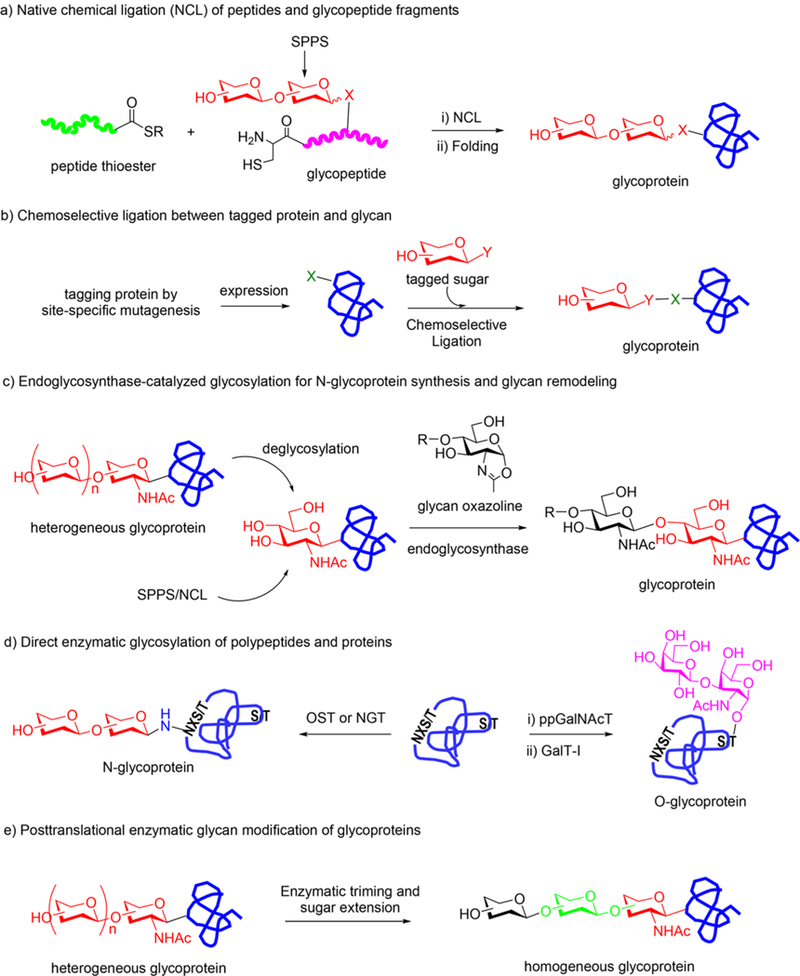
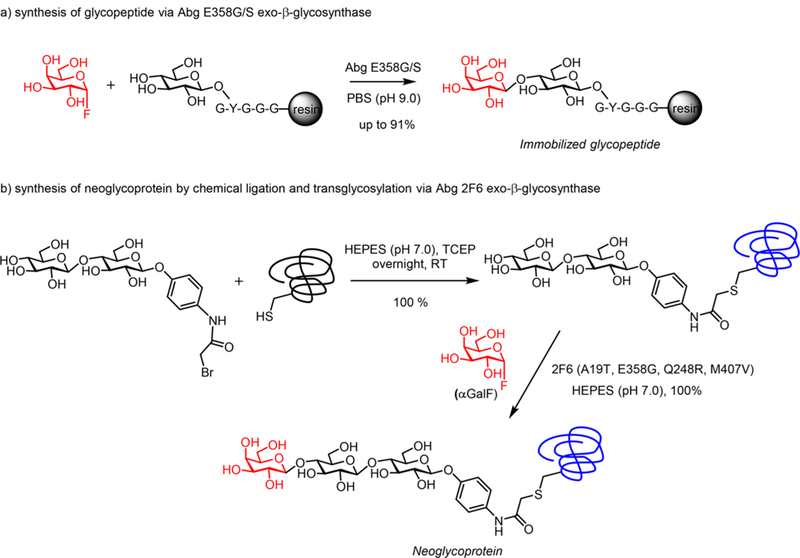
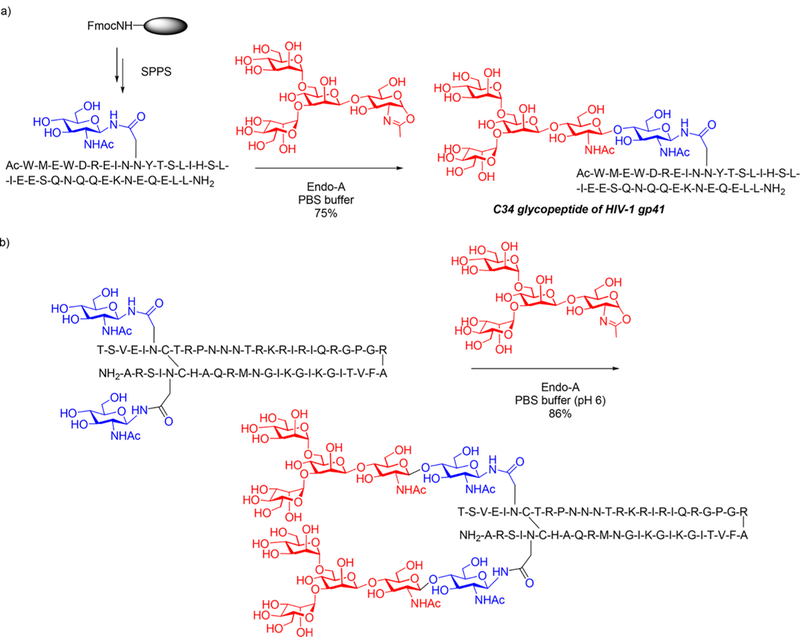
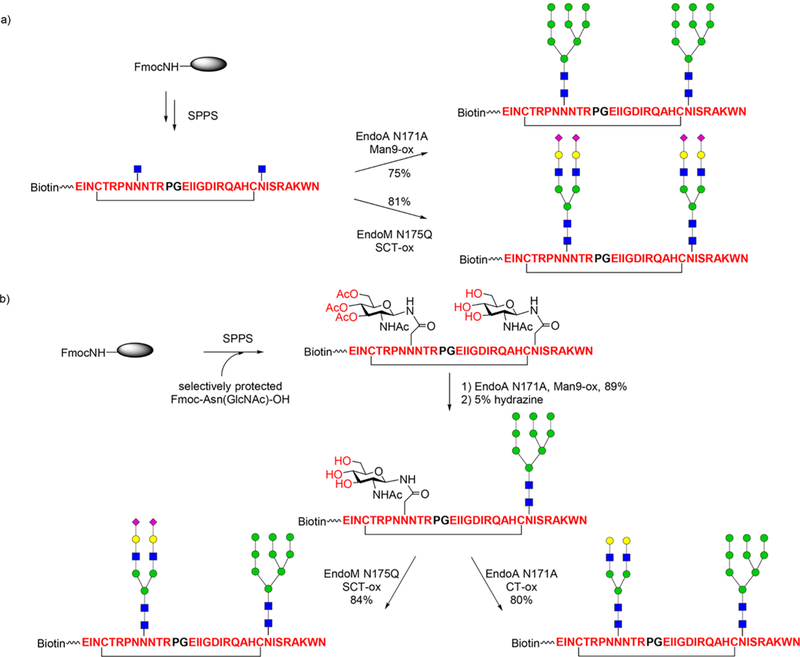
Glycosylation is one of the most prevalent posttranslational modifications that profoundly affects the structure and functions of proteins in a wide variety of biological recognition events. However, the structural complexity and heterogeneity of glycoproteins, usually resulting from the variations of glycan components and/or the sites of glycosylation, often complicates detailed structure-function relationship studies and hampers the therapeutic applications of glycoproteins. To address these challenges, various chemical and biological strategies have been developed for producing glycan-defined homogeneous glycoproteins. This review highlights recent advances in the development of chemoenzymatic methods for synthesizing homogeneous glycoproteins, including the generation of various glycosynthases for synthetic purposes, endoglycosidase-catalyzed glycoprotein synthesis and glycan remodeling, and direct enzymatic glycosylation of polypeptides and proteins. The scope, limitation, and future directions of each method are discussed.
糖基化是最普遍的翻译后修饰之一,它深刻地影响了各种生物识别事件中蛋白质的结构和功能。然而,糖蛋白的结构复杂性和异质性,通常是由于聚糖成分和/或糖基化位点的变化,常常使详细的结构-功能关系研究变得复杂,并阻碍了糖蛋白的治疗应用。为了解决这些挑战,已经开发了各种化学和生物学策略来生产具有定义明确的聚糖的均一糖蛋白。本综述重点介绍了用于合成均一糖蛋白的化学酶法的最新进展,包括为合成目的而产生的各种糖基合成酶、内切糖苷酶催化的糖蛋白合成和聚糖重塑,以及多肽和蛋白质的直接酶促糖基化。讨论了每种方法的范围、局限性和未来方向。