KG Jebsen Center for Diabetes Research, Department of Clinical Science, University of Bergen, 5021, Bergen, Norway.
Department of Medical Genetics, Haukeland University Hospital, 5021, Bergen, Norway.
Sci Rep. 2018 Aug 24;8(1):12780. doi: 10.1038/s41598-018-29448-w.
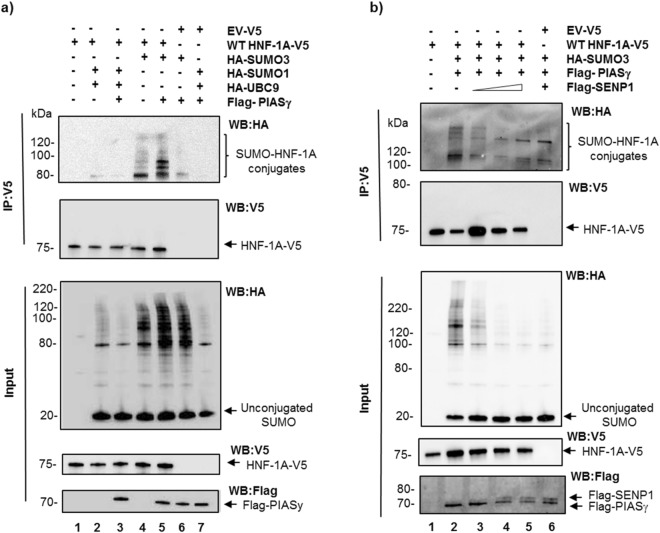
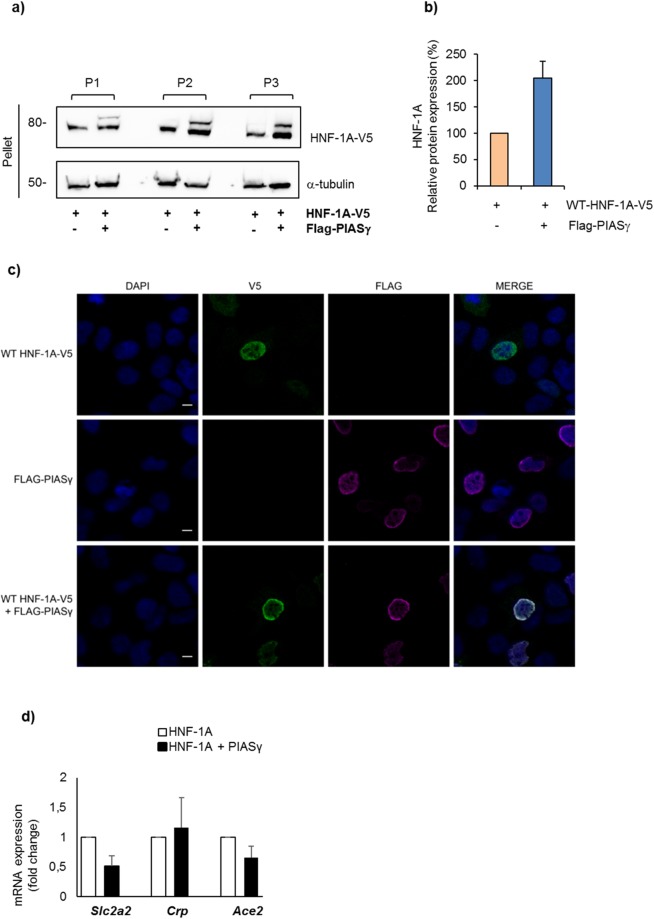
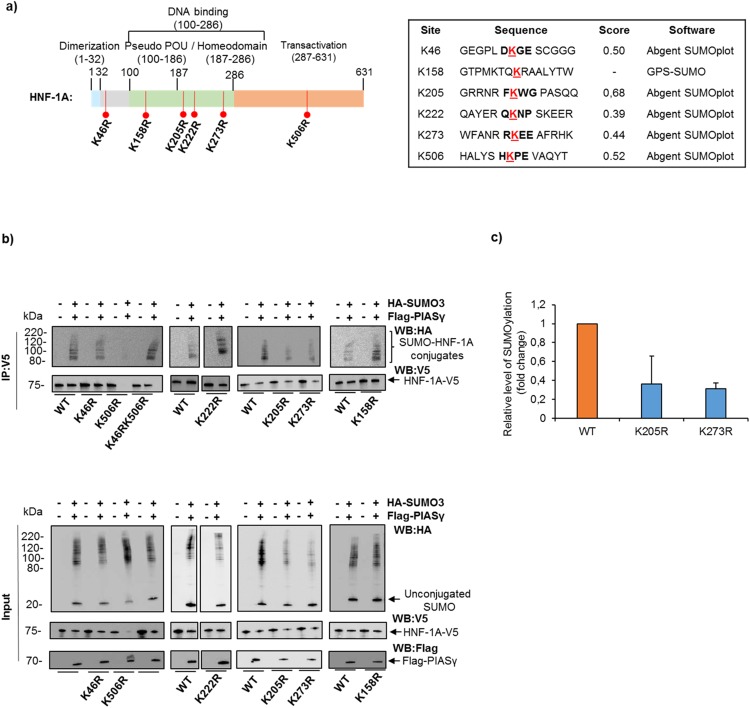
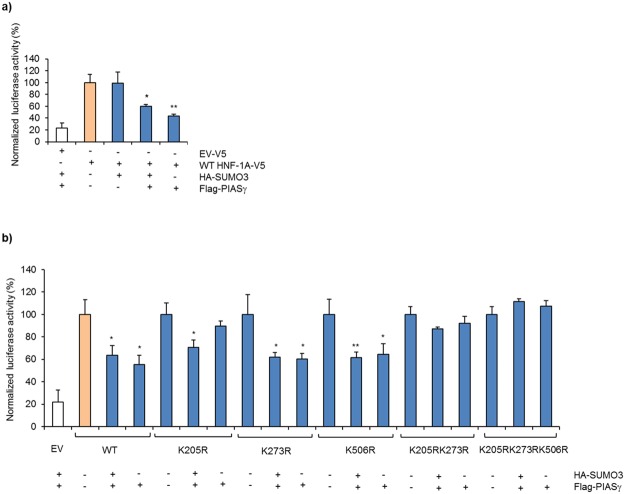
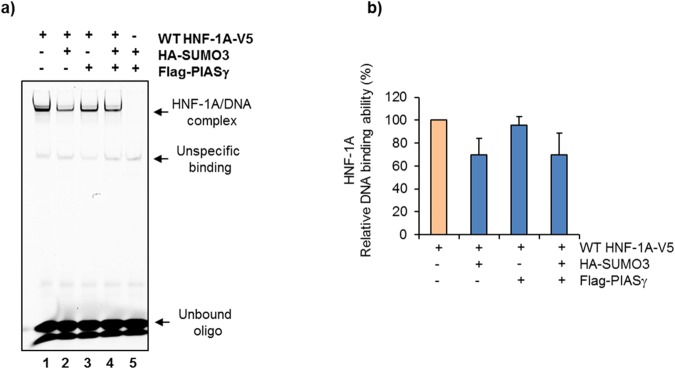
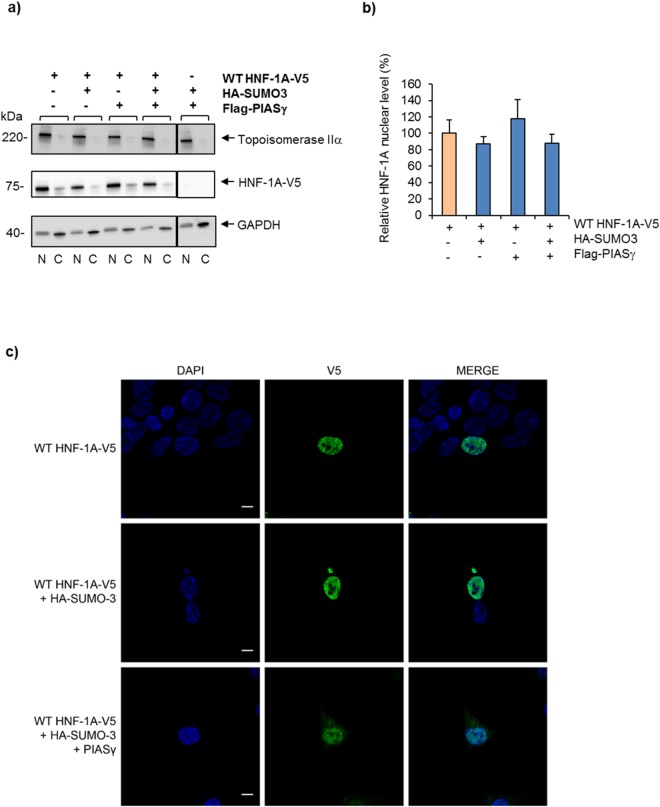
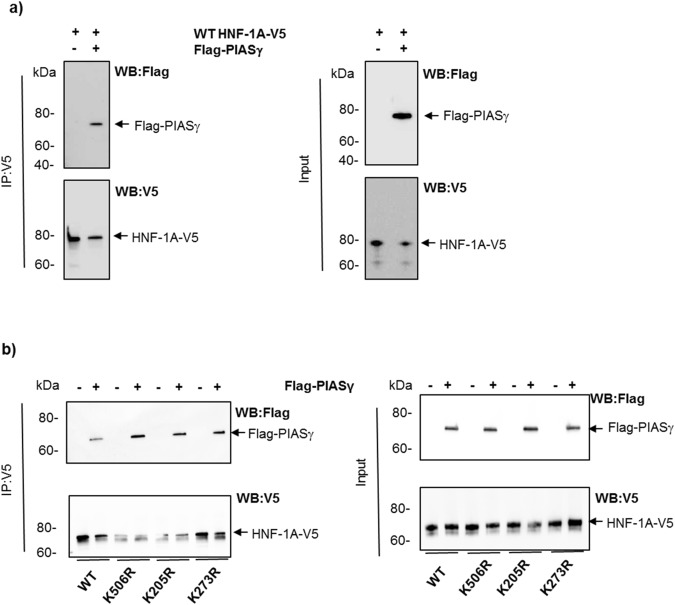
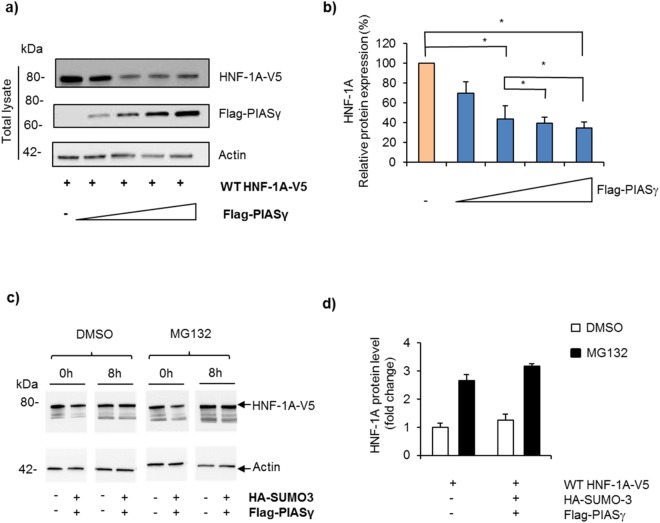
The transcription factor hepatocyte nuclear factor-1α (HNF-1A) is involved in normal pancreas development and function. Rare variants in the HNF1A gene can cause monogenic diabetes, while common variants confer type 2 diabetes risk. The precise mechanisms for regulation of HNF-1A, including the role and function of post-translational modifications, are still largely unknown. Here, we present the first evidence for HNF-1A being a substrate of SUMOylation in cellulo and identify two lysine (K) residues (K205 and K273) as SUMOylation sites. Overexpression of protein inhibitor of activated STAT (PIASγ) represses the transcriptional activity of HNF-1A and is dependent on simultaneous HNF-1A SUMOylation at K205 and K273. Moreover, PIASγ is a novel HNF-1A interaction partner whose expression leads to translocation of HNF-1A to the nuclear periphery. Thus, our findings support that the E3 SUMO ligase PIASγ regulates HNF-1A SUMOylation with functional implications, representing new targets for drug development and precision medicine in diabetes.
转录因子肝细胞核因子-1α(HNF-1α)参与正常胰腺的发育和功能。HNF1A 基因中的罕见变异可导致单基因糖尿病,而常见变异则可导致 2 型糖尿病的风险。HNF-1A 的调节的确切机制,包括翻译后修饰的作用和功能,在很大程度上仍不清楚。在这里,我们首次证明 HNF-1A 是细胞内 SUMOylation 的底物,并确定了两个赖氨酸(K)残基(K205 和 K273)作为 SUMOylation 位点。蛋白抑制剂激活 STAT(PIASγ)的过表达抑制 HNF-1A 的转录活性,并且依赖于同时在 K205 和 K273 处的 HNF-1A SUMOylation。此外,PIASγ 是 HNF-1A 的新的相互作用伙伴,其表达导致 HNF-1A 易位到核周缘。因此,我们的研究结果支持 E3 SUMO 连接酶 PIASγ 通过具有功能意义的 HNF-1A SUMOylation 进行调节,代表了糖尿病药物开发和精准医学的新靶点。