University of Connecticut School of Nursing, Storrs, Connecticut, 06269, USA.
Department of Microbiology and Immunology, Medical University of South Carolina, Charleston, SC, 29425, USA.
Sci Rep. 2018 Aug 27;8(1):12863. doi: 10.1038/s41598-018-31116-y.
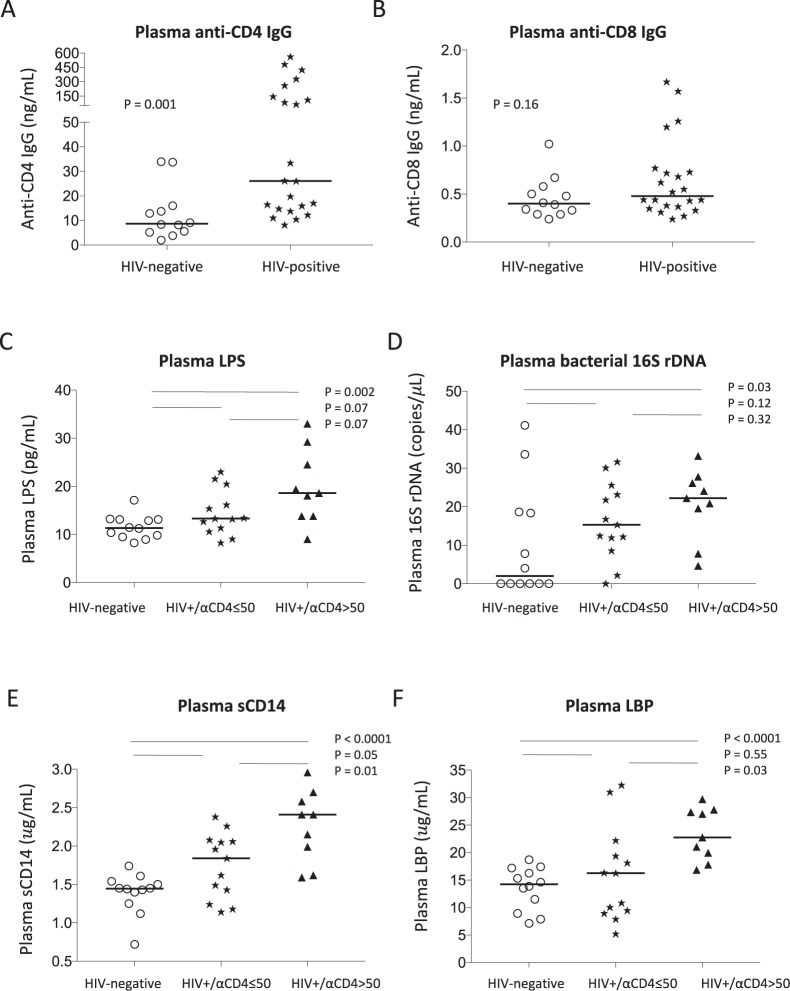
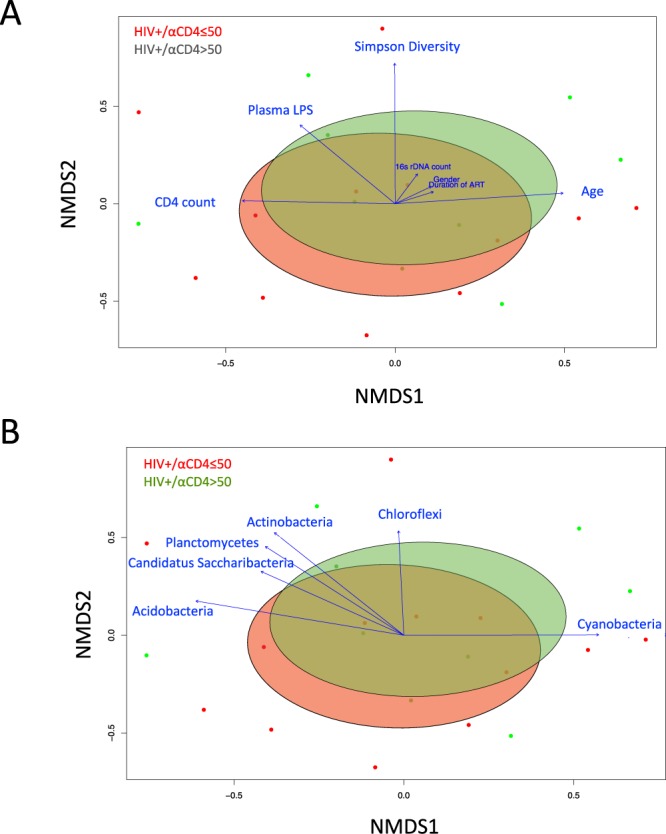
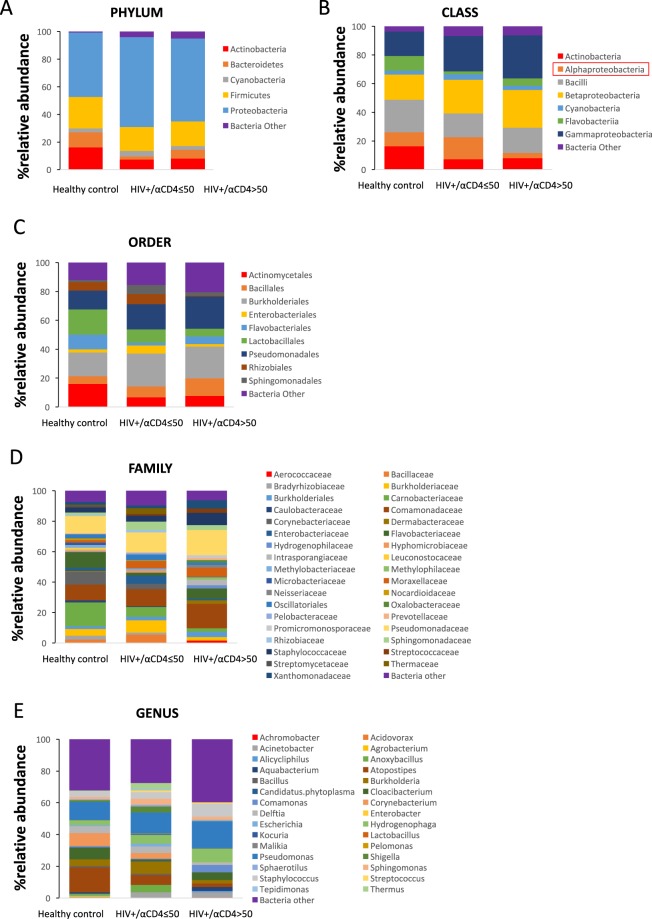
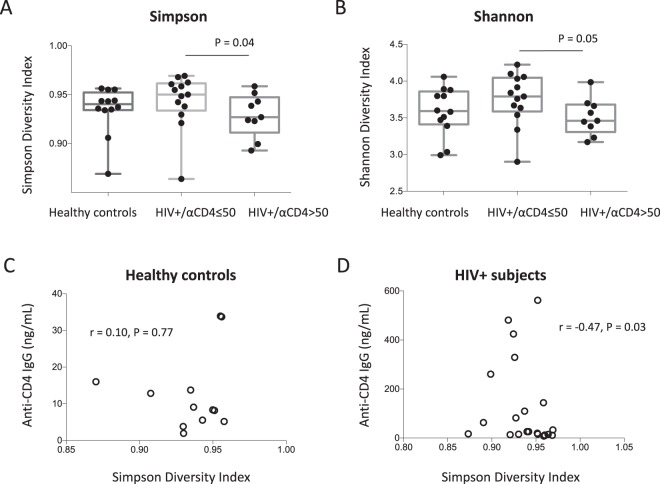
Microbial signals have been linked to autoantibody induction. Recently, we found that purified anti-CD4 autoantibodies from the plasma of chronic HIV-1-infected patients under viral-suppressed antiretroviral therapy (ART) play a pathologic role in poor CD4+ T cell recovery. The purpose of the study was to investigate the association of systemic microbiome and anti-CD4 autoantibody production in HIV. Plasma microbiome from 12 healthy controls and 22 HIV-infected subjects under viral-suppressed ART were analyzed by MiSeq sequencing. Plasma level of autoantibodies and microbial translocation (LPS, total bacterial 16S rDNA, soluble CD14, and LPS binding protein) were analyzed by ELISA, limulus amebocyte assay, and qPCR. We found that plasma level of anti-CD4 IgGs but not anti-CD8 IgGs was increased in HIV+ subjects compared to healthy controls. HIV+ subjects with plasma anti-CD4 IgG > 50 ng/mL (high) had reduced microbial diversity compared to HIV+ subjects with anti-CD4 IgG ≤ 50 ng/mL (low). Moreover, plasma anti-CD4 IgG level was associated with elevated microbial translocation and reduced microbial diversity in HIV+ subjects. The Alphaproteobacteria class was significantly enriched in HIV+ subjects with low anti-CD4 IgG compared to patients with high anti-CD4 IgG even after controlling for false discovery rate (FDR). The microbial components were different from the phylum to genus level in HIV+ subjects with high anti-CD4 IgGs compared to the other two groups, but these differences were not significant after controlling for FDR. These results suggest that systemic microbial translocation and microbiome may associate with anti-CD4 autoantibody production in ART-treated HIV disease.
微生物信号与自身抗体的产生有关。最近,我们发现慢性 HIV-1 感染患者在病毒抑制性抗逆转录病毒治疗(ART)下的血浆中纯化的抗 CD4 自身抗体在 CD4+T 细胞恢复不良中发挥病理作用。本研究的目的是研究 HIV 中系统性微生物组与抗 CD4 自身抗体产生的相关性。通过 MiSeq 测序分析了 12 名健康对照者和 22 名病毒抑制性 ART 下 HIV 感染患者的血浆微生物组。通过 ELISA、鲎试验、qPCR 分析了自身抗体和微生物易位(LPS、总细菌 16S rDNA、可溶性 CD14 和 LPS 结合蛋白)的血浆水平。我们发现与健康对照者相比,HIV+患者的血浆抗 CD4 IgG 水平升高,但抗 CD8 IgG 水平没有升高。与抗 CD4 IgG≤50ng/ml(低)的 HIV+患者相比,血浆抗 CD4 IgG>50ng/ml(高)的 HIV+患者的微生物多样性降低。此外,血浆抗 CD4 IgG 水平与 HIV+患者的微生物易位增加和微生物多样性降低有关。与高抗 CD4 IgG 的 HIV+患者相比,低抗 CD4 IgG 的 HIV+患者的α变形菌门显著富集,即使在控制假发现率(FDR)后也是如此。与其他两组相比,高抗 CD4 IgGs 的 HIV+患者的微生物成分在门到属水平上都有所不同,但在控制 FDR 后,这些差异并不显著。这些结果表明,系统微生物易位和微生物组可能与 ART 治疗的 HIV 疾病中的抗 CD4 自身抗体产生有关。