Department of Evolutionary Theory, Max Planck Institute for Evolutionary Biology, Plön, Germany.
Division of Hematology, Department of Internal Medicine, Mayo Clinic, Rochester, MN, USA.
J R Soc Interface. 2018 Aug;15(145). doi: 10.1098/rsif.2018.0272.
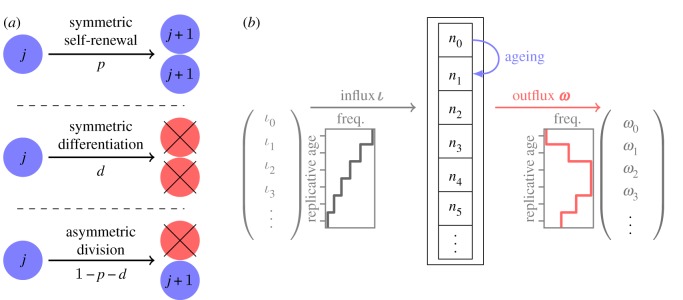
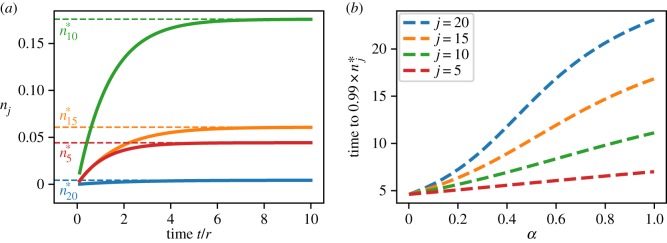
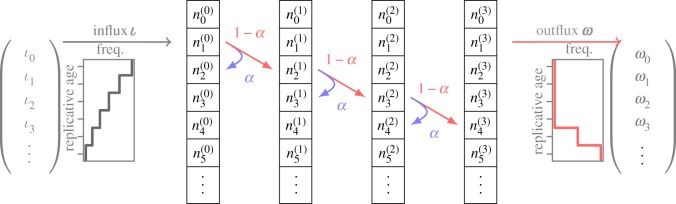
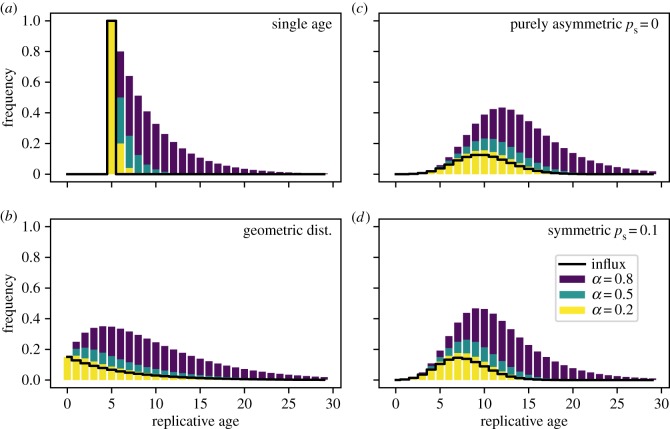
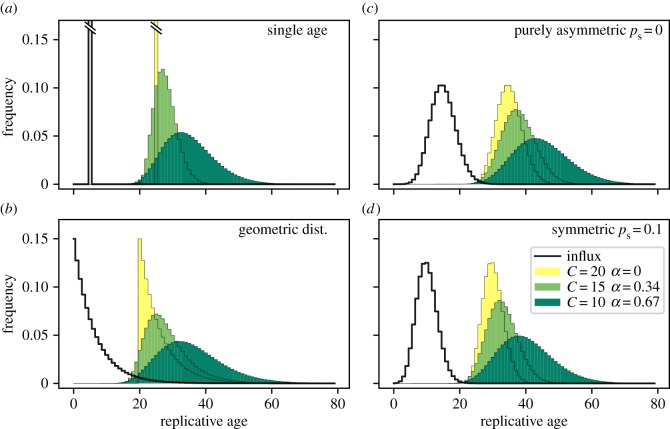
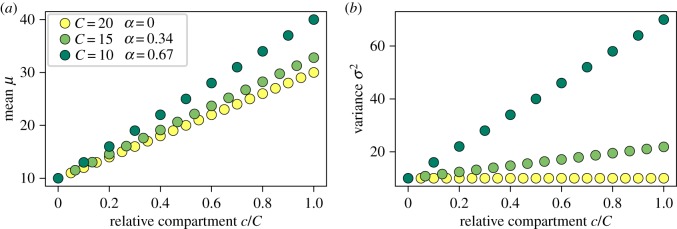
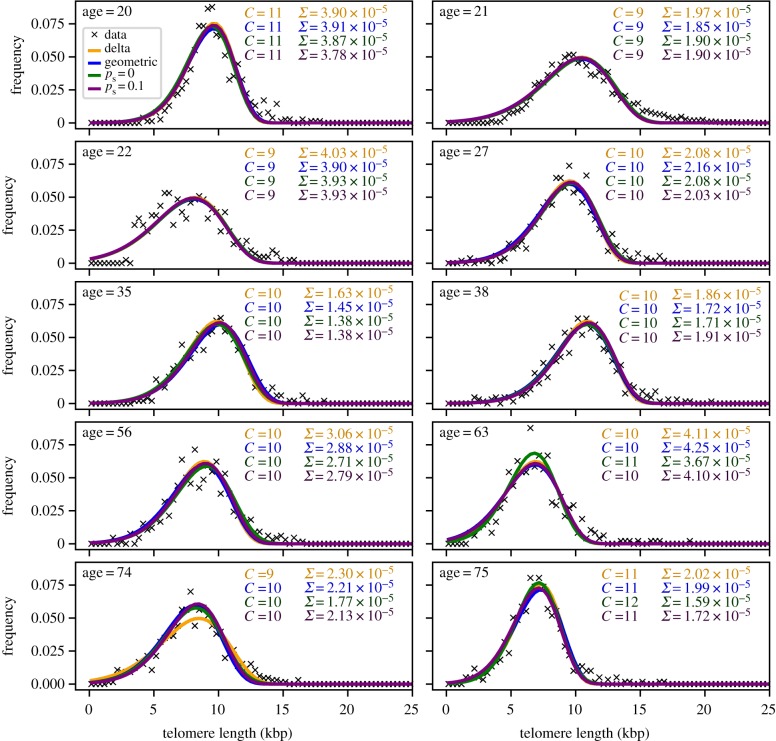
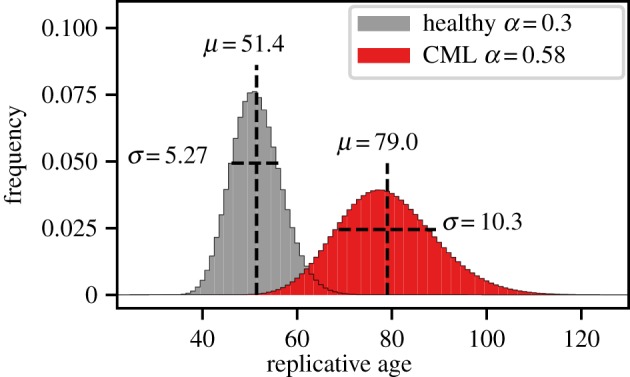
The cellular age distribution of hierarchically organized tissues can reveal important insights into the dynamics of cell differentiation and self-renewal and associated cancer risks. Here, we examine the effect of progenitor compartments with varying differentiation and self-renewal capacities on the resulting observable distributions of replicative cellular ages. We find that strongly amplifying progenitor compartments, i.e. compartments with high self-renewal capacities, substantially broaden the age distributions which become skewed towards younger cells with a long tail of few old cells. For several of these strongly amplifying compartments, the age distribution becomes virtually independent of the influx from the stem cell compartment. By contrast, if tissues are organized into many downstream compartments with low self-renewal capacity, the shape of the replicative cell distribution in more differentiated compartments is dominated by stem cell dynamics with little added variation. In the limiting case of a strict binary differentiation tree without self-renewal, the shape of the output distribution becomes indistinguishable from that of the input distribution. Our results suggest that a comparison of cellular age distributions between healthy and cancerous tissues may inform about dynamical changes within the hierarchical tissue structure, i.e. an acquired increased self-renewal capacity in certain tumours. Furthermore, we compare our theoretical results to telomere length distributions in granulocyte populations of 10 healthy individuals across different ages, highlighting that our theoretical expectations agree with experimental observations.
细胞在组织中的分化和自我更新能力会影响组织的结构和功能。这里,我们研究了不同分化和自我更新能力的祖细胞对细胞复制年龄分布的影响。结果表明,具有强扩增能力的祖细胞(即具有高自我更新能力的祖细胞)会显著拓宽年龄分布,使年龄分布向更年轻的细胞倾斜,同时具有较长的少数老细胞尾巴。对于这些具有强扩增能力的祖细胞中的几个,年龄分布几乎与来自干细胞区室的流入无关。相比之下,如果组织被组织成许多具有低自我更新能力的下游区室,那么在更分化的区室中复制细胞的分布形状主要由干细胞动力学主导,变化很小。在没有自我更新的严格二叉分化树的极限情况下,输出分布的形状与输入分布的形状变得难以区分。我们的结果表明,比较健康组织和癌症组织之间的细胞年龄分布可能有助于了解分层组织结构内的动态变化,即某些肿瘤中获得的自我更新能力增加。此外,我们将理论结果与 10 名健康个体不同年龄的粒细胞群体中的端粒长度分布进行了比较,突出表明我们的理论预期与实验观察结果一致。