Malinauskas Mangirdas, Žukauskas Albertas, Hasegawa Satoshi, Hayasaki Yoshio, Mizeikis Vygantas, Buividas Ričardas, Juodkazis Saulius
Laser Research Centre, Department of Quantum Electronics, Physics Faculty, Vilnius University, Saulėtekio Ave. 10, LT-10223 Vilnius, Lithuania.
Center for Optical Research and Education (CORE), Utsunomiya University, 7-1-2 Yoto, Utsunomiya 321-8585, Japan.
Light Sci Appl. 2016 Aug 12;5(8):e16133. doi: 10.1038/lsa.2016.133. eCollection 2016 Aug.
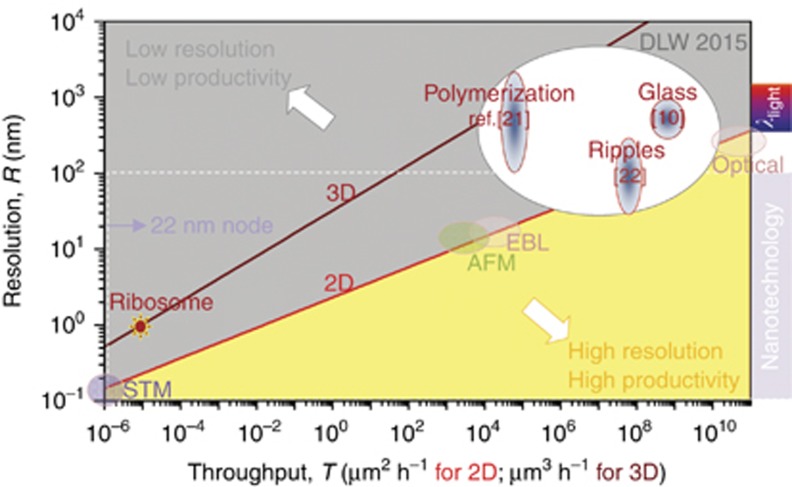
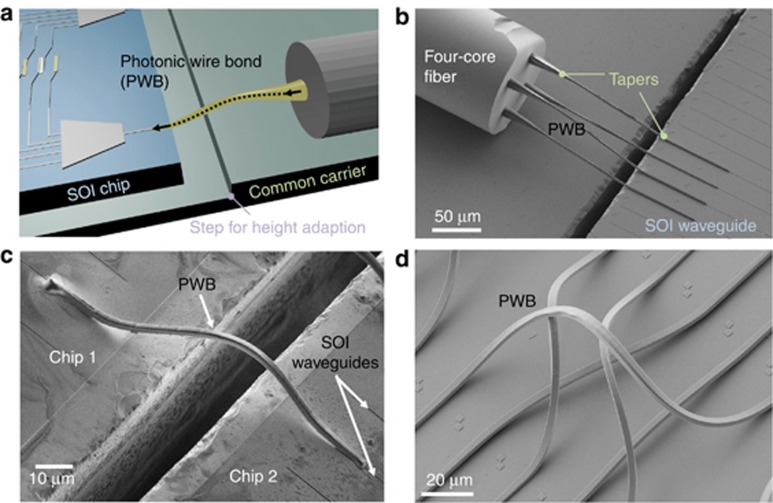
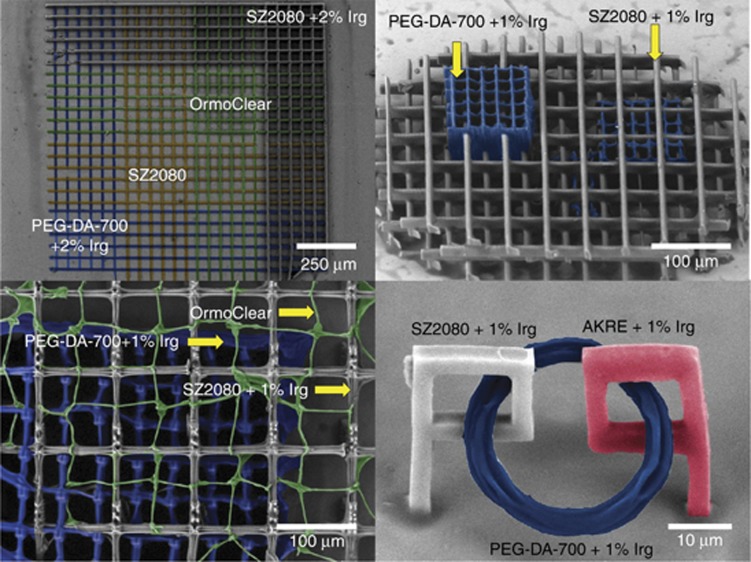
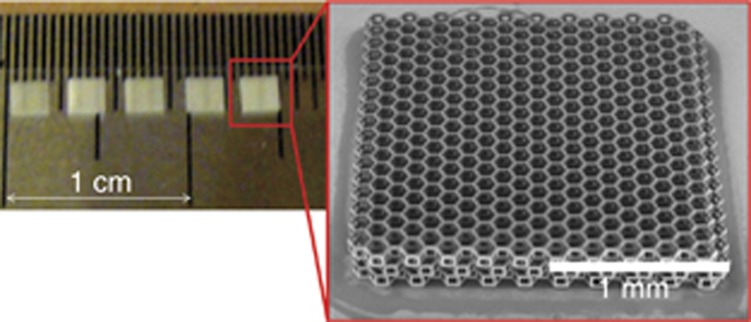
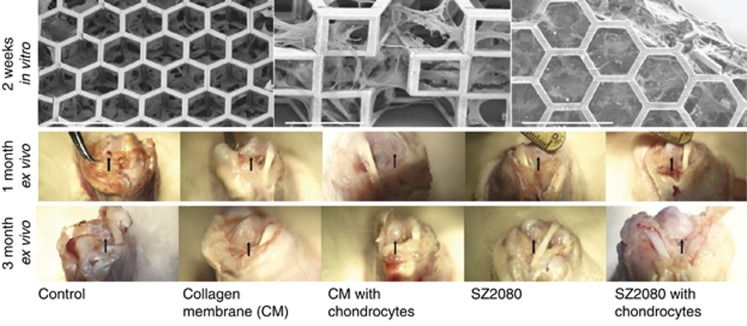
Processing of materials by ultrashort laser pulses has evolved significantly over the last decade and is starting to reveal its scientific, technological and industrial potential. In ultrafast laser manufacturing, optical energy of tightly focused femtosecond or picosecond laser pulses can be delivered to precisely defined positions in the bulk of materials via two-/multi-photon excitation on a timescale much faster than thermal energy exchange between photoexcited electrons and lattice ions. Control of photo-ionization and thermal processes with the highest precision, inducing local photomodification in sub-100-nm-sized regions has been achieved. State-of-the-art ultrashort laser processing techniques exploit high 0.1-1 μm spatial resolution and almost unrestricted three-dimensional structuring capability. Adjustable pulse duration, spatiotemporal chirp, phase front tilt and polarization allow control of photomodification via uniquely wide parameter space. Mature opto-electrical/mechanical technologies have enabled laser processing speeds approaching meters-per-second, leading to a fast lab-to-fab transfer. The key aspects and latest achievements are reviewed with an emphasis on the fundamental relation between spatial resolution and total fabrication throughput. Emerging biomedical applications implementing micrometer feature precision over centimeter-scale scaffolds and photonic wire bonding in telecommunications are highlighted.
在过去十年中,超短激光脉冲对材料的加工技术有了显著发展,并开始展现出其科学、技术和工业潜力。在超快激光制造中,通过双光子或多光子激发,聚焦紧密的飞秒或皮秒激光脉冲的光能能够在比光激发电子与晶格离子之间的热能交换快得多的时间尺度上,被传递到材料内部的精确指定位置。已经实现了以最高精度控制光电离和热过程,在小于100纳米的区域内诱导局部光改性。先进的超短激光加工技术利用了0.1 - 1微米的高空间分辨率和几乎不受限制的三维结构化能力。可调节的脉冲持续时间、时空啁啾、相位前沿倾斜和偏振,使得能够通过独特的宽参数空间来控制光改性。成熟的光电/机械技术使激光加工速度接近每秒数米,从而实现了从实验室到工厂的快速转化。本文回顾了关键方面和最新成果,重点强调了空间分辨率与总制造通量之间的基本关系。还突出介绍了在厘米级支架上实现微米级特征精度的新兴生物医学应用以及电信领域的光子引线键合。