Hartman Linda, Lems Willem F, Boers Maarten
Amsterdam Rheumatology and Immunology Center, Amsterdam UMC, Vrije Universiteit, Amsterdam, The Netherlands.
Department of Epidemiology and Biostatistics, Amsterdam UMC, Vrije Universiteit, Amsterdam, The Netherlands.
J Clin Pharm Ther. 2019 Feb;44(1):1-5. doi: 10.1111/jcpt.12757. Epub 2018 Sep 1.
Currently, medication bottles with an electronic cap are frequently used to measure medication adherence. This system is termed medication event monitoring system (MEMS). To our knowledge, the optimal method to summarize data from MEMS has not yet been determined.
Look for best practices on how to quantify adherence data from MEMS.
Review of PubMed, Embase and Cochrane databases for the articles on medication adherence with MEMS.
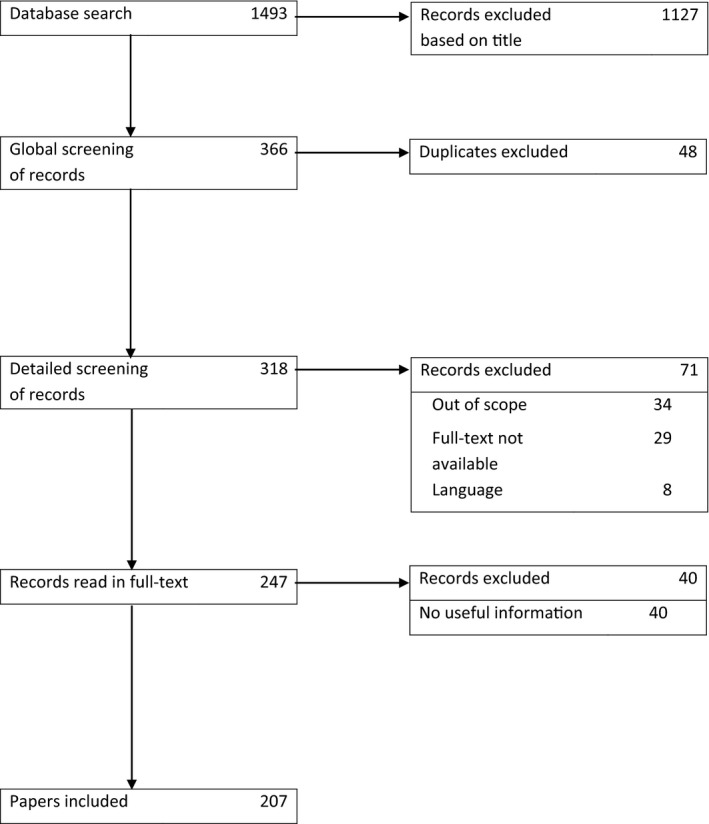
Of 1493 identified articles, 207 were included in this review. The MEMS cap was used for a median of 3 months (IQR: 4; range: 1 week to 24 months) in various health conditions. Many different outcome measures were used. Most studies computed an adherence score, expressed as the percentage of days on which the correct dose of medication was taken. The threshold to mark people as adherent was most frequently, arbitrarily, set at 80% (range: 67%-95%). We found no data to support a specific threshold.
Although the commonly used definition of adherence has face validity, we found no validation studies, and not all studies used the same cut-off for adherence. Ideally, a cut-off should be defined and validated in the context of the specific drug and its pharmacokinetic and dynamic characteristics, and perhaps other contextual factors, rather than generically. In addition, there was large heterogeneity in the definition of what "correct intake" of medication is.
Outcome measures for MEMS data lacked standardization, and no demonstrable effort to validate any definition against a relevant clinical outcome is available. Consensus on the definition of adherence is urgently needed.
目前,带有电子瓶盖的药瓶常用于衡量药物依从性。该系统被称为药物事件监测系统(MEMS)。据我们所知,总结MEMS数据的最佳方法尚未确定。
探寻量化MEMS依从性数据的最佳实践方法。
检索PubMed、Embase和Cochrane数据库,查找有关使用MEMS进行药物依从性研究的文章。
在检索到的1493篇文章中,本综述纳入了207篇。在各种健康状况下,MEMS瓶盖的使用时长中位数为3个月(四分位间距:4;范围:1周-24个月)。研究使用了许多不同的结局指标。大多数研究计算了一个依从性得分,以正确服药天数的百分比表示。将人群标记为依从的阈值最常被任意设定为80%(范围:67%-95%)。我们未找到支持特定阈值的数据。
尽管常用的依从性定义具有表面效度,但我们未找到验证研究,而且并非所有研究都使用相同的依从性截断值。理想情况下,截断值应根据特定药物及其药代动力学和动态特征,或许还应结合其他背景因素来定义和验证,而不是一概而论。此外,对于什么是药物的“正确服用”,其定义存在很大的异质性。
MEMS数据的结局指标缺乏标准化,且没有针对相关临床结局对任何定义进行验证的切实努力。迫切需要就依从性的定义达成共识。