Treger Taryn D, Chagtai Tasnim, Butcher Robert, Cresswell George D, Al-Saadi Reem, Brok Jesper, Williams Richard D, Roberts Chrissy, Luscombe Nicholas M, Pritchard Jones Kathy, Mifsud William
UCL Great Ormond Street Institute of Child Health, London, UK; Francis Crick Institute, London, UK.
UCL Great Ormond Street Institute of Child Health, London, UK.
Transl Oncol. 2018 Dec;11(6):1301-1306. doi: 10.1016/j.tranon.2018.08.006. Epub 2018 Aug 29.
Diffuse anaplastic Wilms tumor (DAWT) is a rare, high-risk subtype that is often missed on diagnostic needle biopsy. Somatic mutations in TP53 are associated with the development of anaplasia and with poorer survival, particularly in advanced-stage disease. Early identification of DAWT harboring TP53 abnormalities could improve risk stratification of initial therapy and monitoring for recurrence.
Droplet digital polymerase chain reaction (ddPCR) was used to evaluate 21 samples from 4 patients with DAWT. For each patient, we assessed TP53 status in frozen tumor, matched germline DNA, and circulating tumor DNA (ctDNA) from plasma, serum, and urine collected throughout treatment.
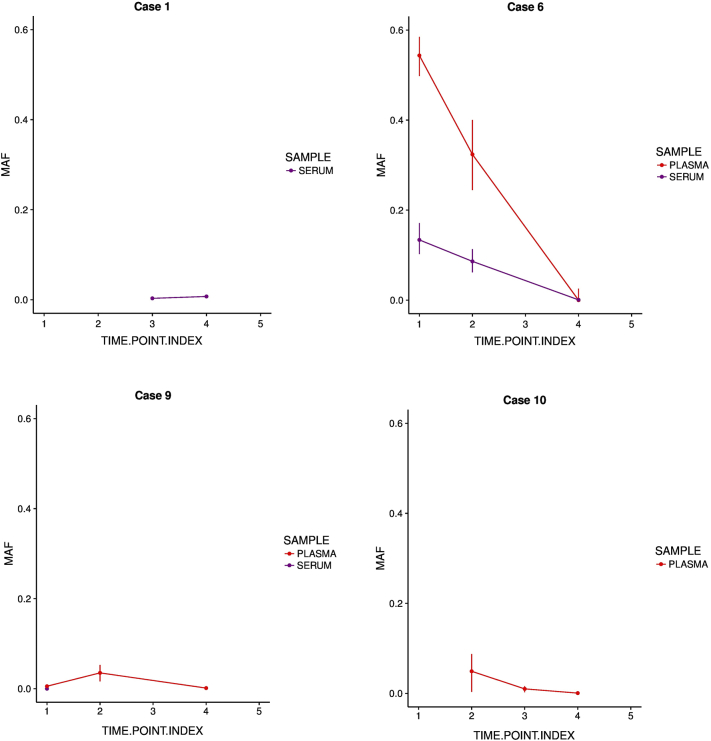
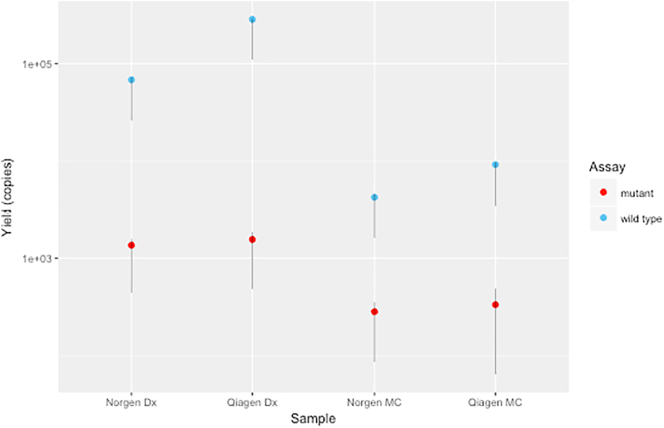
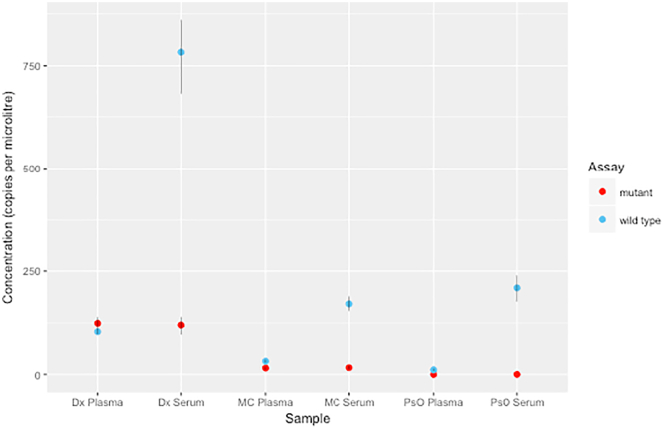
Mutant TP53 was detectable in ctDNA from plasma and serum in all patients. We did not detect variant TP53 in the same volume (200 μl) of urine. One patient displayed heterogeneity of TP53 in the tumor despite both histological sections displaying anaplasia. Concentration of ctDNA from plasma/serum taken prenephrectomy varied significantly between patients, ranging from 0.44 (0.05-0.90) to 125.25 (109.75-140.25) copies/μl. We observed variation in ctDNA throughout treatment, and in all but one patient, ctDNA levels fell significantly following nephrectomy.
We demonstrate for the first time that ddPCR is an effective method for detection of mutant TP53 in ctDNA from children with DAWT even when there is intratumoral somatic heterogeneity. This should be further explored in a larger cohort of patients, as early detection of circulating variant TP53 may have significant clinical impact on future risk stratification and surveillance.
弥漫性间变性肾母细胞瘤(DAWT)是一种罕见的高危亚型,在诊断性穿刺活检时常常被漏诊。TP53基因的体细胞突变与间变的发生以及较差的生存率相关,尤其是在晚期疾病中。早期识别携带TP53异常的DAWT可改善初始治疗的风险分层和复发监测。
采用液滴数字聚合酶链反应(ddPCR)对4例DAWT患者的21份样本进行评估。对于每位患者,我们评估了冷冻肿瘤、匹配的种系DNA以及整个治疗过程中收集的血浆、血清和尿液中的循环肿瘤DNA(ctDNA)中的TP53状态。
所有患者的血浆和血清ctDNA中均可检测到突变型TP53。在相同体积(200μl)的尿液中未检测到变异型TP53。尽管两个组织学切片均显示间变,但有一名患者的肿瘤中TP53存在异质性。肾切除术前采集的血浆/血清ctDNA浓度在患者之间差异显著,范围为0.44(0.05 - 0.90)至125.25(109.75 - 140.25)拷贝/μl。我们观察到整个治疗过程中ctDNA存在变化,除一名患者外,所有患者肾切除术后ctDNA水平均显著下降。
我们首次证明,即使存在肿瘤内体细胞异质性,ddPCR也是检测DAWT患儿ctDNA中突变型TP53的有效方法。这应在更大的患者队列中进一步探索,因为循环变异型TP53的早期检测可能对未来的风险分层和监测产生重大临床影响。