Watanabe Hiroyuki, Fujii Meguru, Yoshimoto Masumi, Abe Hiroshi, Toda Naruaki, Higashiyama Reiji, Takahira Naonobu
Department of Rehabilitation, School of Allied Health Sciences, Kitasato University, Sagamihara, Japan.
Nishifuna Clinic, Funabashi Orthopedic Hospital, Funabashi, Japan.
Orthop J Sports Med. 2018 Aug 28;6(8):2325967118792192. doi: 10.1177/2325967118792192. eCollection 2018 Aug.
A previous cross-sectional study reported that pathogenic factors associated with Osgood-Schlatter disease (OSD) in adolescent athletes include increased quadriceps muscle tightness, lower leg malalignment, and development of apophysitis in the tibial tuberosity.
To confirm these pathogenic factors associated with OSD in a longitudinal study with regard to physical function and performance.
Cohort study; Level of evidence, 2.
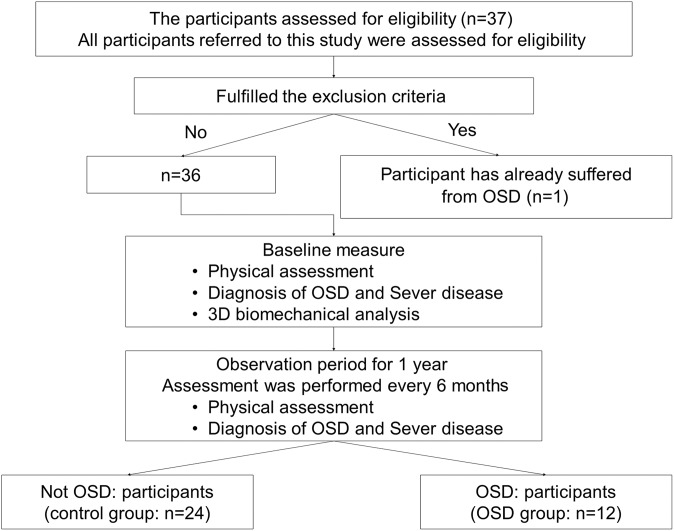
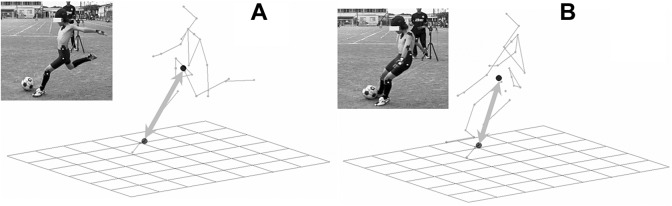
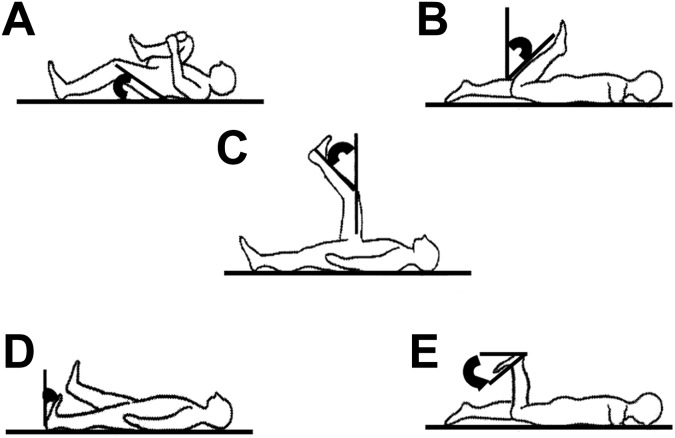
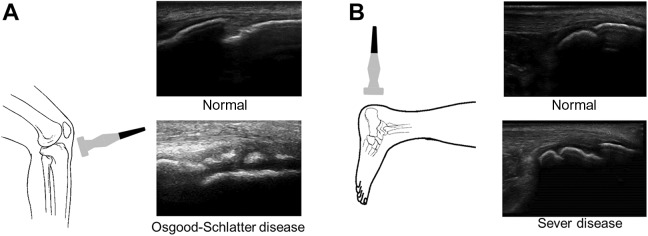
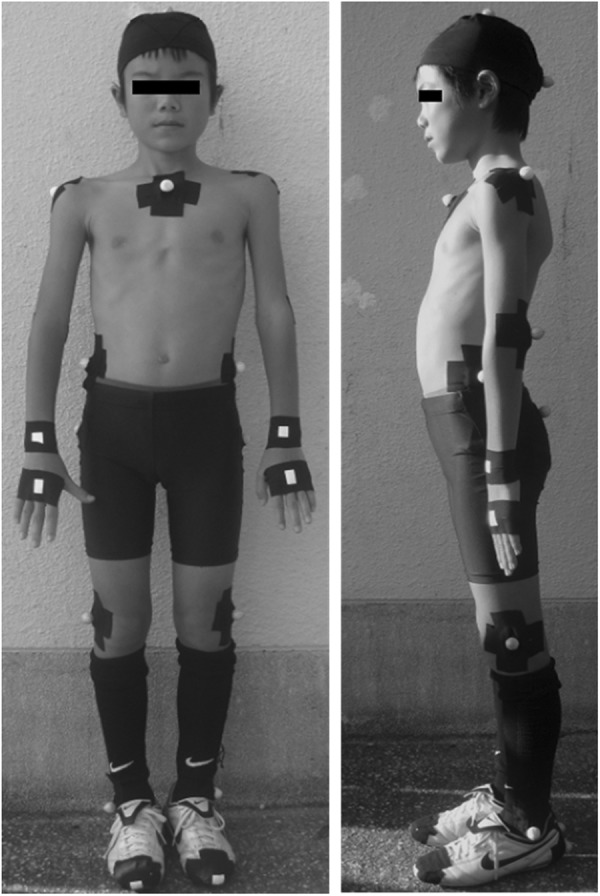
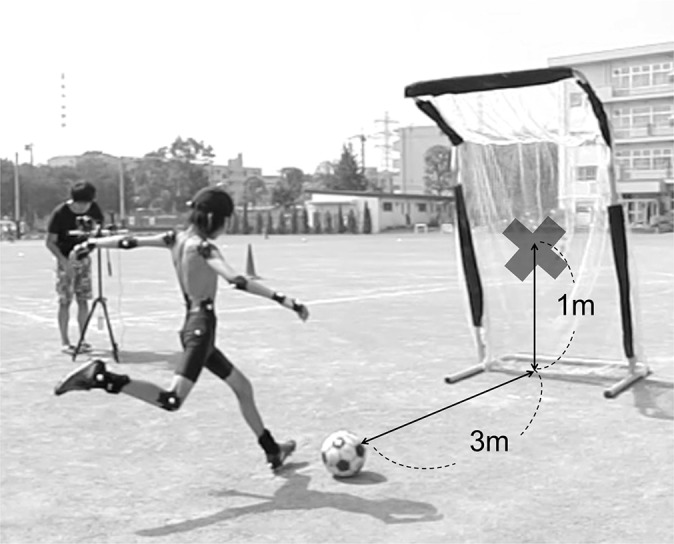
In this study, 37 boys (mean age, 10.2 ± 0.4 years) were recruited from 2 soccer teams at an elementary school. This cohort study was conducted over an observation period of 1 year, with measurements recorded at baseline, followed by screening for OSD every 6 months. Variables evaluated at baseline included physical function (morphometry, joint flexibility, and lower extremity alignment), presence of Sever disease, and kicking motion.
Pathogenic factors associated with OSD in the support leg of adolescent male soccer players included height, weight, body mass index, quadriceps femoris muscle tightness in the kicking and support legs, and gastrocnemius muscle tightness, soleus muscle tightness, and medial longitudinal arch in the support leg. Additional factors included a diagnosis of Sever disease and distance from the lateral malleolus of the support leg's fibula to the center of gravity during kicking.
The onset of OSD was found to be affected by many factors, including developmental stage, physical attributes, and pre-existing apophysitis. In particular, a diagnosis of Sever disease and backward shifting of the center of gravity during kicking increased the risk of the subsequent onset of OSD, suggesting that these factors are very important as a possible focus for interventions.
之前的一项横断面研究报告称,青少年运动员中与胫骨结节骨软骨炎(OSD)相关的致病因素包括股四头肌紧张度增加、小腿排列不齐以及胫骨结节处骨突炎的发展。
在一项关于身体功能和表现的纵向研究中确认这些与OSD相关的致病因素。
队列研究;证据等级,2级。
在本研究中,从一所小学的2支足球队招募了37名男孩(平均年龄10.2±0.4岁)。这项队列研究进行了1年的观察期,在基线时记录测量数据,随后每6个月筛查一次OSD。在基线时评估的变量包括身体功能(形态测量、关节灵活性和下肢排列)、Sever病的存在情况以及踢球动作。
青少年男性足球运动员支撑腿中与OSD相关的致病因素包括身高、体重、体重指数、踢球腿和支撑腿的股四头肌紧张度,以及支撑腿的腓肠肌紧张度、比目鱼肌紧张度和内侧纵弓。其他因素包括Sever病的诊断以及踢球时支撑腿腓骨外侧踝到重心的距离。
发现OSD的发病受多种因素影响,包括发育阶段、身体属性和既往存在的骨突炎。特别是,Sever病的诊断和踢球时重心后移增加了随后发生OSD的风险,表明这些因素作为可能的干预重点非常重要。