Cancer Research UK Edinburgh Centre, MRC Institute of Genetics and Molecular Medicine, University of Edinburgh, UK.
Centre for Neurogeneration, The Chancellor's Building, University of Edinburgh, UK.
Chemistry. 2018 Nov 13;24(63):16783-16790. doi: 10.1002/chem.201803725. Epub 2018 Nov 8.
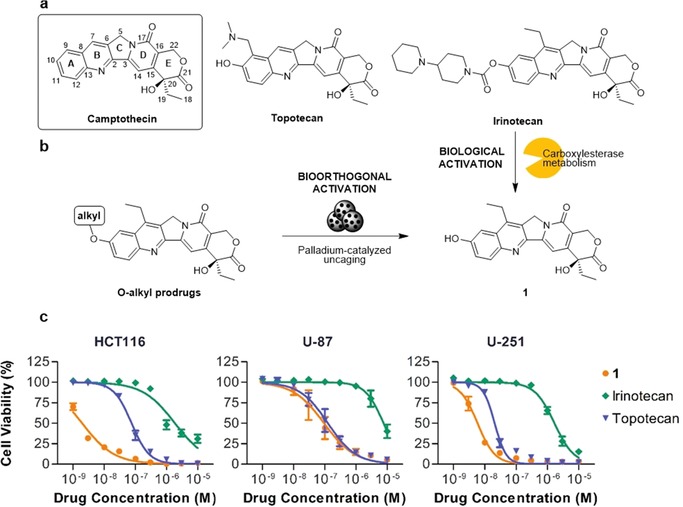
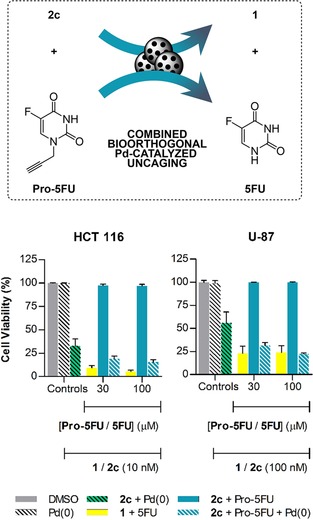
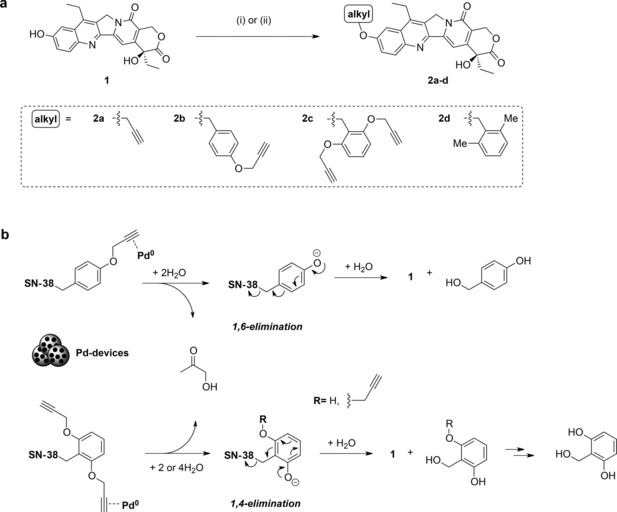
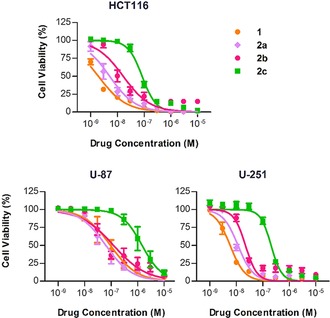
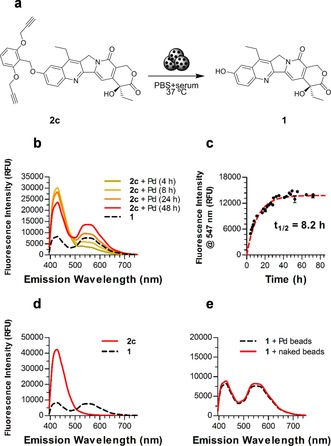
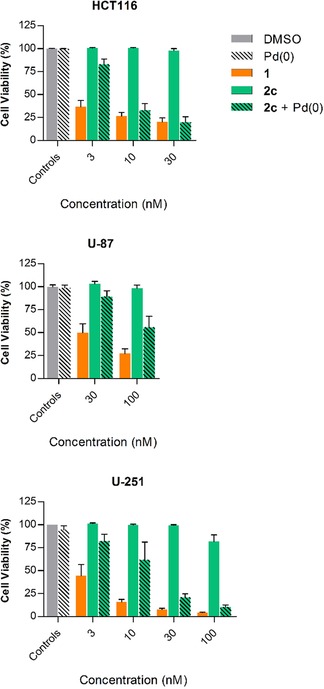
SN-38, the active metabolite of irinotecan, is released upon liver hydrolysis to mediate potent antitumor activity. Systemic exposure to SN-38, however, also leads to serious side effects. To reduce systemic toxicity by controlling where and when SN-38 is generated, a new prodrug was specifically designed to be metabolically stable and undergo rapid palladium-mediated activation. Blocking the phenolic OH of SN-38 with a 2,6-bis(propargyloxy)benzyl group led to significant reduction of cytotoxic activity (up to 44-fold). Anticancer properties were swiftly restored in the presence of heterogeneous palladium (Pd) catalysts to kill colorectal cancer and glioma cells, proving the efficacy of this novel masking strategy for aromatic hydroxyls. Combination with a Pd-activated 5FU prodrug augmented the antiproliferative potency of the treatment, while displaying no activity in the absence of the Pd source, which illustrates the benefit of achieving controlled release of multiple approved therapeutics-sequentially or simultaneously-by the same bioorthogonal catalyst to increase anticancer activity.
SN-38 是伊立替康的活性代谢物,在肝脏水解时释放出来,从而发挥强大的抗肿瘤活性。然而,SN-38 的全身暴露也会导致严重的副作用。为了通过控制 SN-38 的生成位置和时间来降低全身毒性,专门设计了一种新的前药,使其具有代谢稳定性,并迅速进行钯介导的激活。用 2,6-双(炔丙氧基)苄基封闭 SN-38 的酚羟基,导致细胞毒性活性显著降低(高达 44 倍)。在非均相钯(Pd)催化剂的存在下,抗癌特性迅速恢复,从而杀死结直肠癌细胞和神经胶质瘤细胞,证明了这种新型掩蔽策略对芳香羟基的有效性。与 Pd 激活的 5FU 前药联合使用增强了治疗的抗增殖效力,而在没有 Pd 源的情况下没有活性,这说明了通过相同的生物正交催化剂顺序或同时控制释放多种已批准的治疗药物以提高抗癌活性的益处。