Calcagnile Paola, Cacciatore Gabriele, Demitri Christian, Montagna Francesco, Esposito Corcione Carola
Dipartimento di Ingegneria dell'Innovazione, Università del Salento, via Monteroni, Km 1, 73100 Lecce, Italy.
Materials (Basel). 2018 Sep 1;11(9):1578. doi: 10.3390/ma11091578.
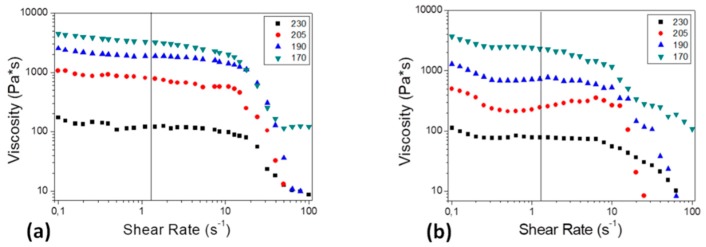
Additive manufacturing (AM) techniques allow the construction of complex physical models reproducing the content of a specific CAD file, and, among them, Fused Deposition Molding (FDM) stands out for its many advantages. The aim of the present work is to perform a feasibility study of 3D printing of a model of human heart to be used to simulate surgical operations or for training through a two-step method based on extrusion and FDM processes. To this purpose, typical extrusion instrumentation and a simple and low-cost FDM printer are employed, in combination with a thermoplastic polydimethylsiloxane (PDMS), chosen for its transparency, flexibility, and high resistance to multiple agents and aging. To improve its tactile properties and mimic the slimy effect of living organs, sodium carboxymethylcellulose (Na⁻CMC) fibrils are added to it. The starting materials, the neat PDMS filament and the composite one, are deeply characterized in terms of structural, thermal, and rheological properties in order to fix the most suitable extrusion and FDM parameters. The composite filaments show larger diameter and roughness, which cause undesirable effects during 3D printing, such as episodic nozzle obstruction, and exhibit a faster degradation, making the FDM step difficult. Nevertheless, the major issues are related to the low crystallinity degree of the employed polymer. The feasibility study carried out leads to the printing of composite layers, even though far from the desired final target. Possible solutions to print the fully characterized Na⁻CMC/PDMS composite are addressed in the conclusion of this work.
增材制造(AM)技术能够构建复杂的物理模型,再现特定CAD文件的内容,其中,熔融沉积成型(FDM)因其诸多优点而脱颖而出。本工作的目的是通过基于挤出和FDM工艺的两步法,对用于模拟外科手术或培训的人体心脏模型进行3D打印的可行性研究。为此,采用了典型的挤出设备和一台简单且低成本的FDM打印机,并结合了热塑性聚二甲基硅氧烷(PDMS),该材料因其透明度、柔韧性以及对多种介质和老化的高耐受性而被选用。为改善其触觉特性并模拟活体器官的黏滑效果,向其中添加了羧甲基纤维素钠(Na⁻CMC)原纤维。对起始材料,即纯PDMS细丝和复合细丝,在结构、热学和流变学性质方面进行了深入表征,以确定最合适的挤出和FDM参数。复合细丝具有更大的直径和粗糙度,这在3D打印过程中会导致不良影响,如间歇性喷嘴堵塞,并且降解速度更快,使得FDM步骤变得困难。然而,主要问题与所用聚合物的低结晶度有关。尽管远未达到预期的最终目标,但所进行的可行性研究还是实现了复合层的打印。本工作的结论部分探讨了打印完全表征的Na⁻CMC/PDMS复合材料的可能解决方案。