Jensen Charlotte Myhre, Overgaard Soren, Wiil Uffe Kock, Smith Anthony C, Clemensen Jane
Department of Clinical Research, University of Southern Denmark, Odense, Denmark.
Department of Orthopaedic Surgery and Traumatology, Odense University Hospital, Odense, Denmark.
SAGE Open Med. 2018 Sep 7;6:2050312118799121. doi: 10.1177/2050312118799121. eCollection 2018.
In future healthcare systems, individuals are expected to be more involved in managing their health and preventing illness. A previous study of patient empowerment on a hip fracture pathway uncovered a gap between what the healthcare system provided and patients' needs and wishes. The aim of this study was to investigate whether a user-driven approach and a participatory design could provide a solution that would bridge this gap.
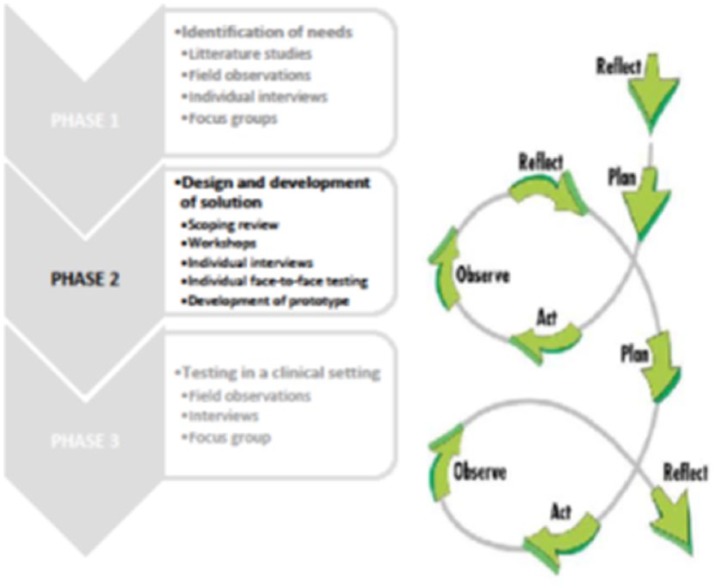
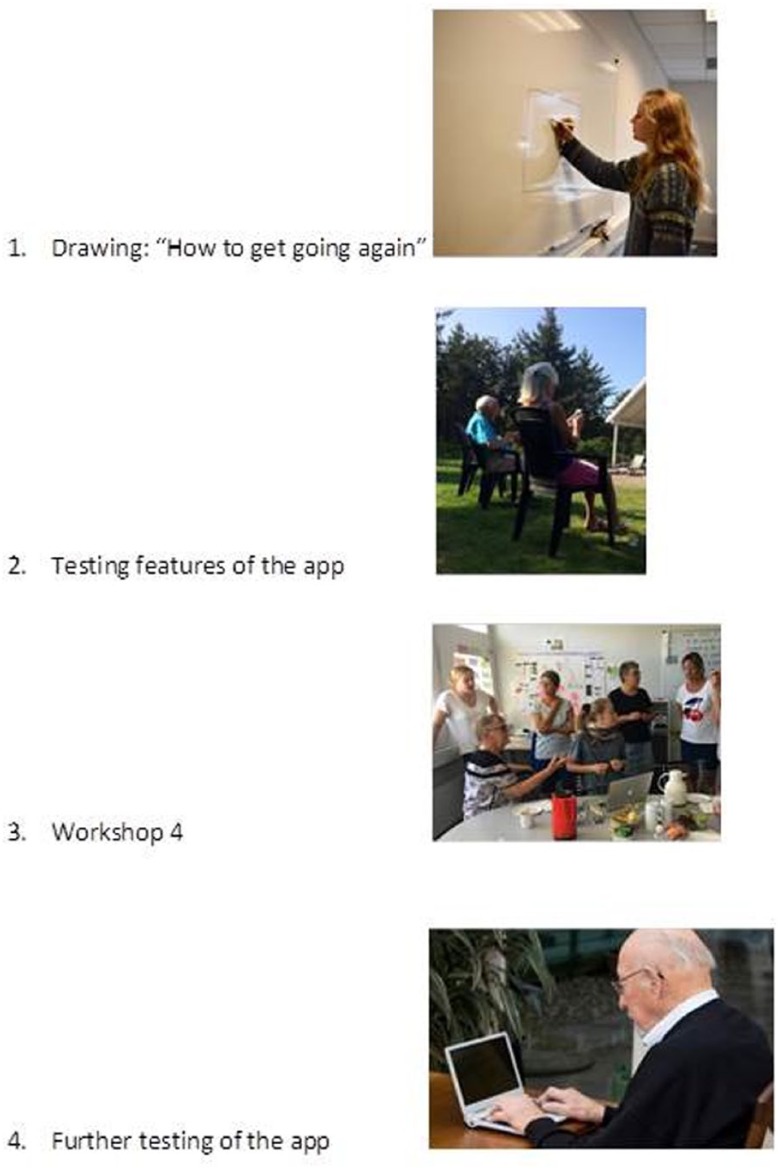
Four workshops and a laboratory test were conducted with healthcare professionals to co-create a final prototype. This was performed in iterative processes through continuous interviews and face-to-face evaluation with patients, together with field studies in patients' homes, to maintain relevance to end-users, that is, patients and healthcare professionals. The data were analysed according to the plan, act, observe and reflect methodology of iterative processes in participatory design.
Our results contribute to a key research area within patient involvement. By using participatory design, patients and healthcare professionals gained a mutual understanding and collaborated to create a technological solution that would encompass needs and wishes. Patient empowerment also involved giving healthcare professionals a means of empowerment, by providing them with a platform to support patient education. We found that one solution to bridging the aforementioned gap could be an app, including a range of educational features that would accommodate different learning styles.
In developing a technological solution, user involvement in a participatory design ensures usability and inclusion of the requested functionalities. This can help bridge the gap between what the healthcare system provided and patients' needs and wishes and support patients' individual empowerment needs and self-care capacity. Together with the tools and techniques, the setting in which PD unfolds should be thoughtfully planned.
在未来的医疗保健系统中,个人有望更多地参与自身健康管理和疾病预防。先前一项关于髋部骨折治疗途径中患者赋权的研究发现,医疗保健系统所提供的服务与患者的需求及愿望之间存在差距。本研究的目的是调查以用户为导向的方法和参与式设计能否提供一种弥合这一差距的解决方案。
与医疗保健专业人员举办了四次研讨会并进行了一次实验室测试,以共同创建最终原型。这是通过与患者进行持续访谈和面对面评估,并结合在患者家中进行的实地研究,以迭代的方式进行的,从而确保与最终用户(即患者和医疗保健专业人员)的相关性。根据参与式设计中迭代过程的计划、行动、观察和反思方法对数据进行了分析。
我们的研究结果为患者参与这一关键研究领域做出了贡献。通过使用参与式设计,患者和医疗保健专业人员达成了相互理解,并合作创建了一个涵盖需求和愿望的技术解决方案。患者赋权还包括为医疗保健专业人员提供一种赋权手段,即通过为他们提供一个支持患者教育的平台。我们发现,弥合上述差距的一个解决方案可能是一款应用程序,它包含一系列能够适应不同学习风格的教育功能。
在开发技术解决方案时,用户参与参与式设计可确保其可用性并纳入所需功能。这有助于弥合医疗保健系统所提供的服务与患者的需求及愿望之间的差距,并支持患者的个人赋权需求和自我护理能力。与工具和技术一样,开展参与式设计的环境也应精心规划。