Guangxi Collaborative Innovation Center for Biomedicine, Guangxi Medical University, Nanning, Guangxi 530021, P.R. China.
Center for Genomic and Personalized Medicine, Guangxi Medical University, Nanning, Guangxi 530021, P.R. China.
Int J Oncol. 2018 Dec;53(6):2473-2487. doi: 10.3892/ijo.2018.4563. Epub 2018 Sep 17.
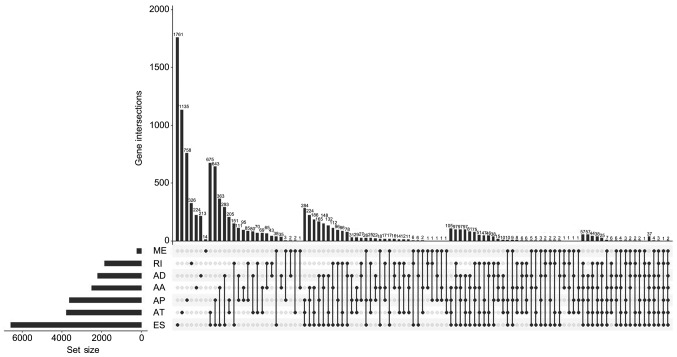
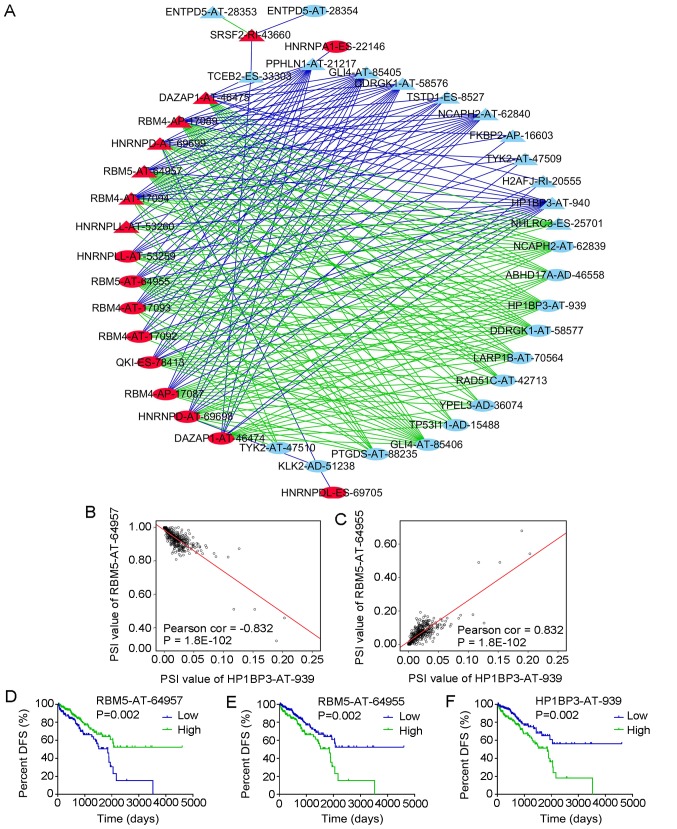
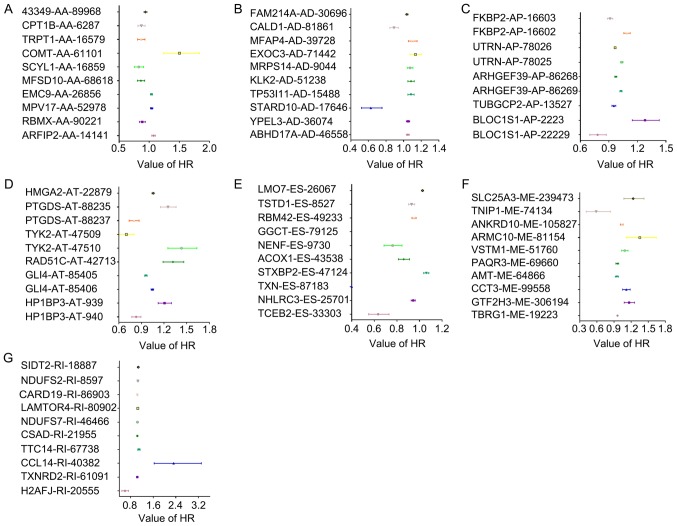
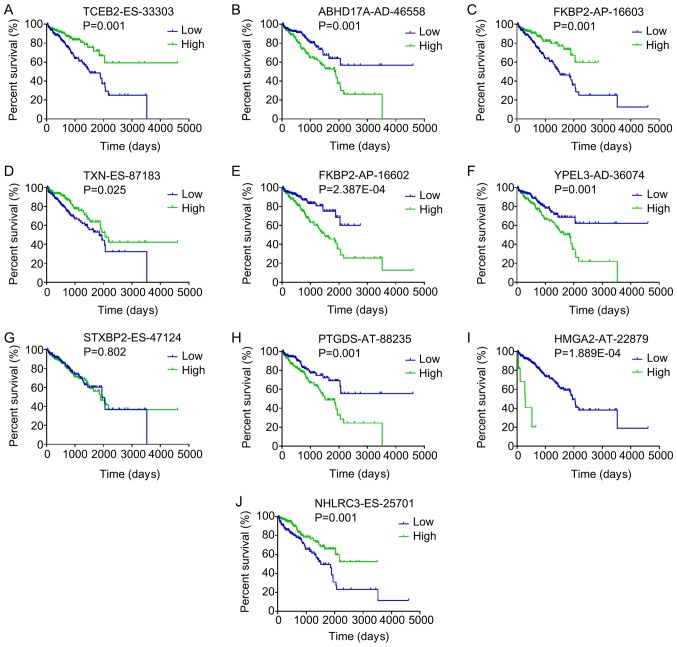
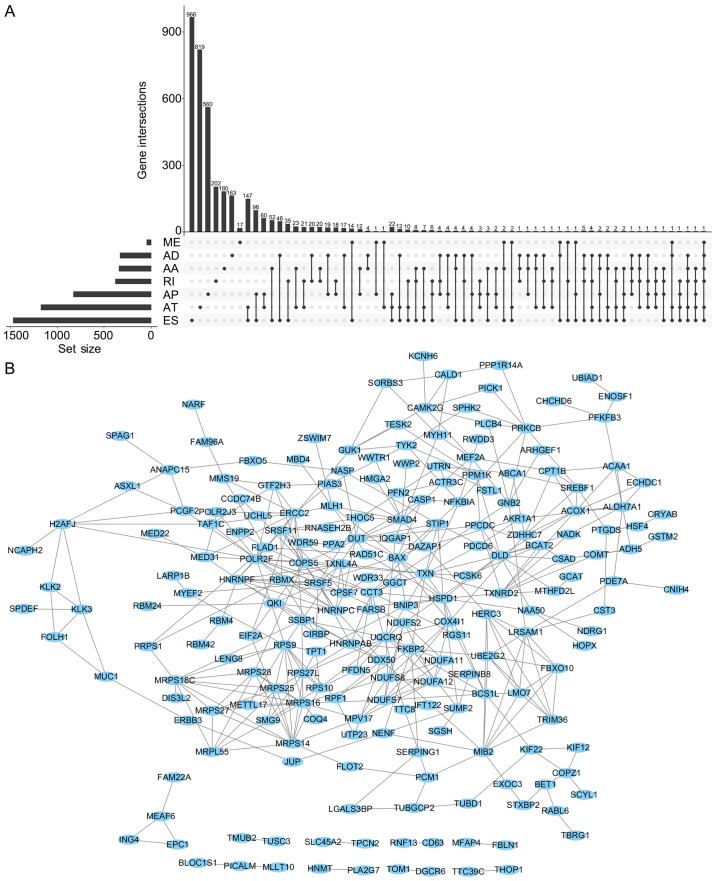
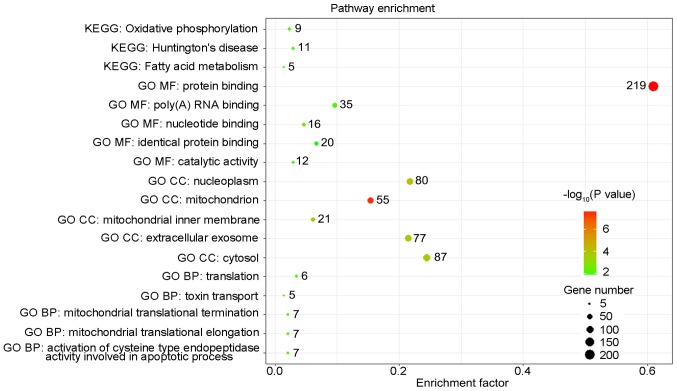
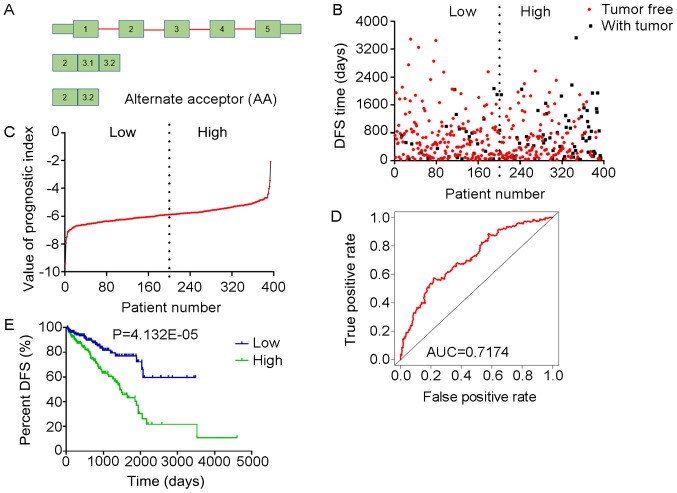
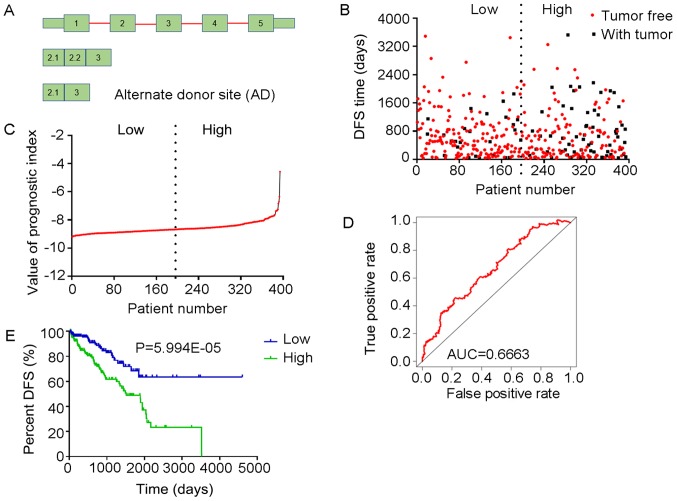
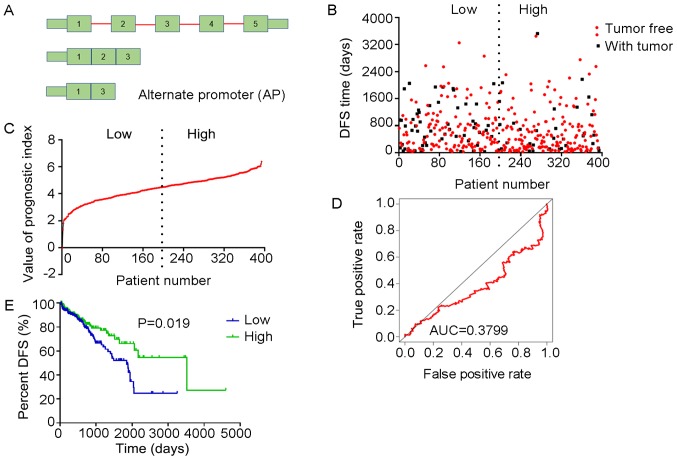
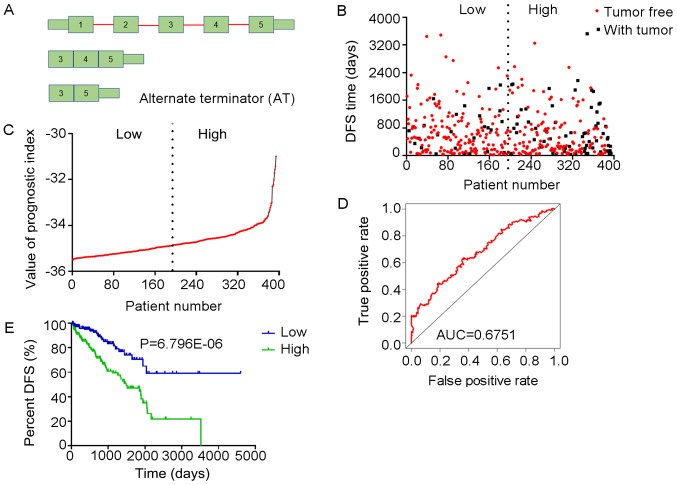
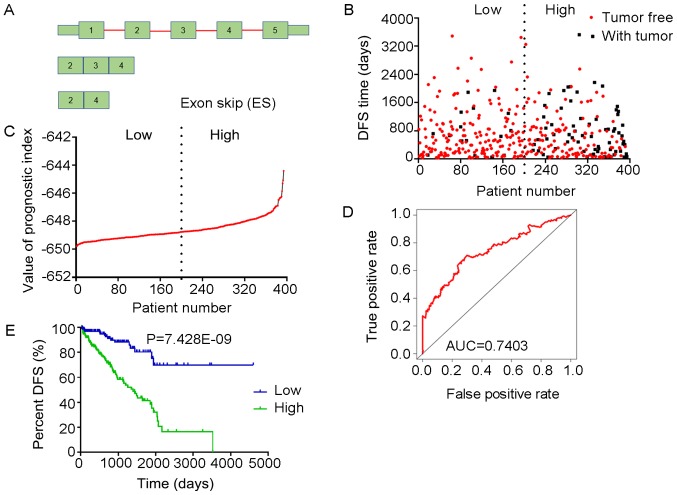
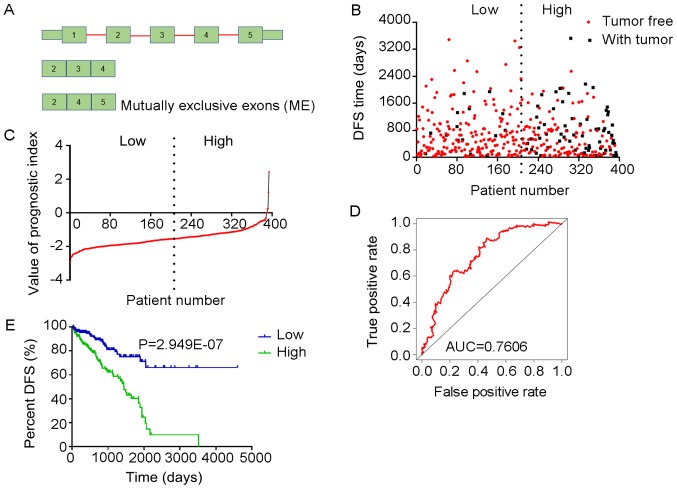
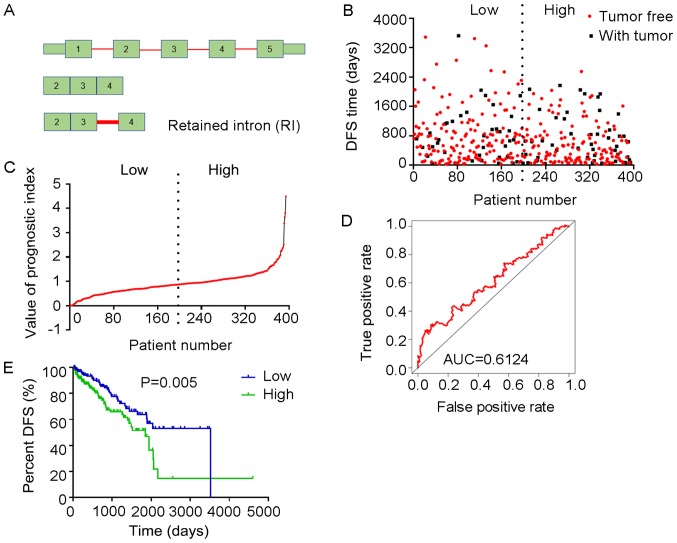
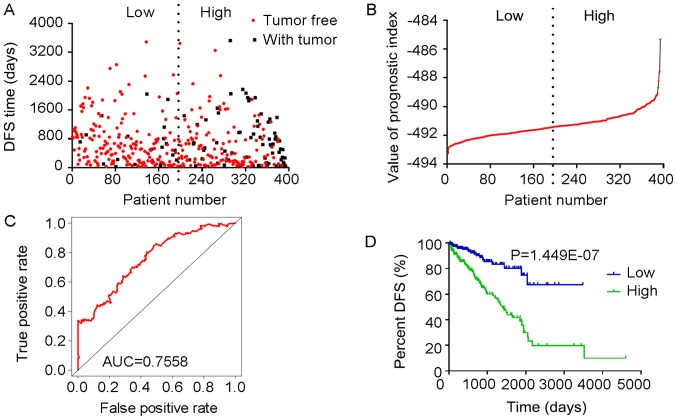
Prostate adenocarcinoma (PRAD) is one of the most common types of malignancy in males and at present, effective prognostic indicators are limited. The development of PRAD has been associated with abnormalities in alternative splicing (AS), a requisite biological process of gene expression in eukaryotic cells; however, the prognostic value of AS products and splicing events remains to be elucidated. In the present study, the data of splicing events and the clinical information of PRAD patients were obtained from The Cancer Genome Atlas (TCGA)SpliceSeq and TCGA databases, respectively. A prognostic index (PI) was generated from disease-free survival-associated splicing events (DFS-SEs), which were identified by univariate/multivariate Cox regression analysis. A total of 6,909 DFS-SEs were identified in PRAD. The corresponding genes for the DFS-SEs were significantly enriched in mitochondria and their associated pathways according to Gene Ontology annotation and in the pathways of fatty acid metabolism, oxidative phosphorylation and Huntington's disease according to a Kyoto Encyclopedia of Genes and Genomes pathway analysis. The PI for mutually exclusive exons had the greatest ability to predict the probability of five-year disease-free survival of patients with PRAD, with an area under the time-dependent receiver-operating characteristic curve of 0.7606. Patients with PRAD, when divided into a 'low' and a 'high' group based on their median PI for exon skip values, exhibited a marked difference in disease-free survival (low vs. high, 3,588.45±250.51 vs. 1,531.08±136.50 days; P=7.43x10⁻⁹). A correlation network between DFS-SEs of splicing factors and non-splicing factors was constructed to determine the potential mechanisms in PRAD, which included the potential regulatory interaction between the splicing event of splicing factor RNA binding motif protein 5-alternate terminator (AT)-64957 and the splicing event of non-splicing factor heterochromatin protein 1 binding protein 3-AT-939. In conclusion, the PIs derived from DFS-SEs are valuable prognostic factors for patients with PRAD, and the function of splicing events in PRAD deserves further exploration.
前列腺腺癌(PRAD)是男性最常见的恶性肿瘤之一,目前有效的预后指标有限。PRAD 的发生与选择性剪接(AS)异常有关,AS 是真核细胞中基因表达的必要生物学过程;然而,AS 产物和剪接事件的预后价值仍有待阐明。在本研究中,从癌症基因组图谱(TCGA)SpliceSeq 和 TCGA 数据库中分别获得了剪接事件的数据和 PRAD 患者的临床信息。通过单变量/多变量 Cox 回归分析,从无病生存相关剪接事件(DFS-SEs)中生成了预后指数(PI)。在 PRAD 中鉴定了 6909 个 DFS-SEs。根据基因本体论注释,DFS-SEs 对应的基因显著富集在线粒体及其相关途径,以及脂肪酸代谢、氧化磷酸化和亨廷顿病的京都基因和基因组百科全书途径分析。互斥外显子的 PI 具有预测 PRAD 患者五年无病生存率的最大能力,时间依赖性接收器操作特征曲线下面积为 0.7606。根据外显子跳过值的中位数 PI,将 PRAD 患者分为“低”和“高”两组,两组患者的无病生存率差异显著(低 vs. 高,3588.45±250.51 天 vs. 1531.08±136.50 天;P=7.43x10⁻⁹)。构建了剪接因子和非剪接因子 DFS-SEs 之间的相关网络,以确定 PRAD 中的潜在机制,其中包括剪接因子 RNA 结合基序蛋白 5-替代终止子(AT)-64957 的剪接事件与非剪接因子异染色质蛋白 1 结合蛋白 3-AT-939 的剪接事件之间潜在的调节相互作用。总之,DFS-SEs 衍生的 PIs 是 PRAD 患者有价值的预后因素,PRAD 中的剪接事件功能值得进一步探索。