Han Xingting, Sawada Tomofumi, Schille Christine, Schweizer Ernst, Scheideler Lutz, Geis-Gerstorfer Jürgen, Rupp Frank, Spintzyk Sebastian
Section Medical Materials Science and Technology, University Hospital Tübingen, Osianderstr. 2-8, Tübingen 72076, Germany.
Department of Biomedical Engineering, Iwate Medical University, 2-1-1 Nishitokuta, Yahaba-cho, Shiwa-gun, Iwate 028-3694, Japan.
Materials (Basel). 2018 Sep 22;11(10):1801. doi: 10.3390/ma11101801.
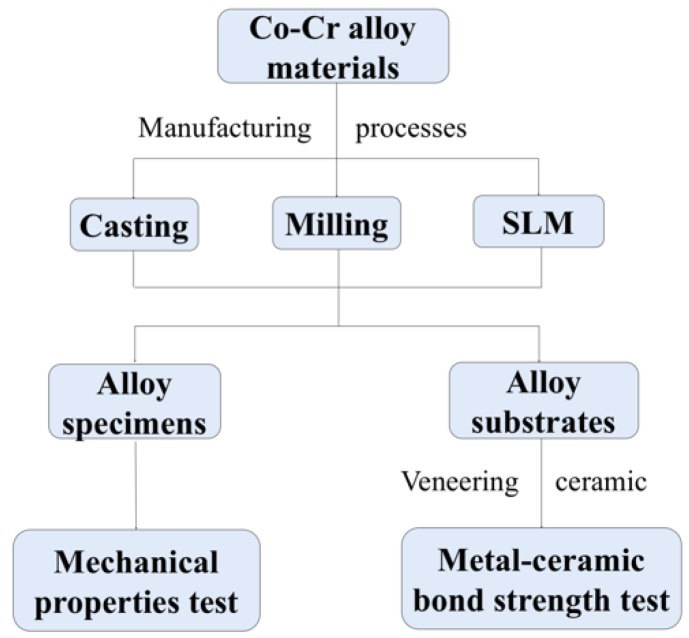
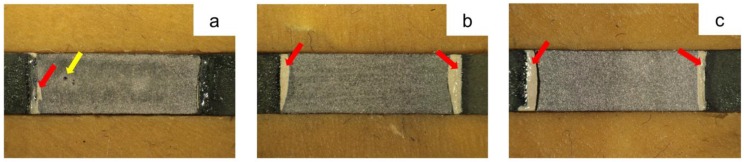
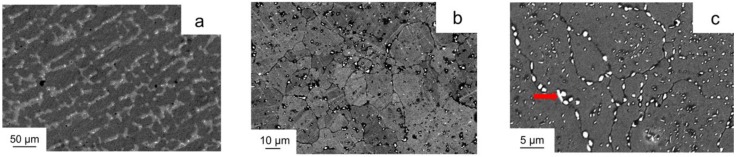
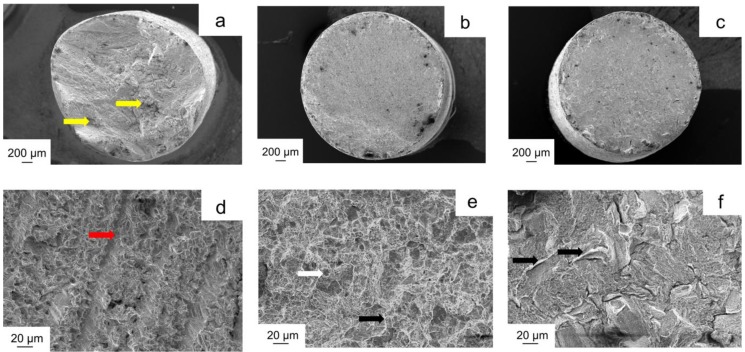
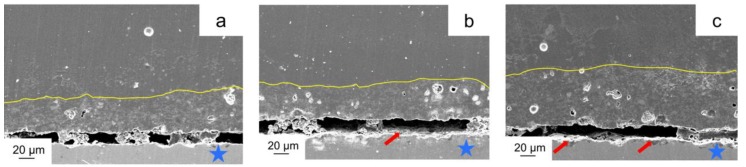
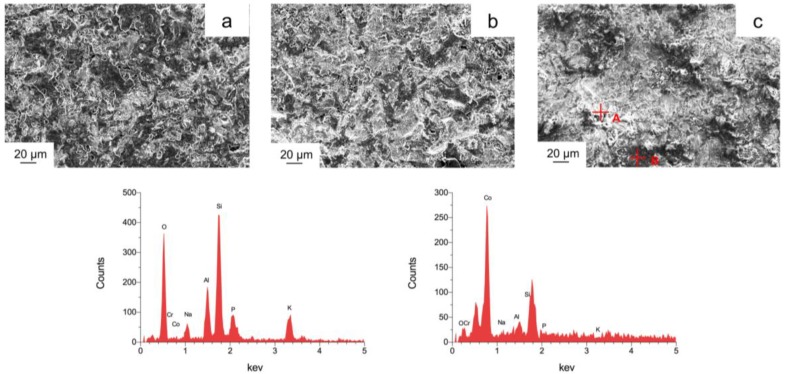
Cobalt-chromium (Co-Cr) alloy is a widely used base material for dental fixed prostheses. These restorations can be produced through casting technique, subtractive or additive manufacturing technologies. However, limited information is available regarding the influence of manufacturing techniques on the properties of Co-Cr alloy since most studies used different chemical compositions of Co-Cr alloy for different manufacturing methods. This study compares the mechanical properties, metal-ceramic bond strength, and microstructures of specimens produced by casting, milling, and selective laser melting (SLM) from one single Co-Cr alloy composition. The mechanical properties of the alloy were investigated by tensile and Vickers hardness tests, and metal-ceramic bond strength was determined by three-point bending. Scanning electron microscopy (SEM) with backscattered electron (BSE) images and optical microphotographs were used to analyze the surface microstructures. Compared with the casting and milling techniques, SLM Co-Cr alloy specimens indicated enhanced mechanical properties and comparable metal-ceramic bond strength. Besides, the microstructures of the SLM specimens showed finer grains with more second phase particles than the casting and milling specimens. The results of our study indicate that SLM might be superior to traditional techniques for the manufacturing of fixed dental restorations.
钴铬(Co-Cr)合金是牙科固定修复体广泛使用的基础材料。这些修复体可以通过铸造技术、减材或增材制造技术生产。然而,由于大多数研究针对不同制造方法使用了不同化学成分的Co-Cr合金,因此关于制造技术对Co-Cr合金性能影响的信息有限。本研究比较了由单一Co-Cr合金成分通过铸造、铣削和选择性激光熔化(SLM)制备的试样的力学性能、金属-陶瓷结合强度和微观结构。通过拉伸试验和维氏硬度测试研究合金的力学性能,并通过三点弯曲测定金属-陶瓷结合强度。使用带有背散射电子(BSE)图像的扫描电子显微镜(SEM)和光学显微照片分析表面微观结构。与铸造和铣削技术相比,SLM Co-Cr合金试样显示出增强的力学性能和相当的金属-陶瓷结合强度。此外,SLM试样的微观结构显示出比铸造和铣削试样更细的晶粒和更多的第二相颗粒。我们的研究结果表明,SLM在制造固定牙科修复体方面可能优于传统技术。