Imae Y, Oosawa K, Mizuno T, Kihara M, Macnab R M
J Bacteriol. 1987 Jan;169(1):371-9. doi: 10.1128/jb.169.1.371-379.1987.
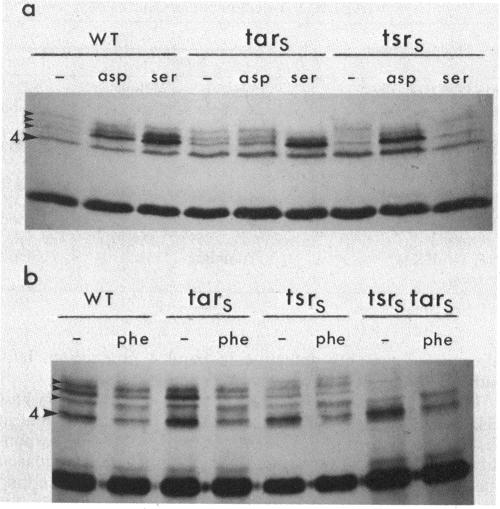
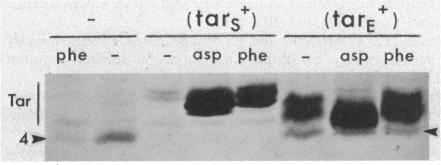
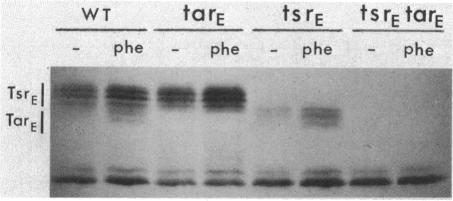
Earlier observations that phenol is a repellent for Salmonella typhimurium but an attractant for Escherichia coli were confirmed. This behavioral difference was found to correlate with a difference in the effect phenol had on receptor methylation levels; it caused net demethylation in S. typhimurium but net methylation in E. coli. On the basis of mutant behavior and measurement of phenol-stimulated methylation, the attractant response of E. coli was shown to be mediated principally by the Tar receptor. In S. typhimurium, two receptors were found to be sensitive to phenol, namely, an unidentified receptor, which mediated the repellent response and showed phenol-stimulated demethylation; and the Tar receptor, which (as with E. coli) mediated the attractant response and showed phenol-stimulated methylation. In wild-type S. typhimurium, the former receptor dominated the Tar receptor, with respect to both behavior and methylation changes. However, when the amount of Tar receptor was artificially increased by the use of Tar-encoding plasmids, S. typhimurium cells exhibited an attractant response to phenol. No protein analogous to the phenol-specific repellent receptor was evident in E. coli, explaining the different behavioral responses of the two species toward phenol.
早期的观察结果得到了证实,即苯酚对鼠伤寒沙门氏菌是一种驱避剂,但对大肠杆菌是一种引诱剂。发现这种行为差异与苯酚对受体甲基化水平的影响差异相关;它导致鼠伤寒沙门氏菌的净去甲基化,但导致大肠杆菌的净甲基化。基于突变体行为和苯酚刺激的甲基化测量,大肠杆菌的引诱反应主要由Tar受体介导。在鼠伤寒沙门氏菌中,发现两种受体对苯酚敏感,即一种未鉴定的受体,它介导驱避反应并显示苯酚刺激的去甲基化;以及Tar受体,它(与大肠杆菌一样)介导引诱反应并显示苯酚刺激的甲基化。在野生型鼠伤寒沙门氏菌中,就行为和甲基化变化而言,前一种受体比Tar受体占主导地位。然而,当通过使用编码Tar的质粒人为增加Tar受体的量时,鼠伤寒沙门氏菌细胞对苯酚表现出引诱反应。在大肠杆菌中没有明显类似于苯酚特异性驱避受体的蛋白质,这解释了两种细菌对苯酚的不同行为反应。