School of Natural Sciences, Bangor University, Deiniol Road, Bangor, Gwynedd, LL57 2UW, UK.
Centre for Ecology and Hydrology, Environment Centre Wales, Deiniol Road, Bangor, LL57 2UW, UK.
Environ Sci Pollut Res Int. 2018 Nov;25(33):33391-33401. doi: 10.1007/s11356-018-3261-y. Epub 2018 Sep 27.
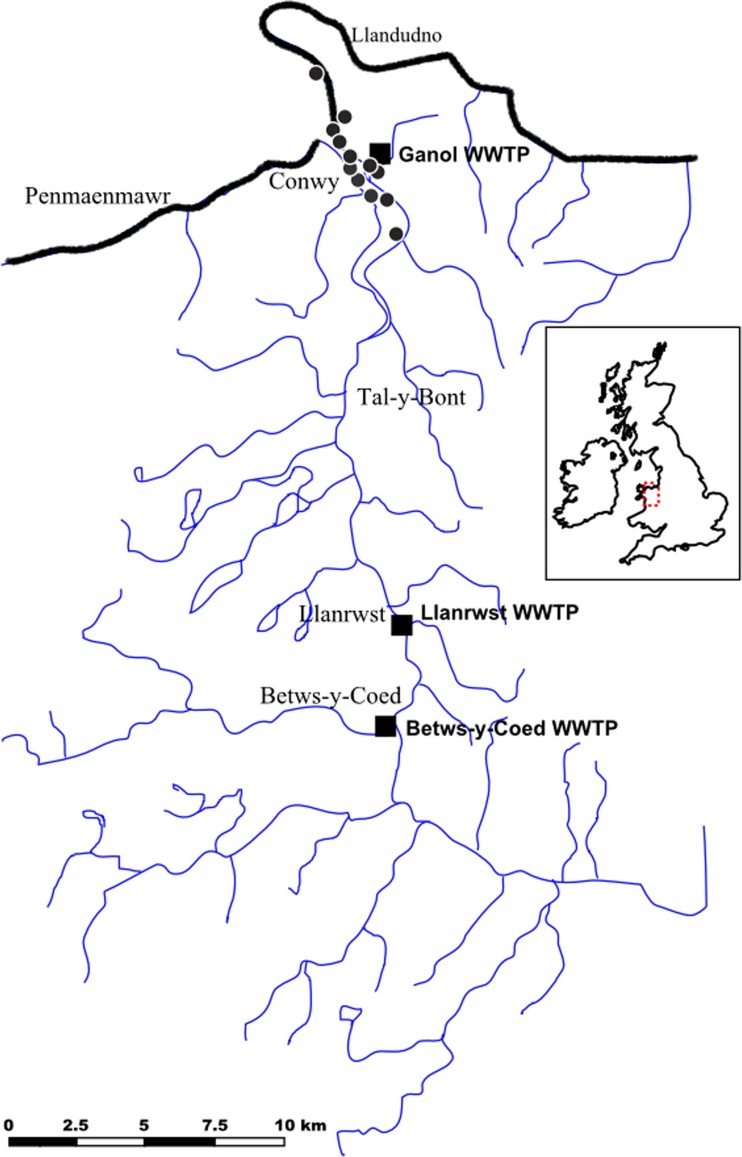
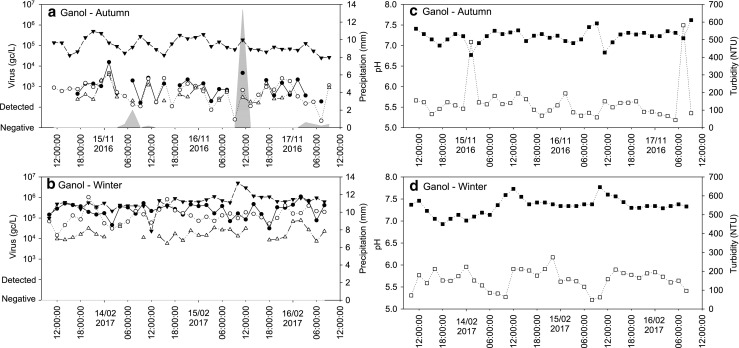
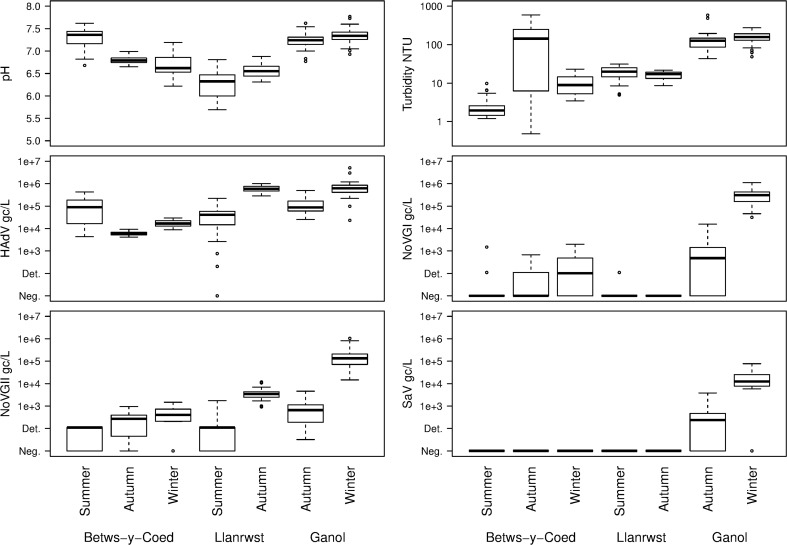
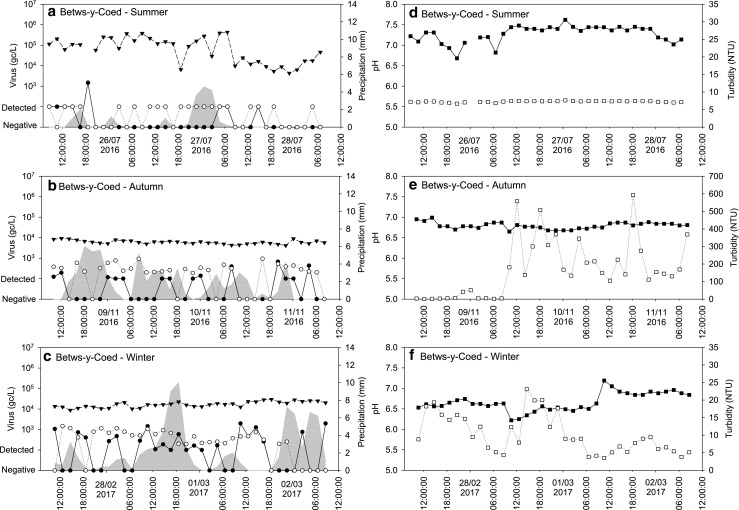
Understanding the abundance and fate of human viral pathogens in wastewater is essential when assessing the public health risks associated with wastewater discharge to the environment. Typically, however, the microbiological monitoring of wastewater is undertaken on an infrequent basis and peak discharge events may be missed leading to the misrepresentation of risk levels. To evaluate diurnal patterns in wastewater viral loading, we undertook 3-day sampling campaigns with bi-hourly sample collection over three seasons at three wastewater treatment plants. Untreated influent was collected at Ganol and secondary-treated effluent was sampled at Llanrwst and Betws-y-Coed (North Wales, UK). Our results confirmed the presence of human adenovirus (AdV), norovirus genotypes I and II (NoVGI and NoVGII) in both influent and effluent samples while sapovirus GI (SaVGI) was only detected in influent water. The AdV titre was high and relatively constant in all samples, whereas the NoVGI, NoVGII and SaVGI showed high concentrations during autumn and winter and low counts during the summer. Diurnal patterns were detected in pH and turbidity for some sampling periods; however, no such changes in viral titres were observed apart from slight fluctuations in the influent samples. Our findings suggest that viral particle number in wastewater is not affected by daily chemical fluctuations. Hence, a grab sample taken at any point during the day may be sufficient to enumerate the viral load of wastewater effluent within an order of magnitude while four samples a day are recommended for testing wastewater influent samples.
了解废水中人类病毒病原体的丰度和归宿对于评估与废水排放到环境中相关的公共卫生风险至关重要。然而,通常情况下,废水的微生物监测是不定期进行的,可能会错过峰值排放事件,从而导致风险水平的错误表示。为了评估废水中病毒负荷的昼夜变化模式,我们在三个季节的三个污水处理厂进行了为期三天的采样活动,每两小时采集一次样本。在 Ganol 采集未经处理的进水,在 Llanrwst 和 Betws-y-Coed(英国北威尔士)采集二级处理后的出水。我们的结果证实,人类腺病毒(AdV)、诺如病毒基因型 I 和 II(NoVGI 和 NoVGII)存在于进水和出水样本中,而肠道病毒 GI(SaVGI)仅在进水水中检测到。AdV 滴度在所有样本中均较高且相对稳定,而 NoVGI、NoVGII 和 SaVGI 在秋季和冬季浓度较高,夏季浓度较低。在一些采样期间检测到 pH 值和浊度的昼夜变化模式;然而,除了进水样本中出现轻微波动外,病毒滴度没有观察到这种变化。我们的研究结果表明,废水中病毒颗粒数不受日常化学波动的影响。因此,在一天中的任何时间采集的一个随机样本可能足以对废水出水的病毒负荷进行数量级估计,而每天推荐采集四个样本用于测试废水进水样本。