Instituto Nacional de Saúde, Ministry of Health, Maputo, Mozambique.
Agence de Médecine Préventive, Abidjan, Côte d'Ivoire.
PLoS One. 2018 Oct 3;13(10):e0198592. doi: 10.1371/journal.pone.0198592. eCollection 2018.
In addition to improving water, sanitation and hygiene (WASH) measures and optimal case management, the introduction of Oral cholera vaccine (OCV) is a complementary strategy for cholera prevention and control for vulnerable population groups. In October 2016, the Mozambique Ministry of Health implemented a mass vaccination campaign using a two-dose regimen of the Shanchol™ OCV in six high-risk neighborhoods of Nampula city, in Northern Mozambique. Overall 193,403 people were targeted by the campaign, which used a door-to-door strategy. During campaign follow-up, a population survey was conducted to assess: (1) OCV coverage; (2) frequency of adverse events following immunization; (3) vaccine acceptability and (4) reasons for non-vaccination.
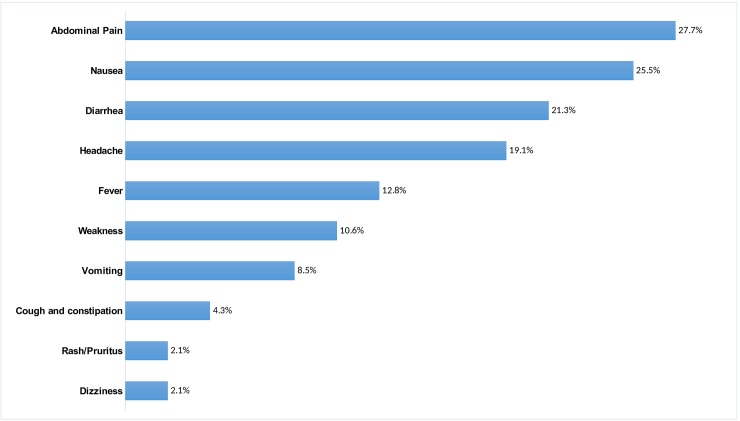
METHODOLOGY/PRINCIPAL FINDINGS: In the absence of a household listing and clear administrative neighborhood delimitations, we used geospatial technology to select households from satellite images and used the support of community leaders. One person per household was randomly selected for interview. In total, 636 individuals were enrolled in the survey. The overall vaccination coverage with at least one dose (including card and oral reporting) was 69.5% (95%CI: 51.2-88.2) and the two-dose coverage was 51.2% (95%CI: 37.9-64.3). The campaign was well accepted. Among the 185 non-vaccinated individuals, 83 (44.6%) did not take the vaccine because they were absent when the vaccination team visited their houses. Among the 451 vaccinated individuals, 47 (10%) reported minor and non-specific complaints, and 78 (17.3%) mentioned they did not receive any information before the campaign.
CONCLUSIONS/SIGNIFICANCE: In spite of overall coverage being slightly lower than expected, the use of a mobile door-to-door strategy remains a viable option even in densely-populated urban settings. Our results suggest that campaigns can be successfully implemented and well accepted in Mozambique in non-emergency contexts in order to prevent cholera outbreaks. These findings are encouraging and complement the previous Mozambican experience related to OCV.
除了改善水、环境卫生和个人卫生(WASH)措施和最佳病例管理外,引入口服霍乱疫苗(OCV)是脆弱人群群体预防和控制霍乱的补充策略。2016 年 10 月,莫桑比克卫生部在莫桑比克北部楠普拉市六个高风险社区实施了一项大规模疫苗接种运动,使用了两剂沙乔尔™OCV。该运动共针对 193403 人,采用挨家挨户的策略。在运动随访期间,进行了一项人口调查,以评估:(1)OCV 覆盖率;(2)接种后不良反应的频率;(3)疫苗可接受性和(4)未接种疫苗的原因。
方法/主要发现:由于没有家庭清单和明确的行政邻里界限,我们使用地理空间技术从卫星图像中选择家庭,并得到社区领导人的支持。每个家庭随机选择一人接受访谈。总共登记了 636 人参加调查。至少接种一剂(包括卡片和口头报告)的总接种覆盖率为 69.5%(95%CI:51.2-88.2),两剂覆盖率为 51.2%(95%CI:37.9-64.3)。运动得到了很好的接受。在 185 名未接种疫苗的人中,有 83 人(44.6%)因接种队访问他们家时不在而未接种疫苗。在 451 名接种疫苗的人中,有 47 人(10%)报告有轻微和非特异性投诉,有 78 人(17.3%)表示在运动前没有收到任何信息。
结论/意义:尽管总体覆盖率略低于预期,但移动上门接种策略的使用仍然是可行的,即使在人口密集的城市环境中也是如此。我们的结果表明,在非紧急情况下,莫桑比克可以成功实施和广泛接受运动,以预防霍乱暴发。这些发现令人鼓舞,并补充了莫桑比克以前与 OCV 相关的经验。