Pinedo-Villanueva Rafael, Khalid Sara, Wylde Vikki, Gooberman-Hill Rachael, Soni Anushka, Judge Andrew
Nuffield Department of Orthopaedics, Rheumatology and Musculoskeletal Sciences, University of Oxford, Botnar Research Centre, Windmill Road, Headington, Oxford, OX3 7LD, UK.
MRC Lifecourse Epidemiology Unit, University of Southampton, Southampton, UK.
BMC Musculoskelet Disord. 2018 Oct 2;19(1):354. doi: 10.1186/s12891-018-2270-9.
Approximately one in five patients undergoing knee replacement surgery experience chronic pain after their operation, which can negatively impact on their quality of life. In order to develop and evaluate interventions to improve the management of chronic post-surgical pain, we aimed to derive a cut-off point in the Oxford Knee Score pain subscale to identify patients with chronic pain following knee replacement, and to characterise these patients using self-reported outcomes.
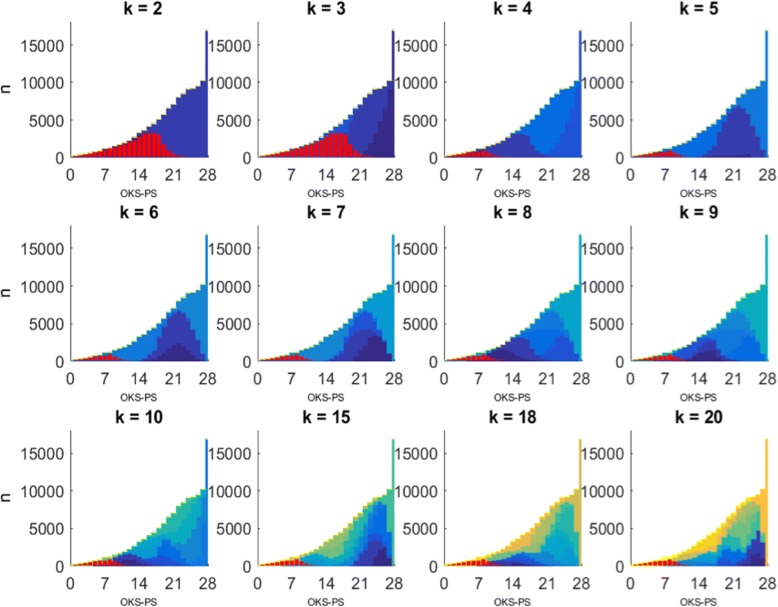
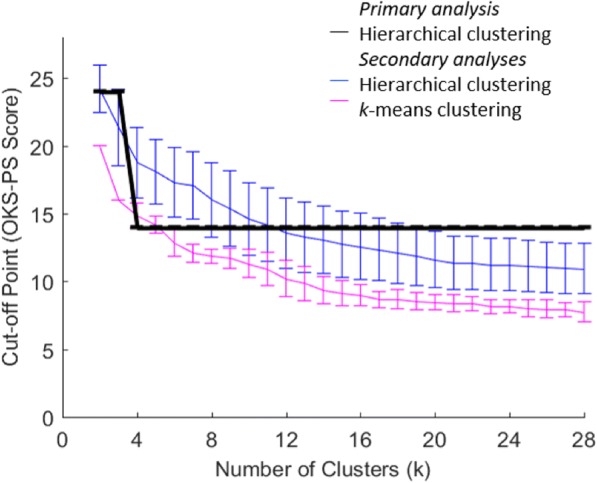
Data from the English Patient-Reported Outcome Measures (PROMs) programme were used. This comprised patient-reported data from 128,145 patients who underwent primary knee replacement surgery in England between 2012 and 2015. Cluster analysis was applied to derive a cut-off point on the pain subscale of the Oxford Knee Score.
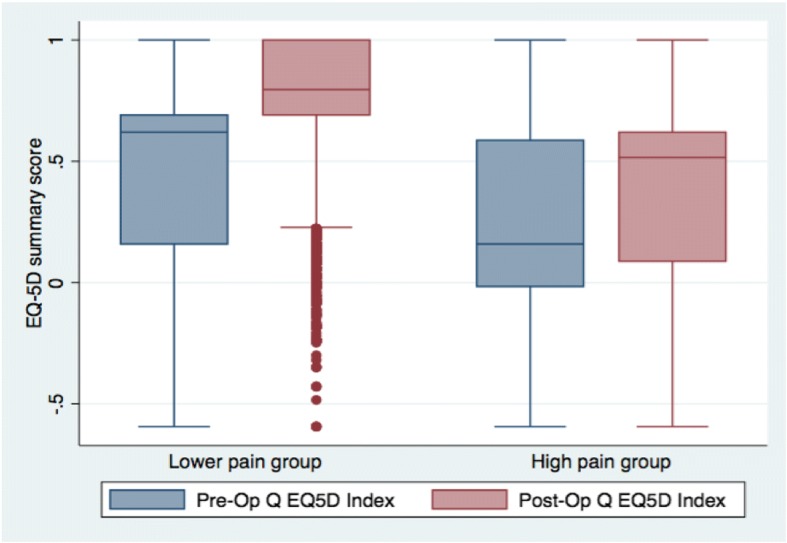
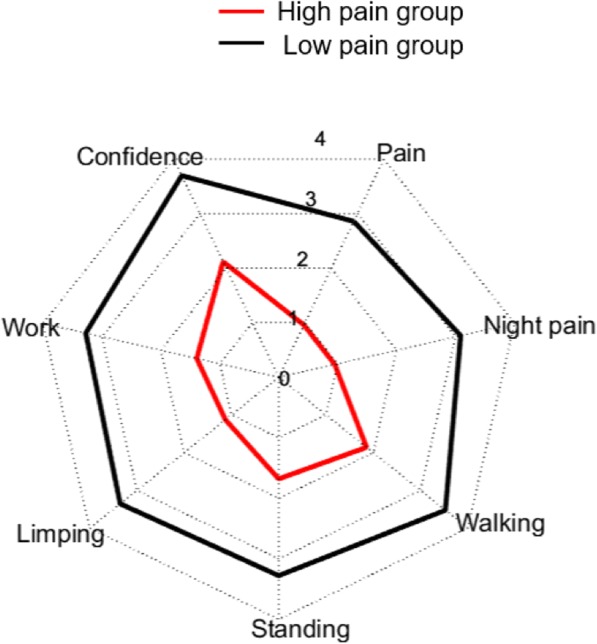
A high-pain group was identified, described by a maximum of 14 points in the Oxford Knee Score pain subscale six months after surgery. The high-pain group, comprising 15% of the sample, was characterised by severe and frequent problems in all pain dimensions, particularly in pain severity, night pain and limping, as well as in all dimensions of health-related quality of life.
Patients with Oxford Knee Score pain subscale scores of 14 or less at six months after knee replacement can be considered to be in chronic pain that is likely to negatively affect their quality of life. This derived cut-off can be used for patient selection in research settings to design and assess interventions that support patients in their management of chronic post-surgical pain.
接受膝关节置换手术的患者中,约五分之一在术后经历慢性疼痛,这会对他们的生活质量产生负面影响。为了开发和评估改善慢性术后疼痛管理的干预措施,我们旨在得出牛津膝关节评分疼痛子量表的一个临界点,以识别膝关节置换术后慢性疼痛患者,并使用自我报告结果对这些患者进行特征描述。
使用来自英国患者报告结果测量(PROMs)项目的数据。这包括2012年至2015年期间在英国接受初次膝关节置换手术的128,145名患者的患者报告数据。应用聚类分析得出牛津膝关节评分疼痛子量表的临界点。
确定了一个高疼痛组,其特征为术后六个月牛津膝关节评分疼痛子量表最高得分为14分。高疼痛组占样本的15%,其特点是在所有疼痛维度,特别是疼痛严重程度、夜间疼痛和跛行方面存在严重且频繁的问题,以及在与健康相关的生活质量的所有维度。
膝关节置换术后六个月牛津膝关节评分疼痛子量表得分在14分及以下的患者可被认为处于慢性疼痛中,这可能会对他们的生活质量产生负面影响。这个得出的临界点可用于研究环境中的患者选择,以设计和评估支持患者管理慢性术后疼痛的干预措施。