Sterk Naomi, Meeussen Loes, Van Laar Colette
Center for Social and Cultural Psychology, KU Leuven, Leuven, Belgium.
Postdoctoral Fellowship, Research Foundation-Flanders, Brussels, Belgium.
Front Psychol. 2018 Sep 20;9:1690. doi: 10.3389/fpsyg.2018.01690. eCollection 2018.
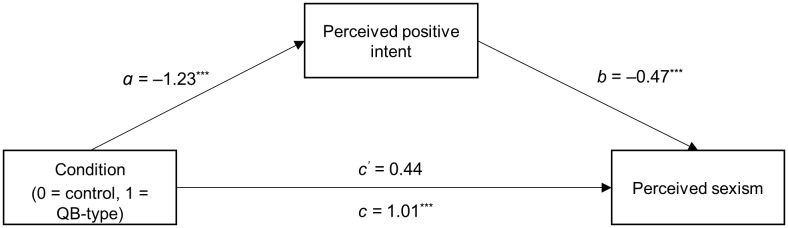
Previous research has revealed that women may attempt to avoid negative gender stereotypes in organizations through self-group distancing, or "queen bee", behaviors: emphasizing masculine qualities, distancing themselves from other women, and legitimizing organizational inequality. Factors that increase self-group distancing have been identified (e.g., existing discrimination and low group identification), but it is unknown how self-group distancing by an ingroup leader is perceived by and affects subordinates of the negatively stereotyped group. In the current study, female participants received ambiguous negative feedback from a male versus female leader displaying queen bee-type versus neutral behavior. As expected, a male leader displaying queen bee-type behavior was seen as having less positive intent than a male leader displaying neutral behavior, which in turn increased how sexist he was perceived to be. A female leader displaying queen bee (vs. neutral) behavior was not seen as having less positive intent, which thus did not indirectly influence perceived sexism. Behavior of both male and female leaders did affect junior women: participants exposed to a leader displaying queen bee-type behavior reported more anger, sadness, and anxiety than participants exposed to a leader displaying neutral behavior. These data provide further evidence that simply adding more women or minorities in key senior positions is insufficient to change inequality if bias in the organization is not tackled. Specifically, exposure to gender inequality can steer female leaders to endorse-rather than change-stereotypes about women, and this behavior is particularly consequential because it (a) might not be recognized as bias and (b) exerts negative effects.
以往的研究表明,女性可能会通过自我群体疏离或“蜂王”行为来避免在组织中出现负面的性别刻板印象:强调男性特质,与其他女性保持距离,并使组织不平等合法化。增加自我群体疏离的因素已被确定(例如,现有的歧视和低群体认同感),但尚不清楚内群体领导者的自我群体疏离会如何被负面刻板印象群体的下属所感知以及对他们产生何种影响。在当前的研究中,女性参与者从表现出“蜂王”型行为或中性行为的男性领导者与女性领导者那里收到了模糊的负面反馈。正如预期的那样,表现出“蜂王”型行为的男性领导者比表现出中性行为的男性领导者被认为具有更少的积极意图,这反过来又增加了他被认为的性别歧视程度。表现出“蜂王”(而非中性)行为的女性领导者并未被认为具有更少的积极意图,因此也没有间接影响对性别歧视的认知。男性和女性领导者的行为确实都对年轻女性产生了影响:接触到表现出“蜂王”型行为的领导者的参与者比接触到表现出中性行为的领导者的参与者报告了更多的愤怒、悲伤和焦虑。这些数据进一步证明,如果不解决组织中的偏见问题,仅仅在关键的高级职位上增加更多女性或少数族裔是不足以改变不平等状况的。具体而言,接触到性别不平等会促使女性领导者认可而非改变对女性的刻板印象,而且这种行为尤其具有影响力,因为它(a)可能不被视为偏见,(b)会产生负面影响。