Olsen Thomas George, Jackson B Hunter, Feeser Theresa Ann, Kent Michael N, Moad John C, Krishnamurthy Smita, Lunsford Denise D, Soans Rajath E
Department of Dermatology, Boonshoft School of Medicine, Wright State University School of Medicine, Dayton, Ohio, USA.
Dermatopathology Laboratory of Central States, Dayton, Ohio, USA.
J Pathol Inform. 2018 Sep 27;9:32. doi: 10.4103/jpi.jpi_31_18. eCollection 2018.
Artificial intelligence is advancing at an accelerated pace into clinical applications, providing opportunities for increased efficiency, improved accuracy, and cost savings through computer-aided diagnostics. Dermatopathology, with emphasis on pattern recognition, offers a unique opportunity for testing deep learning algorithms.
This study aims to determine the accuracy of deep learning algorithms to diagnose three common dermatopathology diagnoses.
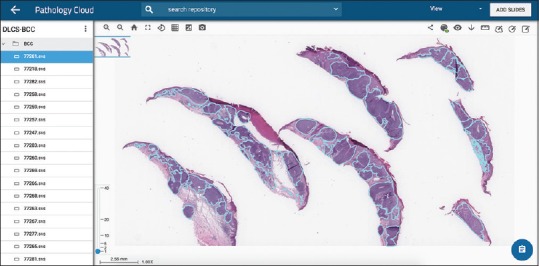
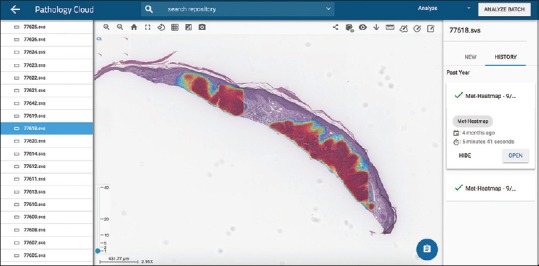
Whole slide images (WSI) of previously diagnosed nodular basal cell carcinomas (BCCs), dermal nevi, and seborrheic keratoses were annotated for areas of distinct morphology. Unannotated WSIs, consisting of five distractor diagnoses of common neoplastic and inflammatory diagnoses, were included in each training set. A proprietary fully convolutional neural network was developed to train algorithms to classify test images as positive or negative relative to ground truth diagnosis.
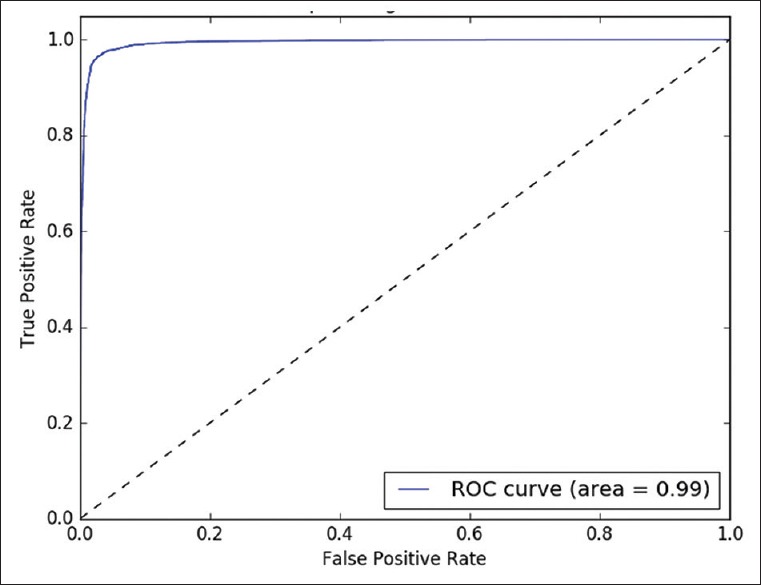
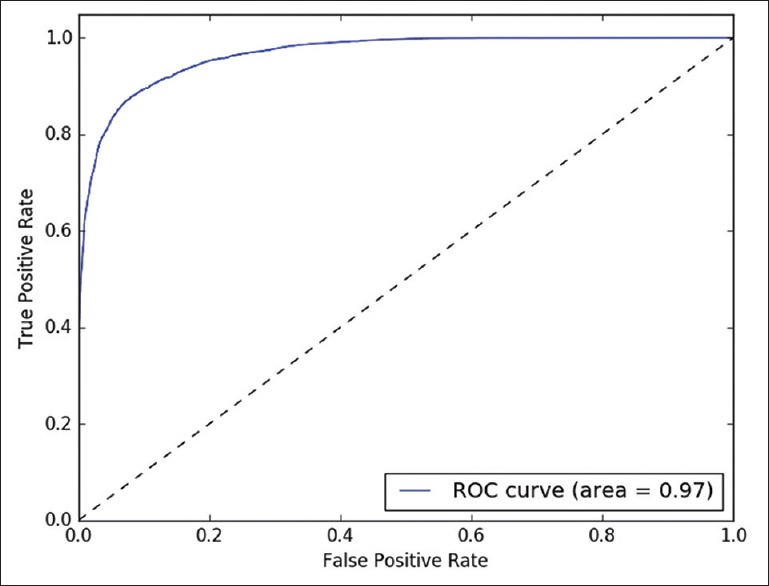
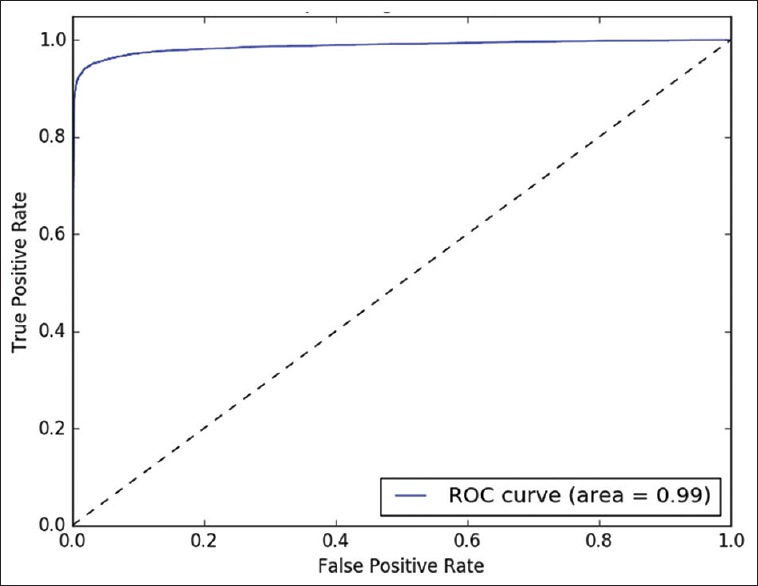
Artificial intelligence system accurately classified 123/124 (99.45%) BCCs (nodular), 113/114 (99.4%) dermal nevi, and 123/123 (100%) seborrheic keratoses.
Artificial intelligence using deep learning algorithms is a potential adjunct to diagnosis and may result in improved workflow efficiencies for dermatopathologists and laboratories.
人工智能正加速推进临床应用,通过计算机辅助诊断提供提高效率、提升准确性和节省成本的机会。皮肤病理学侧重于模式识别,为测试深度学习算法提供了独特机会。
本研究旨在确定深度学习算法诊断三种常见皮肤病理学诊断的准确性。
对先前诊断的结节性基底细胞癌(BCC)、真皮痣和脂溢性角化病的全切片图像(WSI)标注不同形态区域。每个训练集中包含未标注的WSI,其中包括五种常见肿瘤性和炎症性诊断的干扰性诊断。开发了一种专有的全卷积神经网络来训练算法,以将测试图像相对于真实诊断分类为阳性或阴性。
人工智能系统准确分类了123/124(99.45%)的结节性BCC、113/114(99.4%)的真皮痣和123/123(100%)的脂溢性角化病。
使用深度学习算法的人工智能是诊断的潜在辅助手段,可能会提高皮肤病理学家和实验室的工作流程效率。