Harvard Medical School, Boston, MA, USA; The Mind Research Network & LBERI, Albuquerque, NM, USA.
The Mind Research Network & LBERI, Albuquerque, NM, USA.
Neuroimage. 2019 Jan 1;184:843-854. doi: 10.1016/j.neuroimage.2018.10.004. Epub 2018 Oct 6.
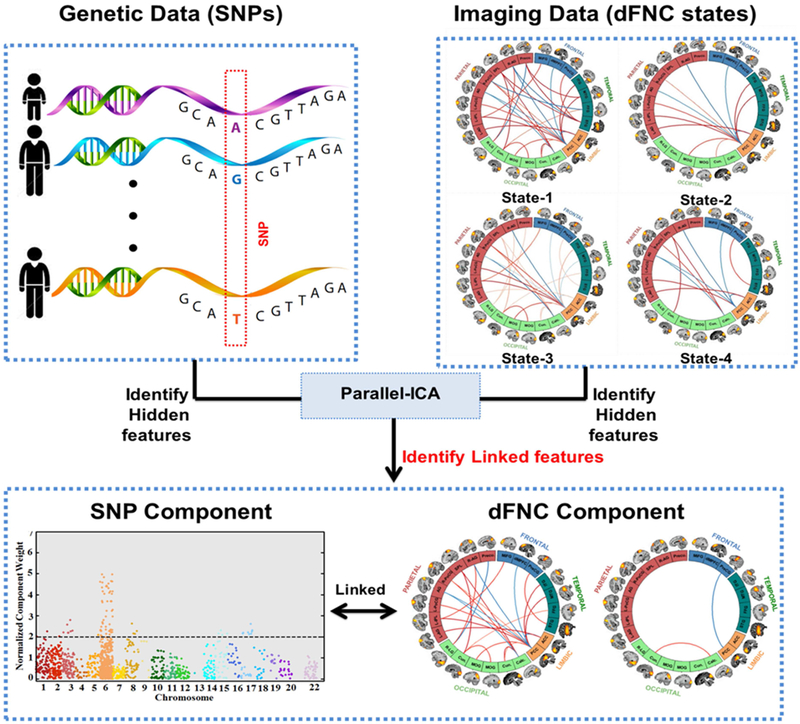
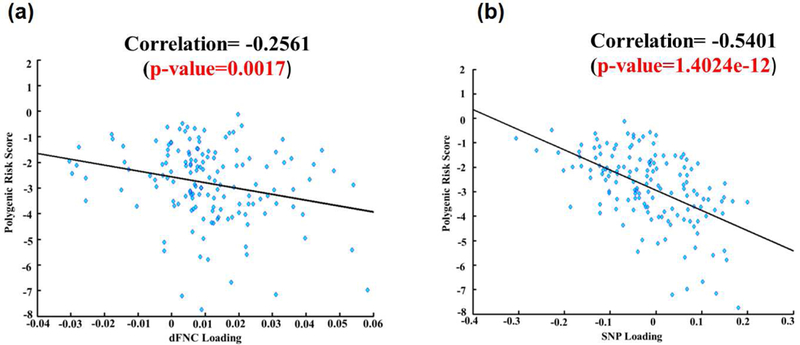
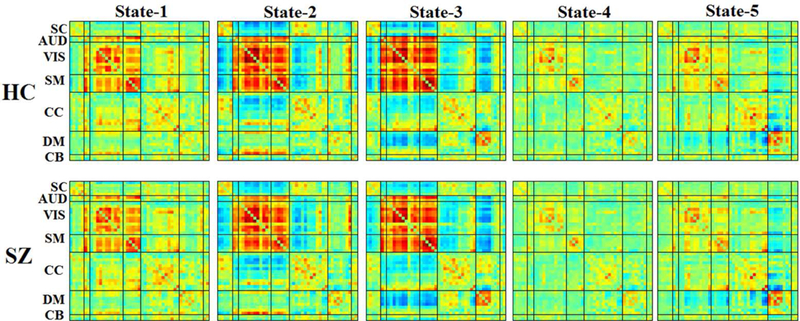
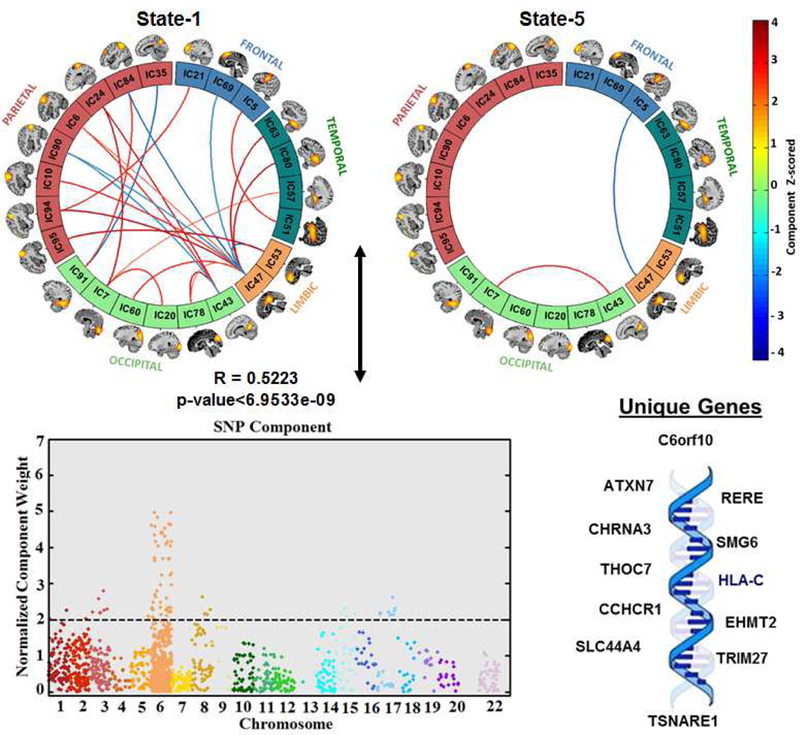
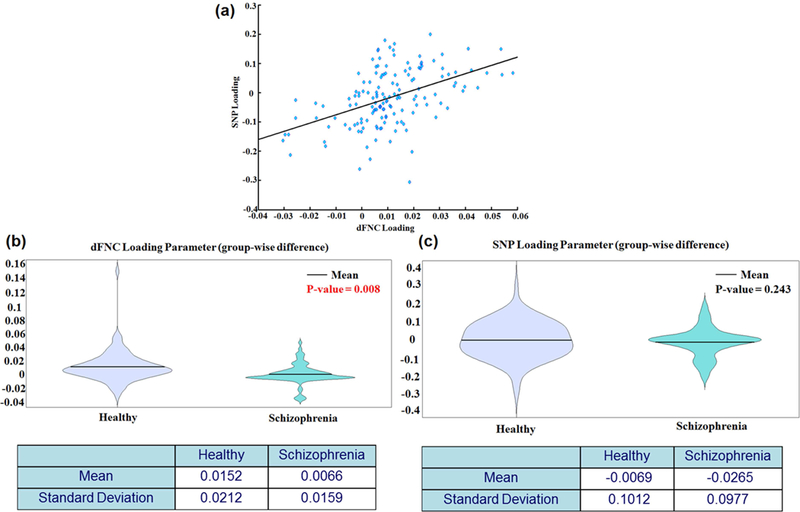
Multimodal, imaging-genomics techniques offer a platform for understanding genetic influences on brain abnormalities in psychiatric disorders. Such approaches utilize the information available from both imaging and genomics data and identify their association. Particularly for complex disorders such as schizophrenia, the relationship between imaging and genomic features may be better understood by incorporating additional information provided by advanced multimodal modeling. In this study, we propose a novel framework to combine features corresponding to functional magnetic resonance imaging (functional) and single nucleotide polymorphism (SNP) data from 61 schizophrenia (SZ) patients and 87 healthy controls (HC). In particular, the features for the functional and genetic modalities include dynamic (i.e., time-varying) functional network connectivity (dFNC) features and the SNP data, respectively. The dFNC features are estimated from component time-courses, obtained using group independent component analysis (ICA), by computing sliding-window functional network connectivity, and then estimating subject specific states from this dFNC data using a k-means clustering approach. For each subject, both the functional (dFNC states) and SNP data are selected as features for a parallel ICA (pICA) based imaging-genomic framework. This analysis identified a significant association between a SNP component (defined by large clusters of functionally related SNPs statistically correlated with phenotype components) and time-varying or dFNC component (defined by clusters of related connectivity links among distant brain regions distributed across discrete dynamic states, and statistically correlated with genomic components) in schizophrenia. Importantly, the polygenetic risk score (PRS) for SZ (computed as a linearly weighted sum of the genotype profiles with weights derived from the odds ratios of the psychiatric genomics consortium (PGC)) was negatively correlated with the significant dFNC component, which were mostly present within a state that exhibited a lower occupancy rate in individuals with SZ compared with HC, hence identifying a potential dFNC imaging biomarker for schizophrenia. Taken together, the current findings provide preliminary evidence for a link between dFNC measures and genetic risk, suggesting the application of dFNC patterns as biomarkers in imaging genetic association study.
多模态、影像基因组学技术为理解精神障碍中大脑异常的遗传影响提供了一个平台。这些方法利用了影像和基因组数据的信息,并确定了它们之间的关联。对于精神分裂症等复杂疾病,通过纳入先进的多模态建模提供的额外信息,可以更好地理解影像和基因组特征之间的关系。在这项研究中,我们提出了一个新的框架,将来自 61 名精神分裂症(SZ)患者和 87 名健康对照(HC)的功能磁共振成像(功能)和单核苷酸多态性(SNP)数据的对应特征结合起来。特别是,功能和遗传模态的特征分别包括动态(即时变)功能网络连接(dFNC)特征和 SNP 数据。dFNC 特征是从使用组独立成分分析(ICA)获得的分量时间序列中估计出来的,通过计算滑动窗口功能网络连接,然后使用 k-均值聚类方法从这个 dFNC 数据中估计个体特定的状态。对于每个个体,功能(dFNC 状态)和 SNP 数据都被选为基于并行独立成分分析(pICA)的影像基因组框架的特征。这项分析确定了 SNP 成分(由与表型成分统计相关的功能相关 SNP 的大簇定义)和时变或 dFNC 成分(由分布在离散动态状态中的远距离大脑区域之间的相关连接簇定义)之间的显著关联,这在精神分裂症中。重要的是,精神分裂症的多基因风险评分(PRS)(计算为基因型谱的线性加权和,权重由精神病基因组联盟(PGC)的比值比导出)与显著的 dFNC 成分呈负相关,这些成分主要存在于个体中与 HC 相比,SZ 个体的占有率较低的状态中,因此确定了精神分裂症的潜在 dFNC 影像生物标志物。总的来说,目前的研究结果为 dFNC 测量与遗传风险之间的联系提供了初步证据,表明将 dFNC 模式作为影像遗传关联研究中的生物标志物的应用。