Department of Microbiology, Universidade Federal de Viçosa, Viçosa, Minas Gerais, Brazil.
Department of Biochemistry and Molecular Biology, Universidade Federal de Viçosa, Viçosa, Minas Gerais, Brazil.
PLoS One. 2018 Oct 10;13(10):e0204673. doi: 10.1371/journal.pone.0204673. eCollection 2018.
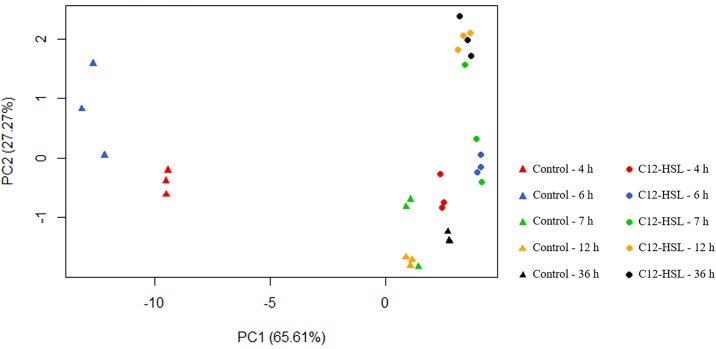
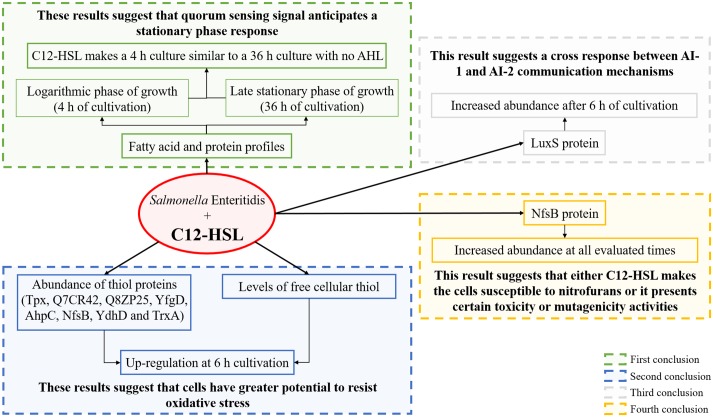
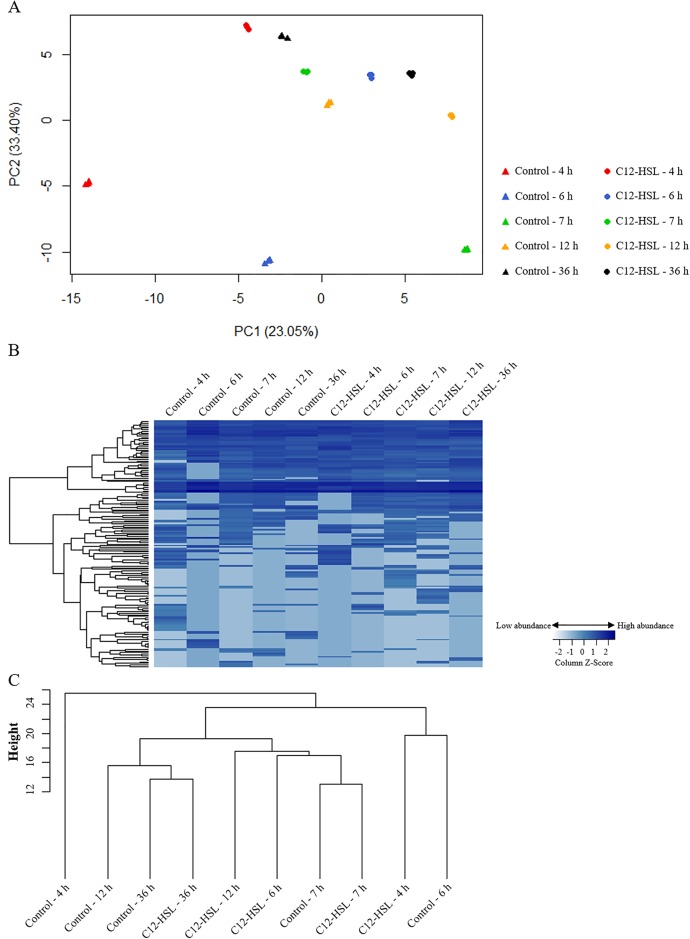
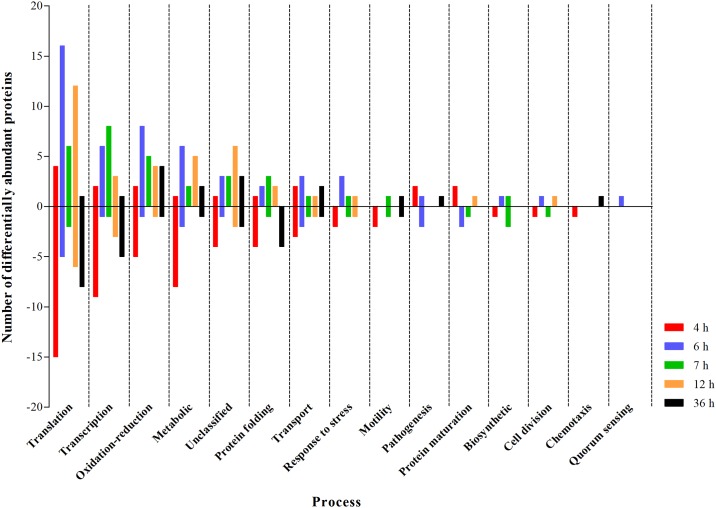
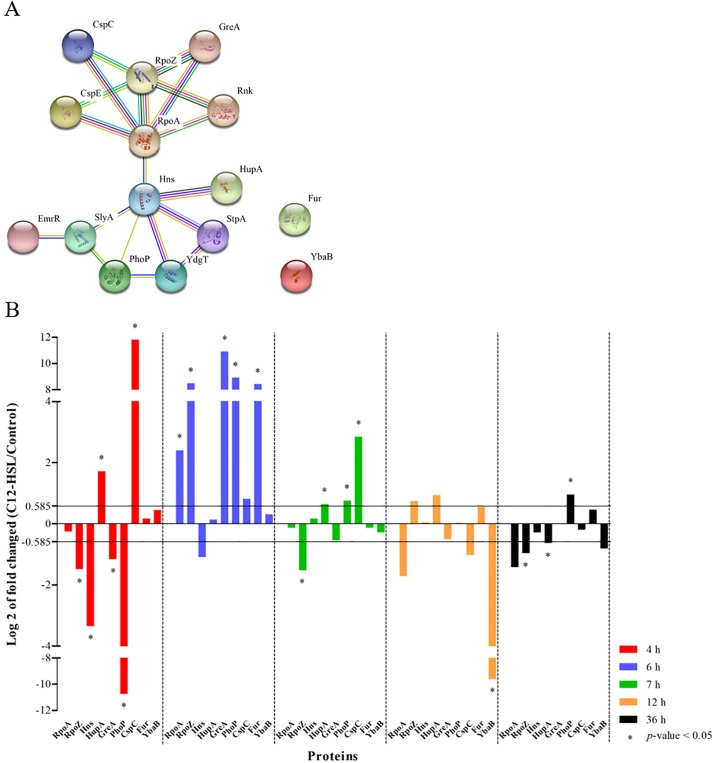
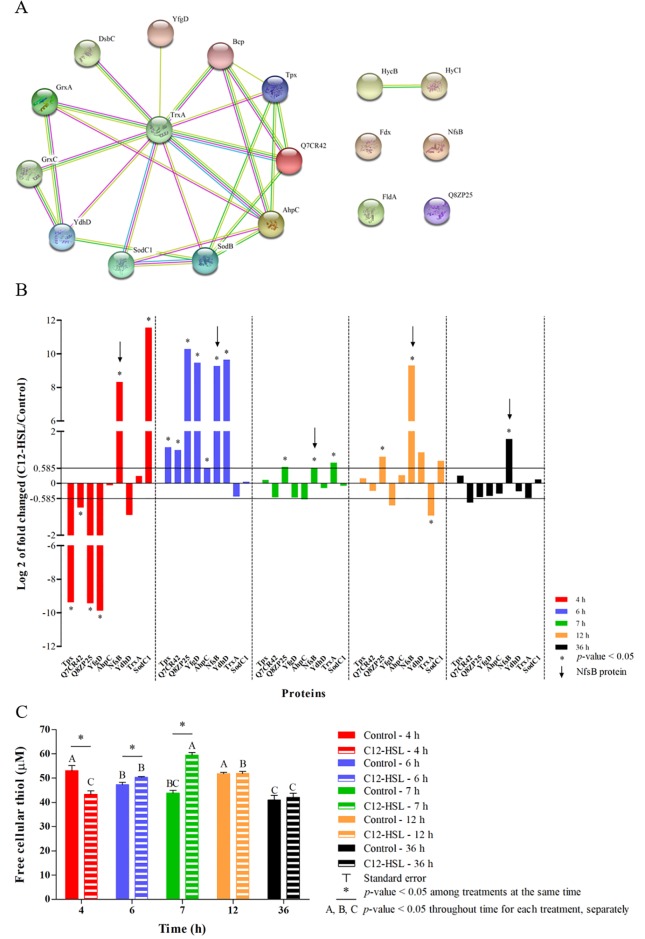
Quorum sensing is a cell-cell communication mechanism mediated by chemical signals that leads to differential gene expression in response to high population density. Salmonella is unable to synthesize the autoinducer-1 (AI-1), N-acyl homoserine lactone (AHL), but is able to recognize AHLs produced by other microorganisms through SdiA protein. This study aimed to evaluate the fatty acid and protein profiles of Salmonella enterica serovar Enteritidis PT4 578 throughout time of cultivation in the presence of AHL. The presence of N-dodecanoyl-homoserine lactone (C12-HSL) altered the fatty acid and protein profiles of Salmonella cultivated during 4, 6, 7, 12 and 36 h in anaerobic condition. The profiles of Salmonella Enteritidis at logarithmic phase of growth (4 h of cultivation), in the presence of C12-HSL, were similar to those of cells at late stationary phase (36 h). In addition, there was less variation in both protein and fatty acid profiles along growth, suggesting that this quorum sensing signal anticipated a stationary phase response. The presence of C12-HSL increased the abundance of thiol related proteins such as Tpx, Q7CR42, Q8ZP25, YfgD, AhpC, NfsB, YdhD and TrxA, as well as the levels of free cellular thiol after 6 h of cultivation, suggesting that these cells have greater potential to resist oxidative stress. Additionally, the LuxS protein which synthesizes the AI-2 signaling molecule was differentially abundant in the presence of C12-HSL. The NfsB protein had its abundance increased in the presence of C12-HSL at all evaluated times, which is a suggestion that the cells may be susceptible to the action of nitrofurans or that AHLs present some toxicity. Overall, the presence of C12-HSL altered important pathways related to oxidative stress and stationary phase response in Salmonella.
群体感应是一种由化学信号介导的细胞间通讯机制,可导致细菌在高细胞密度下表现出差异基因表达。沙门氏菌无法合成自诱导物-1(AI-1),N-酰基高丝氨酸内酯(AHL),但能够通过 SdiA 蛋白识别其他微生物产生的 AHL。本研究旨在评估在存在 AHL 的情况下,沙门氏菌肠炎亚种 PT4578 随时间培养的脂肪酸和蛋白质图谱。N-十二酰基高丝氨酸内酯(C12-HSL)的存在改变了沙门氏菌在厌氧条件下培养 4、6、7、12 和 36 小时时的脂肪酸和蛋白质图谱。在 C12-HSL 存在下,处于对数生长期(培养 4 小时)的肠炎沙门氏菌的图谱与处于晚期稳定期(培养 36 小时)的细胞图谱相似。此外,在生长过程中,蛋白质和脂肪酸图谱的变化都较小,表明这种群体感应信号预测了稳定期的反应。C12-HSL 的存在增加了与硫醇相关的蛋白质(如 Tpx、Q7CR42、Q8ZP25、YfgD、AhpC、NfsB、YdhD 和 TrxA)的丰度,以及培养 6 小时后细胞内游离硫醇的水平,表明这些细胞具有更大的抵抗氧化应激的潜力。此外,合成 AI-2 信号分子的 LuxS 蛋白在 C12-HSL 存在时丰度不同。在所有评估时间,C12-HSL 的存在都会增加 NfsB 蛋白的丰度,这表明细胞可能容易受到硝基呋喃类药物的作用或 AHLs 具有一定的毒性。总的来说,C12-HSL 的存在改变了沙门氏菌中与氧化应激和稳定期反应相关的重要途径。