Dahl K, Martin K, Miller G
J Virol. 1987 May;61(5):1602-8. doi: 10.1128/JVI.61.5.1602-1608.1987.
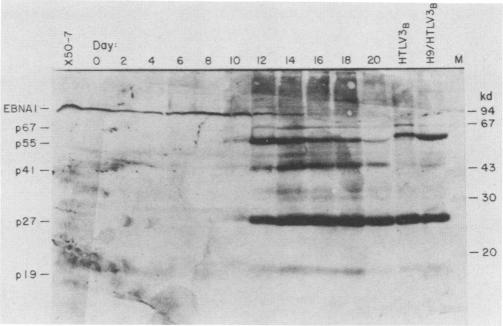
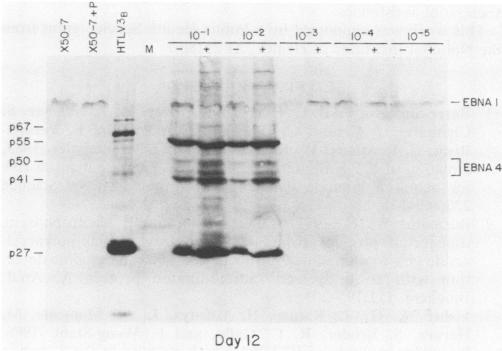
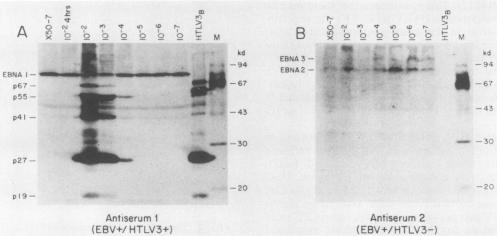
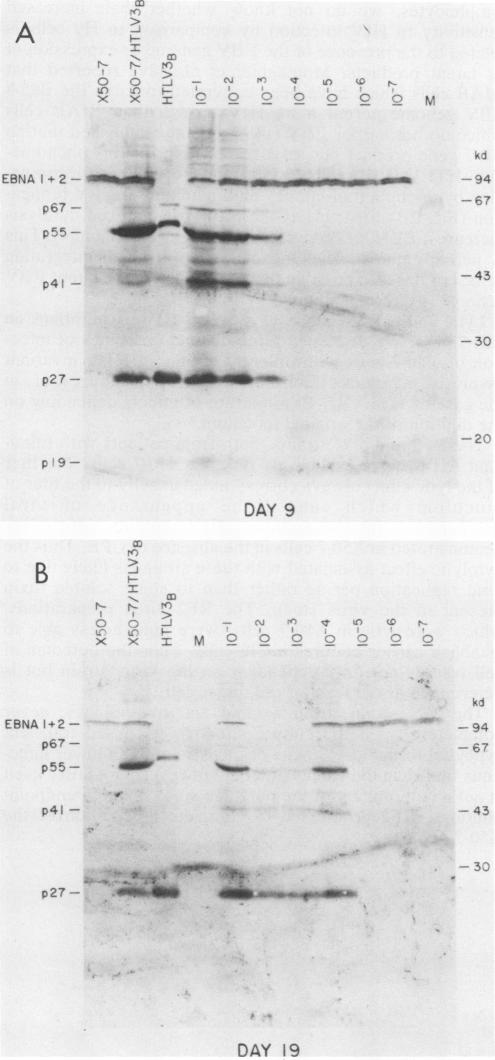
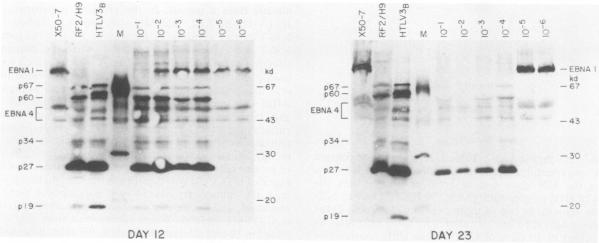
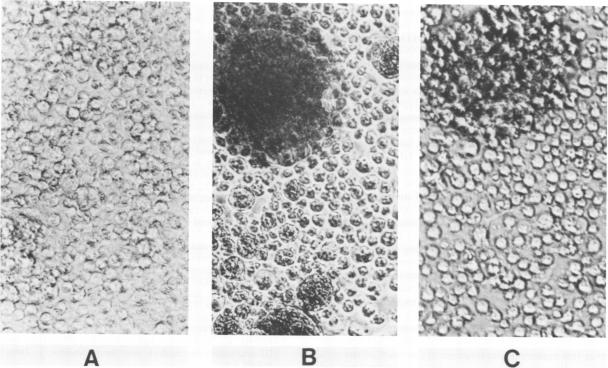
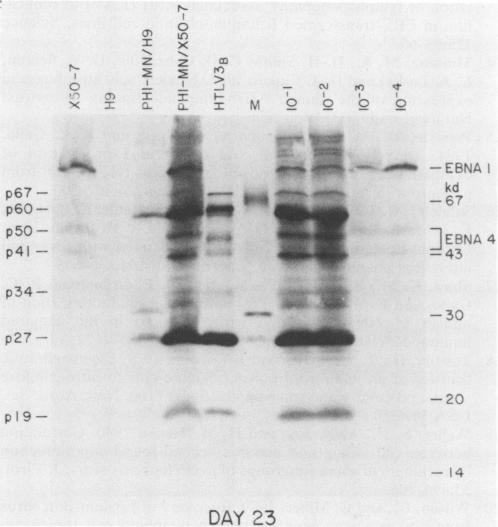
Four strains of human immunodeficiency virus (HIV) manifest consistent differences in biologic behavior after infection of the X50-7 line of human umbilical cord lymphocytes immortalized by Epstein-Barr virus (EBV). Some dilutions of the first strain examined, human T-cell lymphotropic virus type III B, which is derived from a pool of patient isolates propagated in H9 cells, caused transient cytopathic effects (CPE) followed by recovery of a subpopulation of X50-7 cells which became virus carrier cultures. Other dilutions of the same virus stock completely lysed X50-7 cells. Two other strains, RF2 and YW, both from individual patients with acquired immune deficiency syndrome, always induced complete cytolysis of X50-7 cells at all dilutions which infected the cells. However, RF2 did establish persistent infection of H9 cells. A fourth strain, PH1-MN, from a child with acquired immune deficiency syndrome-related complex, induced only transient CPE in X50-7 and H9 cells, which thereafter always recovered to form carrier cultures. For all four strains, the dilutions of HIV stocks which caused CPE corresponded to dilutions which resulted in the detection of HIV polypeptides by immunoblot. Cytolysis in HIV-infected X50-7 cells was accompanied by a decrease in the amount of EBV nuclear antigen; however, HIV infection did not induce EBV replication. Thus CPE in X50-7 cells is due to replication of HIV per se and not to activation of EBV. The observations indicate that there are differences in the cytolytic properties of HIVs and that these differences are influenced by the target cell.
四株人类免疫缺陷病毒(HIV)在感染由爱泼斯坦 - 巴尔病毒(EBV)永生化的人脐带淋巴细胞X50 - 7系后,在生物学行为上表现出一致的差异。所检测的第一株病毒,即从在H9细胞中传代的患者分离株混合群体中获得的人类嗜T细胞病毒III B型,其某些稀释液会引起短暂的细胞病变效应(CPE),随后X50 - 7细胞亚群恢复并成为病毒携带培养物。同一病毒原液的其他稀释液则会完全裂解X50 - 7细胞。另外两株病毒,RF2和YW,均来自获得性免疫缺陷综合征个体患者,在所有能感染细胞的稀释度下,总是诱导X50 - 7细胞完全溶解。然而,RF2确实能在H9细胞中建立持续感染。第四株病毒,PH1 - MN,来自一名患有与获得性免疫缺陷综合征相关综合征的儿童,在X50 - 7和H9细胞中仅诱导短暂的CPE,之后细胞总是恢复并形成携带培养物。对于所有四株病毒,导致CPE的HIV原液稀释度与通过免疫印迹检测到HIV多肽的稀释度相对应。HIV感染的X50 - 7细胞中的细胞溶解伴随着EBV核抗原量的减少;然而,HIV感染并未诱导EBV复制。因此,X50 - 7细胞中的CPE是由于HIV本身的复制,而非EBV的激活。这些观察结果表明,HIV的细胞溶解特性存在差异,且这些差异受靶细胞影响。