VIB-KU Leuven Center for Microbiology, Leuven, Belgium.
KU Leuven Laboratory of Molecular Cell Biology, Institute of Botany and Microbiology, Leuven, Belgium.
PLoS Pathog. 2018 Oct 18;14(10):e1007301. doi: 10.1371/journal.ppat.1007301. eCollection 2018 Oct.
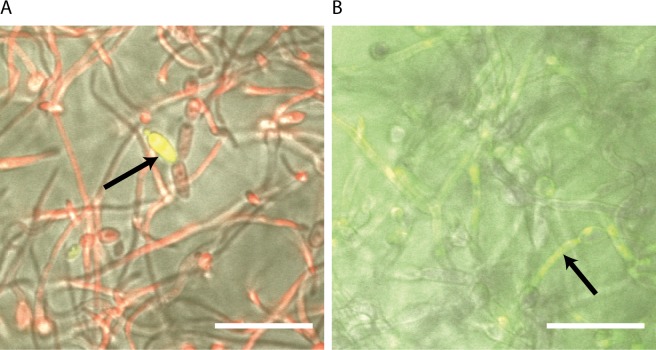
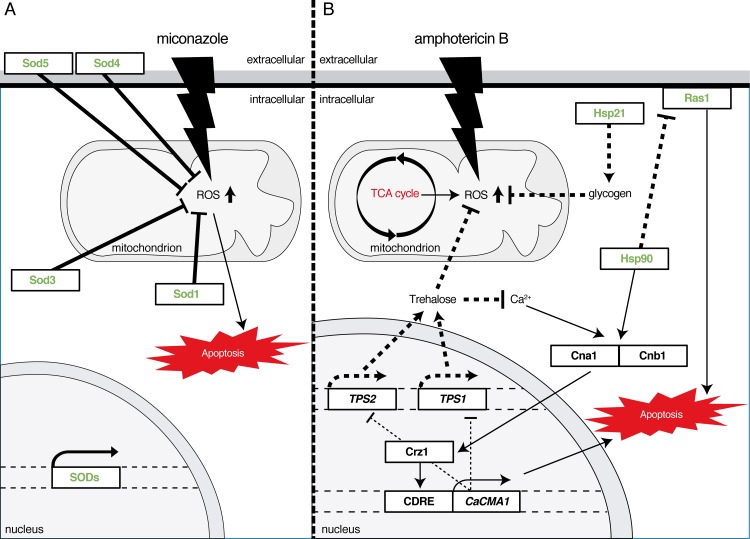
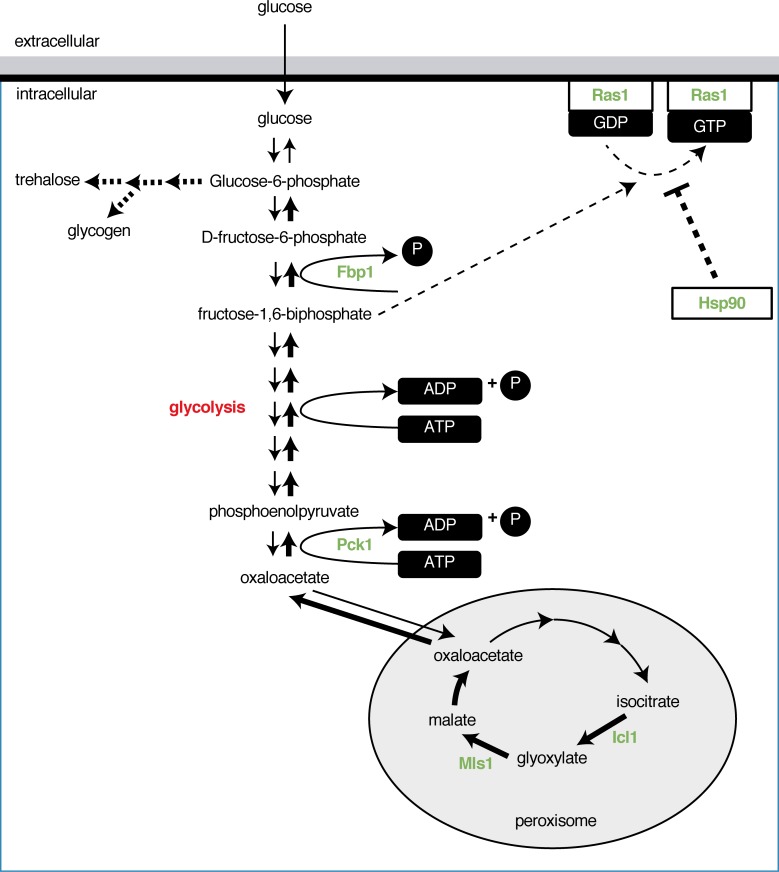
Persister cells are a small subpopulation within fungal biofilms that are highly resistant to high concentrations of antifungals and therefore most likely contribute to the resistance and recalcitrance of biofilm infections. Moreover, this subpopulation is defined as a nongrowing, phenotypic variant of wild-type cells that can survive high doses of antifungals. There are high degrees of heterogeneity and plasticity associated with biofilm formation, resulting in a strong variation in the amount of persister cells. The fraction of these cells in fungal biofilms also appear to be dependent on the type of substrate. The cells can be observed immediately after their adhesion to that substrate, which makes up the initial step of biofilm formation. Thus far, persister cells have primarily been studied in Candida spp. These fungi are the fourth most common cause of nosocomial systemic infections in the United States, with C. albicans being the most prevalent species. Remarkably, persisters exhibit characteristics of a dormant state similar to what is observed in cells deprived of glucose. This dormant state, together with attachment to a substrate, appears to provide the cells with characteristics that help them overcome the challenges with fungicidal drugs such as amphotericin B (AmB). AmB is known to induce apoptosis, and persister cells are able to cope with the increase in reactive oxygen species (ROS) by activating stress response pathways and the accumulation of high amounts of glycogen and trehalose-two known stress-protecting molecules. In this review, we discuss the molecular pathways that are involved in persister cell formation in fungal species and highlight that the eradication of persister cells could lead to a strong reduction of treatment failure in a clinical setting.
持久细胞是真菌生物膜中的一个小亚群,对高浓度的抗真菌药物具有高度耐药性,因此极有可能导致生物膜感染的耐药性和难治性。此外,该亚群被定义为一种非生长的、野生型细胞的表型变体,能够在高剂量的抗真菌药物下存活。生物膜形成与高度异质性和可塑性相关,导致持久细胞的数量存在很大差异。这些细胞在真菌生物膜中的比例似乎也依赖于基质的类型。这些细胞可以在它们刚刚附着到基质上时被观察到,这是生物膜形成的初始步骤。到目前为止,持久细胞主要在念珠菌属中进行了研究。这些真菌是美国第四大常见的医院获得性系统性感染病原体,其中白色念珠菌是最常见的物种。值得注意的是,持久细胞表现出类似于在葡萄糖缺乏的细胞中观察到的休眠状态的特征。这种休眠状态,加上与基质的附着,似乎赋予了细胞克服杀真菌药物(如两性霉素 B (AmB))挑战的特性。AmB 已知会诱导细胞凋亡,而持久细胞能够通过激活应激反应途径和积累大量的糖原和海藻糖来应对活性氧 (ROS) 的增加,这两种物质是已知的应激保护分子。在这篇综述中,我们讨论了真菌物种中持久细胞形成所涉及的分子途径,并强调了消除持久细胞可能会导致临床治疗失败的大幅减少。