Zhu Yaobin, Zhang Jing, Li Zhiqiang, Liu Yang, Fan Xing, Zhang Yaping, Zhang Yanbo
Cardiovascular Surgery II, Beijing Children's Hospital, Capital Medical University, National Center for Children's Health, Beijing, 100045, China.
Pediatric Heart Center, Beijing Anzhen Hospital, Capital Medical University, Beijing, 100029, China.
BMC Cardiovasc Disord. 2018 Oct 19;18(1):192. doi: 10.1186/s12872-018-0927-9.
The association of sodium intake with the risk of cardiovascular morbidity and mortality is inconsistent. Thus, the present meta-analysis was conducted to summarize the strength of association between sodium intake and cardiovascular morbidity and mortality.
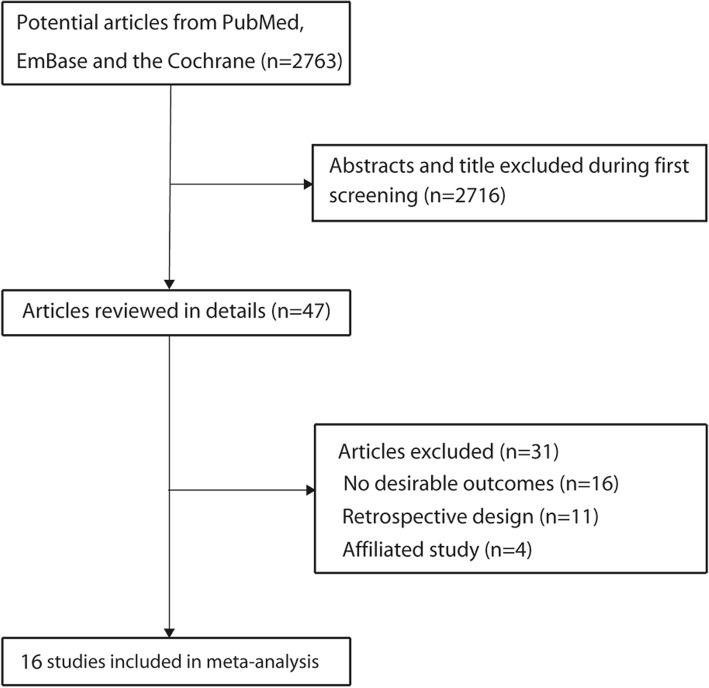
PubMed, Embase, and the Cochrane Library were searched systematically to identify the relevant studies up to October 2017. The effect estimates for 100 mmol/day increase in sodium intake were calculated using 95% confidence intervals (CIs) of cardiac death, total mortality, stroke, or stroke mortality for low (< 3 g/d), moderate (3-5 g/d), or heavy (> 5 g/d) sodium intake, and minimal sodium intake comparison.
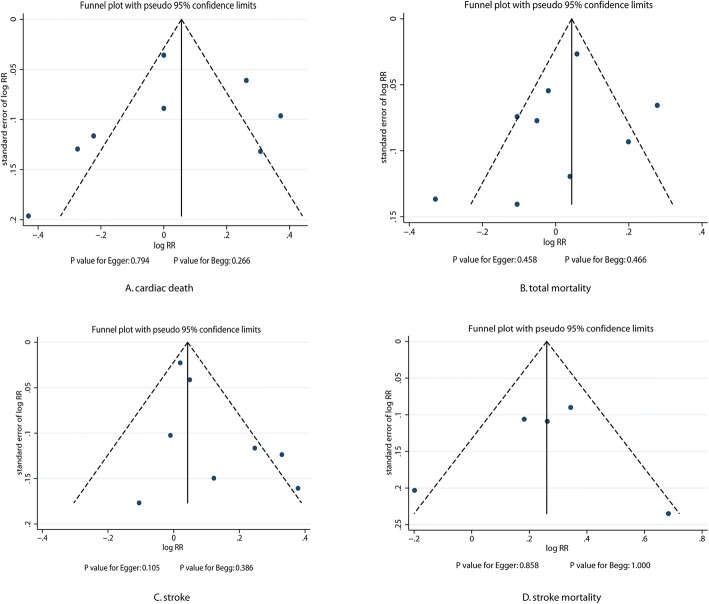
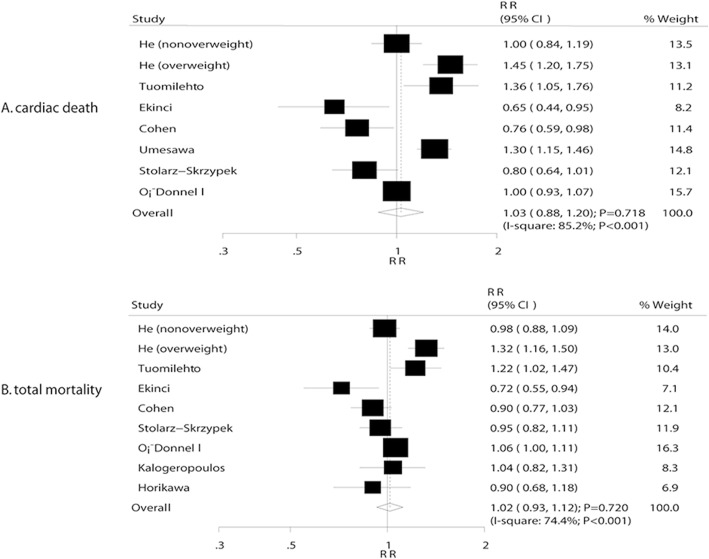
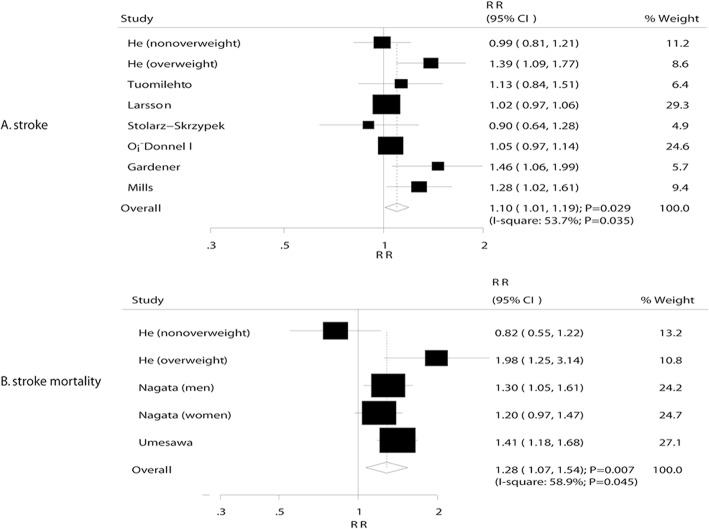
A total of 16 prospective cohort studies reported data on 205,575 individuals. The results suggested that an increase in sodium intake by 100 mmol/d demonstrated little or no effect on the risk of cardiac death (P = 0.718) and total mortality (P = 0.720). However, the risk of stroke incidence (P = 0.029) and stroke mortality (P = 0.007) was increased significantly by 100 mmol/day increment of sodium intake. Furthermore, low sodium intake was associated with an increased risk of cardiac death (P = 0.003), while moderate (P < 0.001) or heavy (P = 0.001) sodium intake was associated with an increased risk of stroke mortality.
These findings suggested that sodium intake by 100 mmol/d increment was associated with an increased risk of stroke incidence and stroke mortality. Furthermore, low sodium intake was related to an increased cardiac death risk, while moderate or heavy sodium intake was related to an increased risk of stroke mortality.
钠摄入量与心血管疾病发病率及死亡率之间的关联并不一致。因此,开展了本次荟萃分析以总结钠摄入量与心血管疾病发病率及死亡率之间关联的强度。
系统检索了PubMed、Embase和Cochrane图书馆,以识别截至2017年10月的相关研究。使用低钠摄入(<3克/天)、中等钠摄入(3 - 5克/天)或高钠摄入(>5克/天)以及最低钠摄入对照的心脏死亡、总死亡率、中风或中风死亡率的95%置信区间(CI),计算钠摄入量每天增加100毫摩尔的效应估计值。
共有16项前瞻性队列研究报告了205,575名个体的数据。结果表明,钠摄入量每天增加100毫摩尔对心脏死亡风险(P = 0.718)和总死亡率(P = 0.720)几乎没有影响。然而,钠摄入量每天增加100毫摩尔会显著增加中风发病率风险(P = 0.029)和中风死亡率风险(P = 0.007)。此外,低钠摄入与心脏死亡风险增加相关(P = 0.003),而中等钠摄入(P < 0.001)或高钠摄入(P = 0.001)与中风死亡率风险增加相关。
这些发现表明,钠摄入量每天增加100毫摩尔与中风发病率和中风死亡率风险增加相关。此外,低钠摄入与心脏死亡风险增加有关,而中等或高钠摄入与中风死亡率风险增加有关。