VDF FutureCeuticals, 2692 North State Route 1-17, Momence, IL, 60954, USA.
Department of Pharmacognosy & Phytotherapy, Faculty of Pharmacy, University of Medicine and Pharmacy of Craiova, 2 Petru Rareş Street, 200349, Craiova, Romania.
Biol Trace Elem Res. 2019 Mar;188(1):11-25. doi: 10.1007/s12011-018-1550-4. Epub 2018 Oct 20.
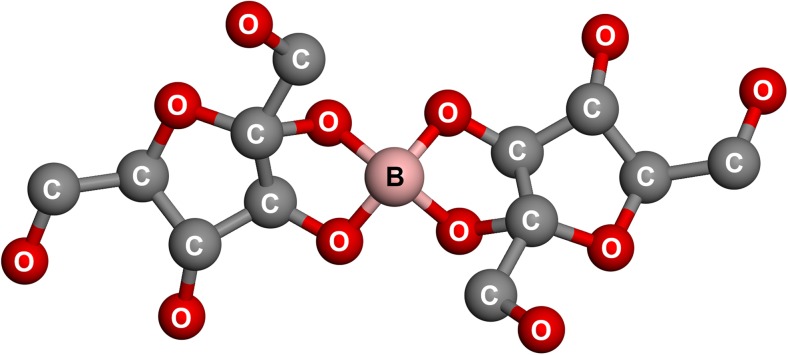
Sugar-borates (SBs) are mono- or di-sugar-borate esters (SBEs) comprised of one or two monosaccharide molecules linked to a boron (B) atom. SBEs occur naturally in commonly consumed herbs, vegetables, fruits, seeds, and nuts and, other than greatly varying levels of B found in local drinking water, are the primary natural dietary sources of B-containing molecules in humans. To date, the most studied SBE is calcium fructoborate (CaFB). CaFB represents an important example of how organic B-containing molecules are significantly distinct from their inorganic counterparts. During these past two decades, CaFB has been researched for its physical and biochemical characteristics, safety, and clinical outcomes. Results of these researches are presented and discussed herein. CaFB has been characterized using Fourier-transform infrared (FTIR) spectroscopy, thermogravimetric analysis (TGA), high-performance thin-layer chromatography (HPTLC), nuclear magnetic resonance (NMR), liquid chromatography-multistage accurate mass spectrometry (LC-MSn), X-ray diffraction (XRD), Raman spectroscopy, and inductively coupled plasma (ICP) in non-biological and biological specimens. Potential health benefits of CaFB have been clinically investigated in pilot and efficacy studies demonstrating (i) significant reductions in knee discomfort and improved flexibility within 7, 14, and 90 days and (ii) significant effect on blood levels of inflammatory, cardiovascular, and other biomarkers. These studies support the use of CaFB as a dietary supplement for the management of joint discomfort. CaFB is presented here in order to illustrate how physiological benefits are imparted by distinct organic boron-containing molecules rather than solely by the element B itself. Considering recent National Health and Nutrition Examination Survey (NHANES) data reporting increases in age-related joint pain and an increasing elderly demographic, SBEs offer potential for safe, natural, and effective management of joint discomfort and improved mobility in human and animal health applications. Several of these studies may also open new opportunities for use of SBEs for health benefits beyond joint health.
糖硼酸酯 (SBs) 是由一个或两个单糖分子与硼 (B) 原子连接而成的单糖硼酸酯 (SBE) 或二糖硼酸酯。SBE 天然存在于人们经常食用的草药、蔬菜、水果、种子和坚果中,除了当地饮用水中 B 的含量差异很大外,它们是人体中含 B 分子的主要天然饮食来源。迄今为止,研究最多的 SBE 是钙果硼酸酯 (CaFB)。CaFB 代表了一个重要的例子,说明有机含 B 分子与无机含 B 分子有很大的不同。在过去的二十年中,CaFB 的物理和生化特性、安全性和临床结果已被研究。本文介绍和讨论了这些研究的结果。CaFB 的特征已使用傅里叶变换红外 (FTIR) 光谱、热重分析 (TGA)、高效薄层色谱 (HPTLC)、核磁共振 (NMR)、液相色谱-多级精确质量质谱 (LC-MSn)、X 射线衍射 (XRD)、拉曼光谱和电感耦合等离子体 (ICP) 在非生物和生物样本中进行了表征。在试点和疗效研究中,CaFB 的潜在健康益处已在临床上进行了研究,证明了 (i) 在 7、14 和 90 天内膝关节不适显著减轻和柔韧性提高,以及 (ii) 对炎症、心血管和其他生物标志物的血液水平有显著影响。这些研究支持将 CaFB 用作关节不适管理的膳食补充剂。本文介绍 CaFB 是为了说明生理益处是如何由独特的有机含硼分子赋予的,而不仅仅是由元素 B 本身赋予的。考虑到最近的全国健康和营养检查调查 (NHANES) 数据报告年龄相关性关节疼痛增加和老年人口增加,SBE 为人类和动物健康应用中关节不适的安全、自然和有效管理以及提高活动能力提供了潜在的机会。这些研究中的几项也可能为 SBE 在关节健康以外的健康益处的应用开辟新的机会。