1School of Psychology, Pevensey Building, University of Sussex, Brighton, BN1 9QJ UK.
2Autism Research Centre, University of Cambridge, Cambridge, CB2 8AH UK.
Mol Autism. 2018 Oct 12;9:53. doi: 10.1186/s13229-018-0237-1. eCollection 2018.
Savant syndrome is a condition where prodigious talent can co-occur with developmental conditions such as autism spectrum conditions (autism). It is not yet clear why some autistic people develop savant skills while others do not.
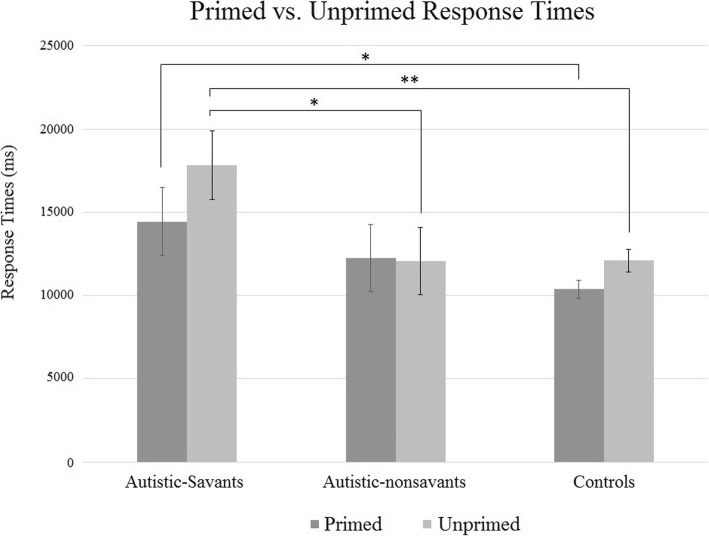
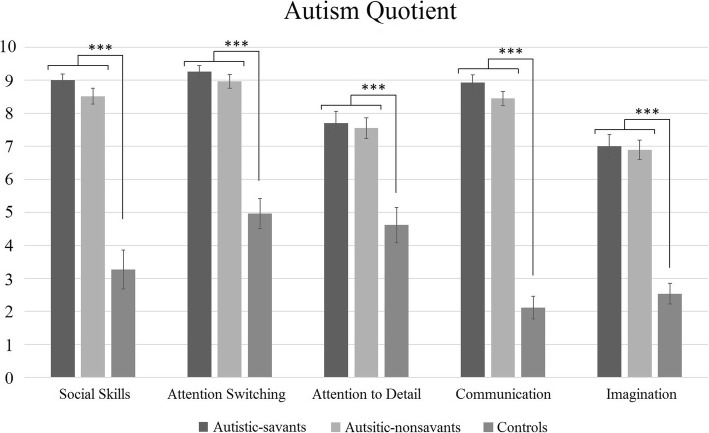
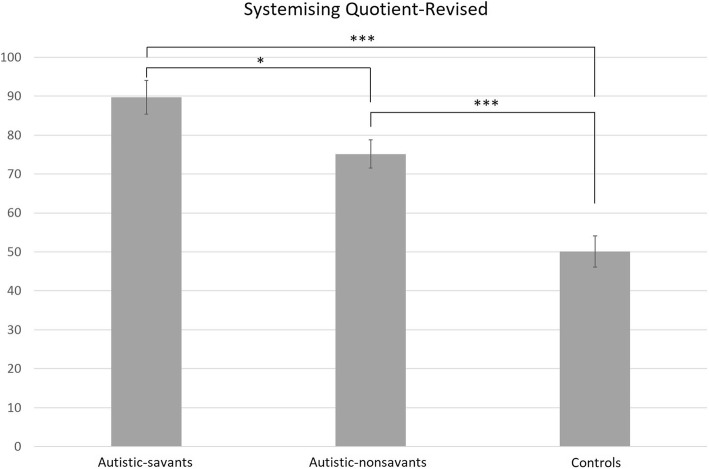
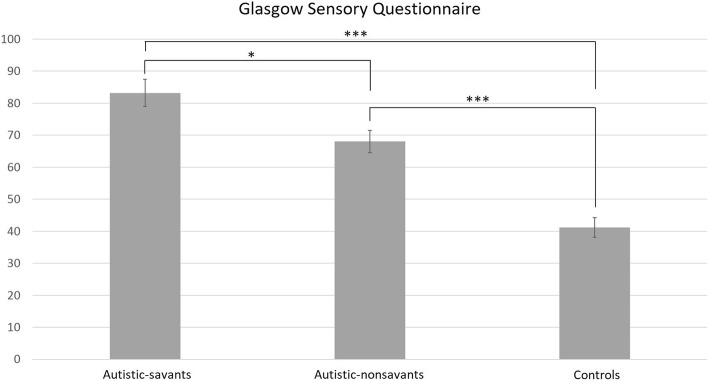
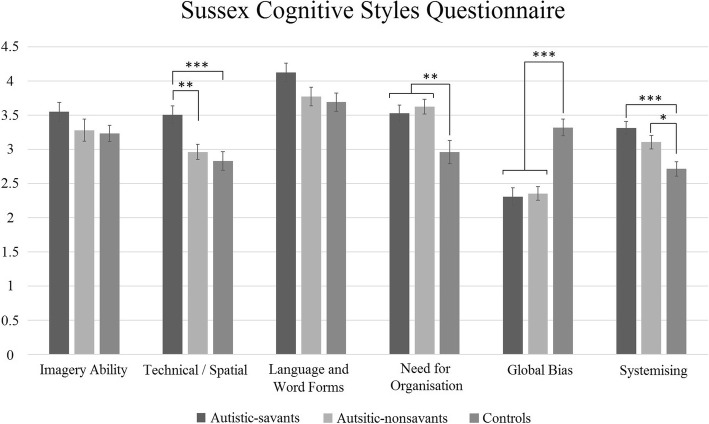
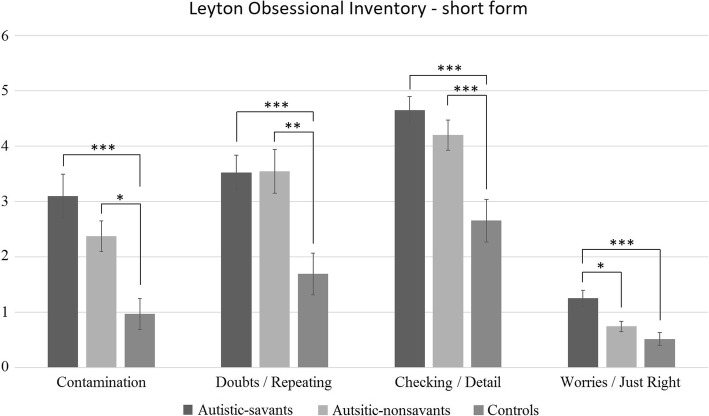
We tested three groups of adults: autistic individuals who have savant skills, autistic individuals without savant skills, and typical controls without autism or savant syndrome. In experiment 1, we investigated the cognitive and behavioural profiles of these three groups by asking participants to complete a battery of self-report measures of sensory sensitivity, obsessional behaviours, cognitive styles, and broader autism-related traits including social communication and systemising. In experiment 2, we investigated how our three groups learned a novel savant skill-calendar calculation.
Heightened sensory sensitivity, obsessional behaviours, technical/spatial abilities, and systemising were all key aspects in defining the savant profile distinct from autism alone, along with a different approach to task learning.
These results reveal a unique cognitive and behavioural profile in autistic adults with savant syndrome that is distinct from autistic adults without a savant skill.
学者症候群是一种特殊才能与自闭症谱系障碍(自闭症)等发育障碍同时存在的情况。目前还不清楚为什么有些自闭症患者会发展出学者症候群技能,而有些则不会。
我们测试了三组成年人:具有学者症候群技能的自闭症患者、没有学者症候群技能的自闭症患者和没有自闭症或学者症候群的典型对照组。在实验 1 中,我们通过让参与者完成一系列自我报告的感官敏感性、强迫行为、认知风格以及更广泛的自闭症相关特征(包括社交沟通和系统化)的测量来调查这三组人群的认知和行为特征。在实验 2 中,我们研究了我们的三组人群如何学习一项新的学者症候群技能——日历计算。
高度的感官敏感性、强迫行为、技术/空间能力和系统化都是定义学者症候群特征的关键方面,与自闭症本身不同,还有不同的任务学习方法。
这些结果揭示了自闭症患者中具有学者症候群的独特认知和行为特征,与没有学者症候群技能的自闭症患者不同。