International Science and Technology Cooperation Base of Spinal Cord Injury, Department of Orthopedic Surgery, Tianjin Medical University General Hospital, Tianjin, People's Republic of China,
Tianjin Neurological Institute, Key Laboratory of Post-Neuroinjury Neuro-repair and Regeneration in Central Nervous System, Ministry of Education and Tianjin City, Tianjin, People's Republic of China,
Int J Nanomedicine. 2018 Oct 10;13:6265-6277. doi: 10.2147/IJN.S175914. eCollection 2018.
Spinal cord injury (SCI) is a traumatic disease of the central nervous system, accompanied with high incidence and high disability rate. Tissue engineering scaffold can be used as therapeutic systems to provide effective repair for SCI.
In this study, a novel tissue engineering scaffold has been synthesized in order to explore the effect of nerve repair on SCI.
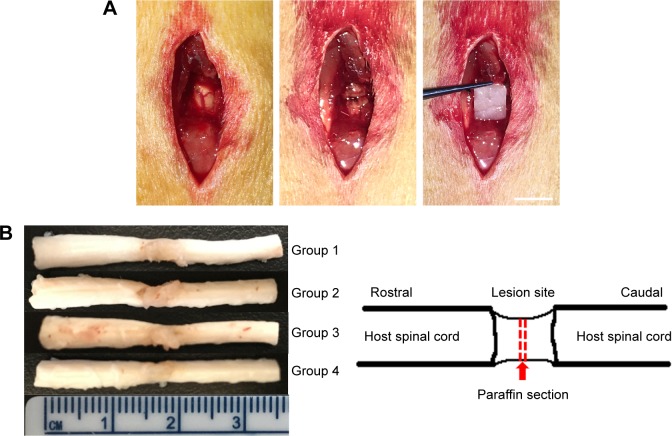
Polycaprolactone (PCL) scaffolds loaded with actived Schwann cells (ASCs) and induced pluripotent stem cells -derived neural stem cells (iPSC-NSCs), a combined cell transplantation strategy, were prepared and characterized. The cell-loaded PCL scaffolds were further utilized for the treatment of SCI in vivo. Histological observation, behavioral evaluation, Western-blot and qRT-PCR were used to investigate the nerve repair of Wistar rats after scaffold transplantation.
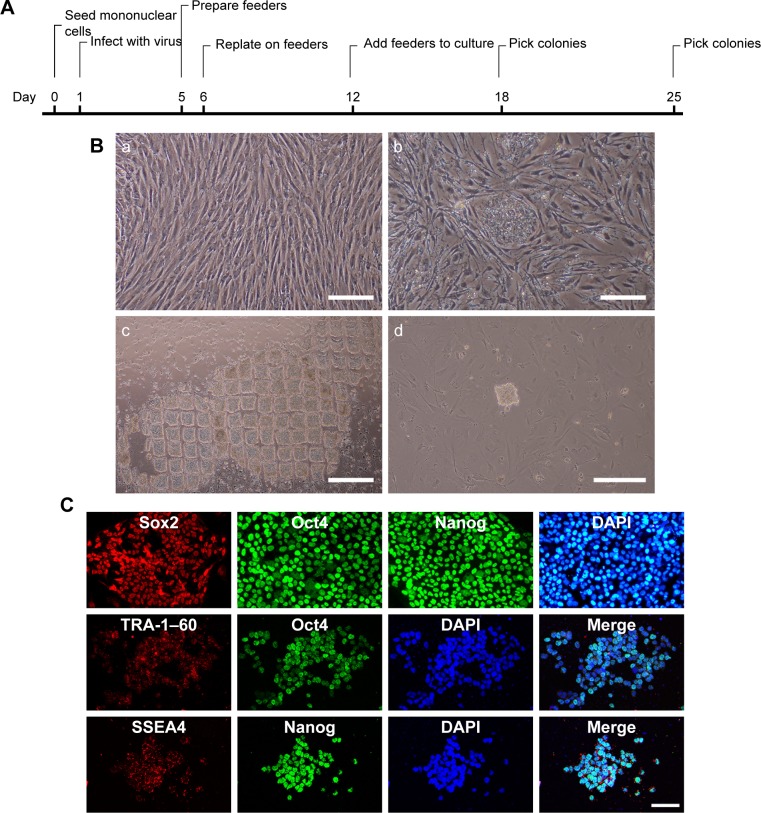
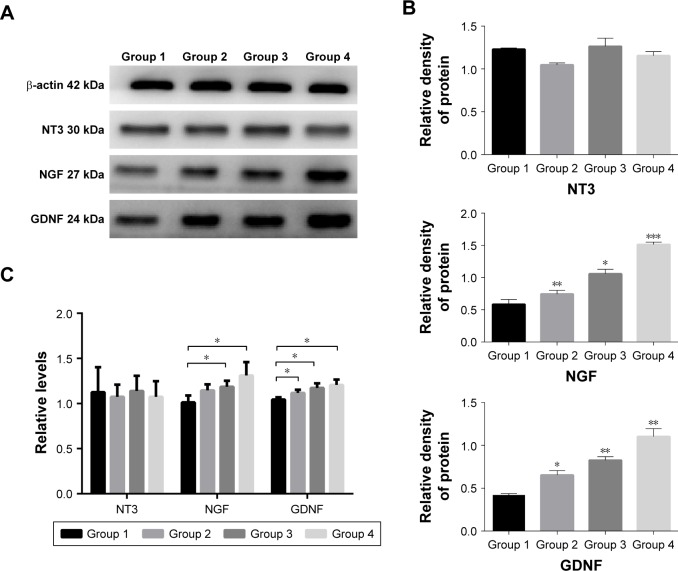
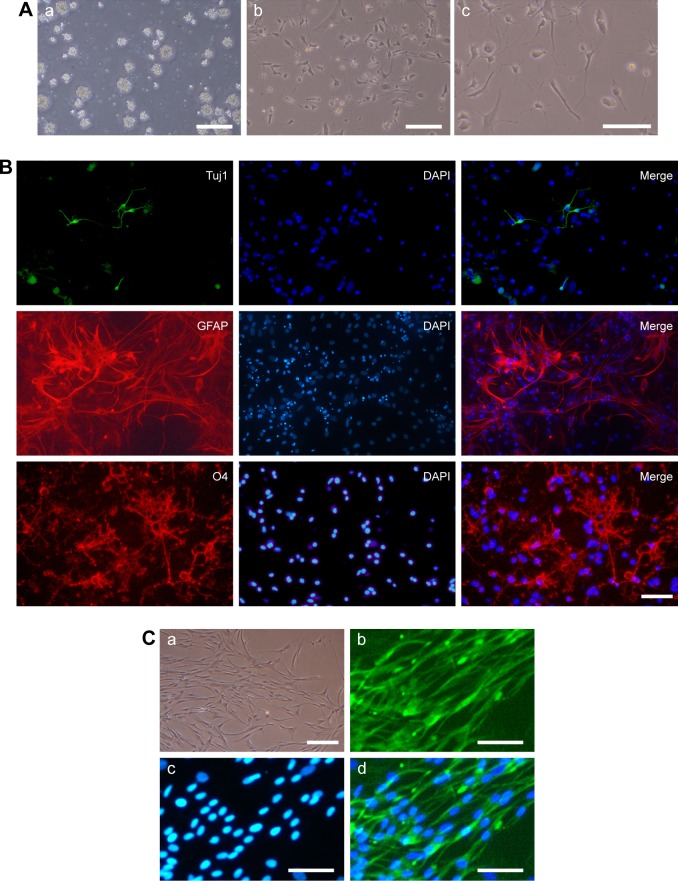
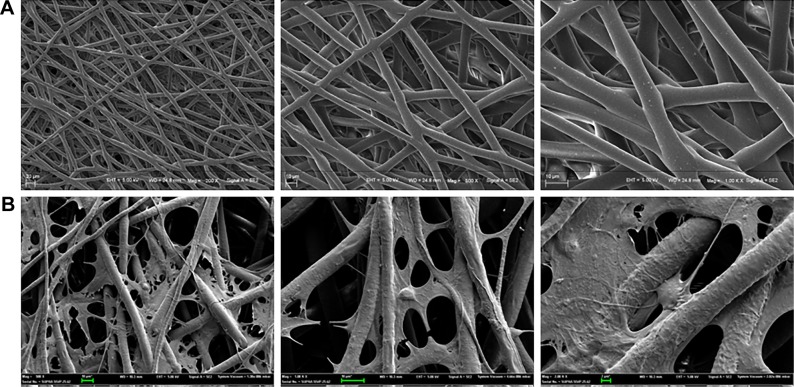
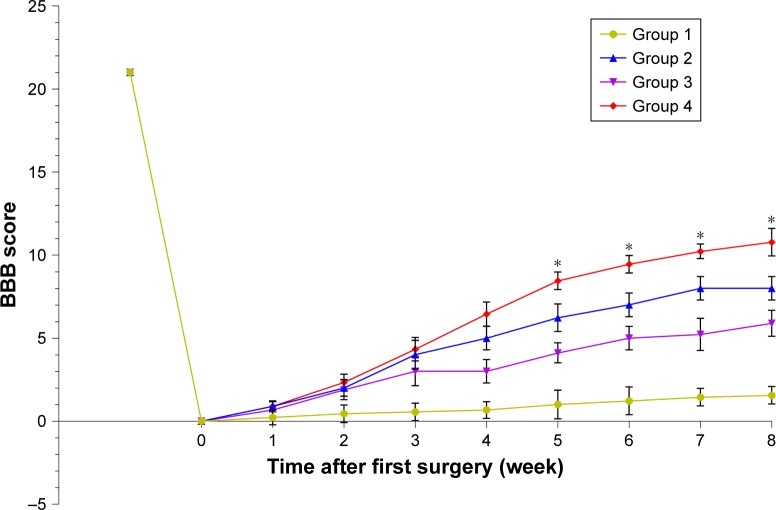
The iPSCs displayed similar characteristics to embryonic stem cells and were efficiently differentiated into neural stem cells in vitro. The obtained PCL scaffolds werê0.5 mm in thickness with biocompatibility and biodegradability. SEM results indicated that the ASCs and (or) iPS-NSCs grew well on PCL scaffolds. Moreover, transplantation reduced the volume of lesion cavity and improved locomotor recovery of rats. In addition, the degree of spinal cord recovery and remodeling maybe closely related to nerve growth factor and glial cell-derived neurotrophic factor. In summary, our results demonstrated that tissue engineering scaffold treatment could increase tissue remodeling and could promote motor function recovery in a transection SCI model.
This study provides preliminary evidence for using tissue engineering scaffold as a clinically viable treatment for SCI in the future.
脊髓损伤(SCI)是一种中枢神经系统的创伤性疾病,具有高发病率和高致残率。组织工程支架可用作治疗系统,为 SCI 提供有效的修复。
本研究合成了一种新型组织工程支架,以探讨其对 SCI 神经修复的影响。
制备并表征了负载激活雪旺细胞(ASCs)和诱导多能干细胞衍生的神经干细胞(iPSC-NSCs)的聚己内酯(PCL)支架,这是一种联合细胞移植策略。进一步将载细胞的 PCL 支架用于 SCI 的体内治疗。采用组织学观察、行为评估、Western blot 和 qRT-PCR 等方法,研究了支架移植后 Wistar 大鼠的神经修复情况。
iPS 细胞具有与胚胎干细胞相似的特征,并且能够在体外有效地分化为神经干细胞。获得的 PCL 支架厚度为 0.5mm,具有生物相容性和可生物降解性。SEM 结果表明,ASCs 和(或)iPSC-NSCs 在 PCL 支架上生长良好。此外,移植减少了损伤腔的体积,改善了大鼠的运动功能恢复。此外,脊髓恢复和重塑的程度可能与神经生长因子和胶质细胞源性神经营养因子密切相关。总之,我们的结果表明,组织工程支架治疗可以增加组织重塑,并促进横断性 SCI 模型中运动功能的恢复。
本研究为组织工程支架作为未来治疗 SCI 的一种可行的临床方法提供了初步证据。