Department of Pharmacology, University of Colorado School of Medicine, Aurora, CO 80045, USA.
Advanced Light Microscopy Core, University of Colorado School of Medicine, Aurora, CO 80045, USA.
Cell Rep. 2018 Oct 23;25(4):974-987.e4. doi: 10.1016/j.celrep.2018.09.085.
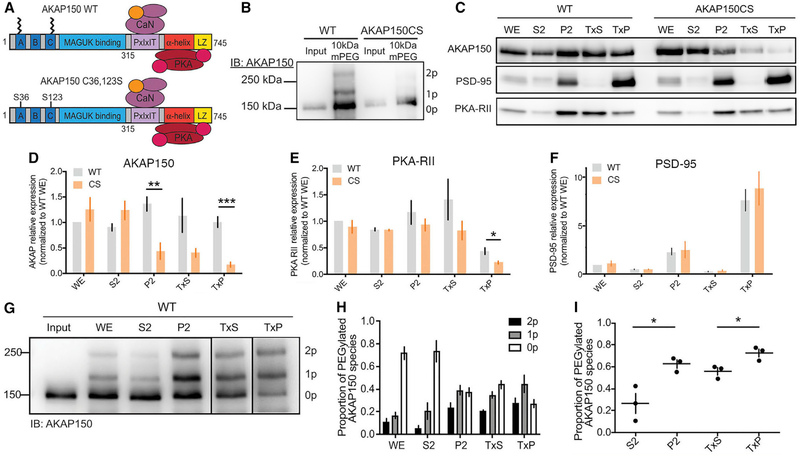
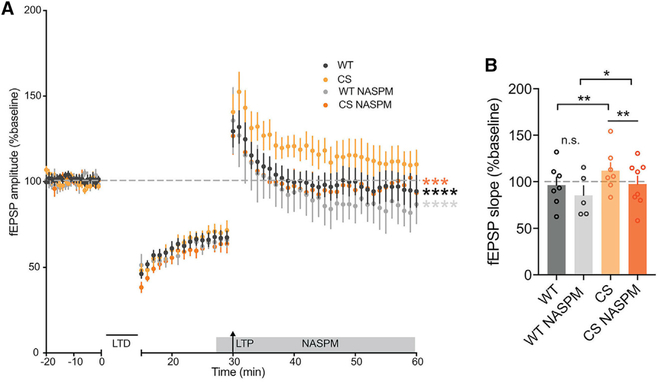
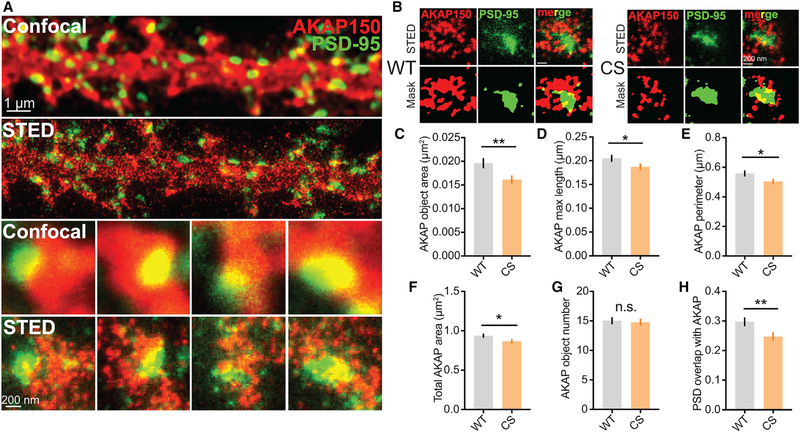
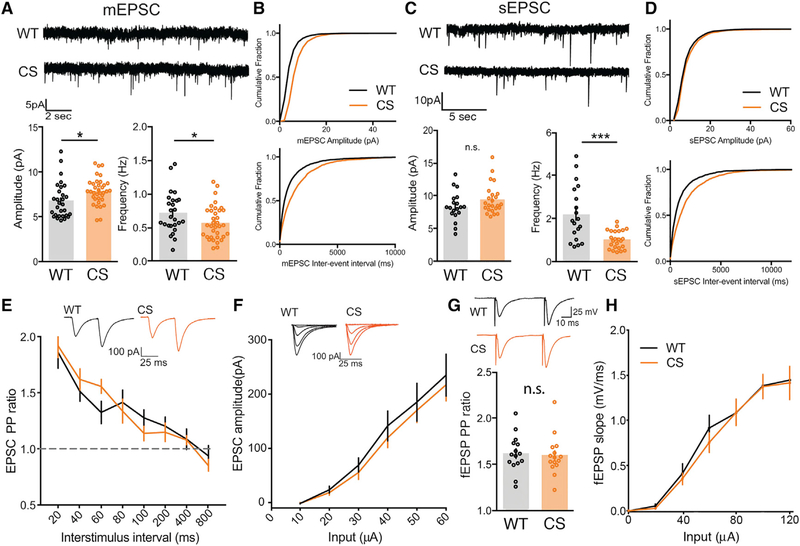
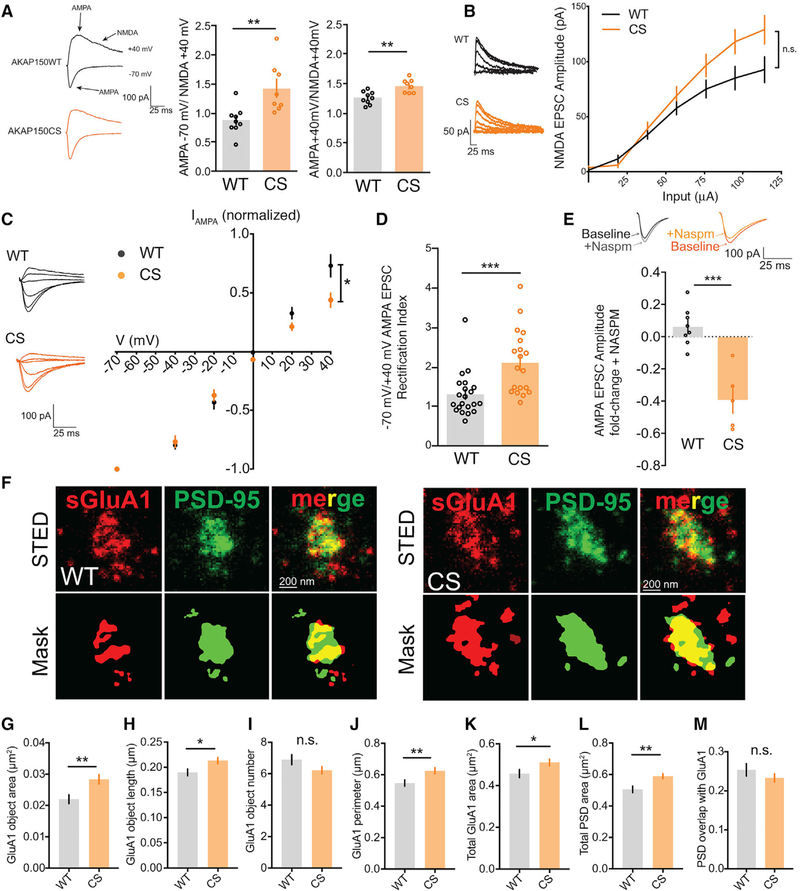
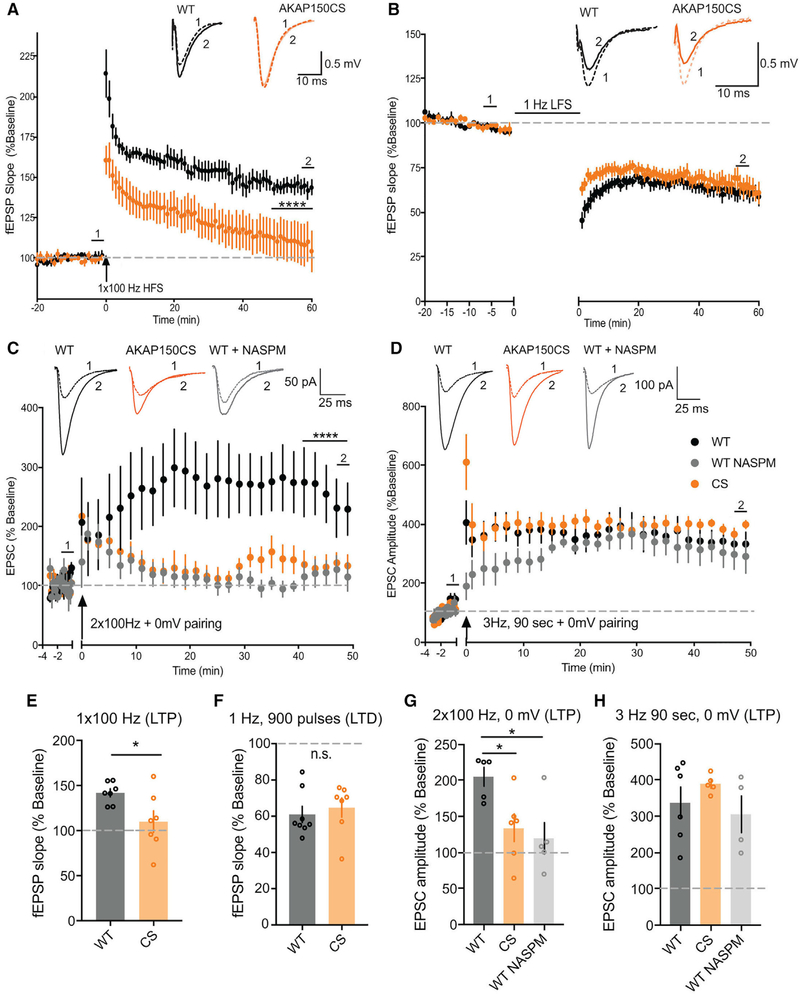
Ca-permeable AMPA-type glutamate receptors (CP-AMPARs) containing GluA1 but lacking GluA2 subunits contribute to multiple forms of synaptic plasticity, including long-term potentiation (LTP), but mechanisms regulating CP-AMPARs are poorly understood. A-kinase anchoring protein (AKAP) 150 scaffolds kinases and phosphatases to regulate GluA1 phosphorylation and trafficking, and trafficking of AKAP150 itself is modulated by palmitoylation on two Cys residues. Here, we developed a palmitoylation-deficient knockin mouse to show that AKAP150 palmitoylation regulates CP-AMPAR incorporation at hippocampal synapses. Using biochemical, super-resolution imaging, and electrophysiological approaches, we found that palmitoylation promotes AKAP150 localization to recycling endosomes and the postsynaptic density (PSD) to limit CP-AMPAR basal synaptic incorporation. In addition, we found that AKAP150 palmitoylation is required for LTP induced by weaker stimulation that recruits CP-AMPARs to synapses but not stronger stimulation that recruits GluA2-containing AMPARs. Thus, AKAP150 palmitoylation controls its subcellular localization to maintain proper basal and activity-dependent regulation of synaptic AMPAR subunit composition.
钙通透性的 AMPA 型谷氨酸受体(CP-AMPARs)包含 GluA1 但缺乏 GluA2 亚基,有助于多种形式的突触可塑性,包括长时程增强(LTP),但调节 CP-AMPARs 的机制还知之甚少。蛋白激酶 A 锚定蛋白(AKAP)150 支架激酶和磷酸酶以调节 GluA1 的磷酸化和运输,AKAP150 本身的运输受两个 Cys 残基上的棕榈酰化调节。在这里,我们开发了一种棕榈酰化缺陷敲入小鼠,以表明 AKAP150 的棕榈酰化调节海马突触处 CP-AMPAR 的掺入。使用生化、超分辨率成像和电生理方法,我们发现棕榈酰化促进 AKAP150 向再循环内体和突触后密度(PSD)的定位,以限制 CP-AMPAR 的基础突触掺入。此外,我们发现 AKAP150 的棕榈酰化对于由较弱刺激引起的 LTP 是必需的,较弱刺激会募集 CP-AMPARs 到突触,但不是募集含有 GluA2 的 AMPARs 的较强刺激。因此,AKAP150 的棕榈酰化控制其亚细胞定位,以维持适当的基础和活动依赖性调节突触 AMPAR 亚基组成。