Department of Chemical and Biomolecular Engineering, National University of Singapore, 4 Engineering Drive 4, Singapore, 117576, Singapore.
Bioprocessing Technology Institute, Agency for Science, Technology and Research (A*STAR), 20 Biopolis Way, #06-01, Centros, Singapore, 138668, Singapore.
Microb Cell Fact. 2018 Oct 25;17(1):167. doi: 10.1186/s12934-018-1015-7.
Cellular metabolism is tightly regulated by hard-wired multiple layers of biological processes to achieve robust and homeostatic states given the limited resources. As a result, even the most intuitive enzyme-centric metabolic engineering endeavours through the up-/down-regulation of multiple genes in biochemical pathways often deliver insignificant improvements in the product yield. In this regard, targeted engineering of transcriptional regulators (TRs) that control several metabolic functions in modular patterns is an interesting strategy. However, only a handful of in silico model-added techniques are available for identifying the TR manipulation candidates, thus limiting its strain design application.
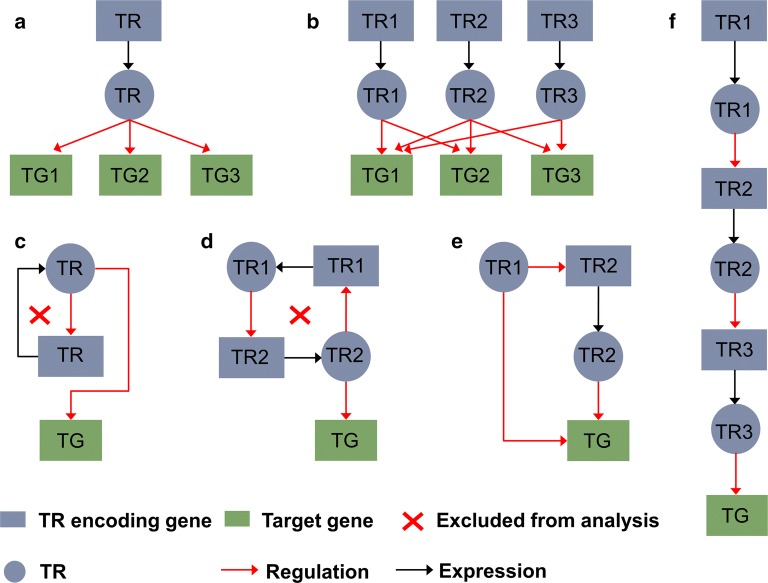
We developed hierarchical-Beneficial Regulatory Targeting (h-BeReTa) which employs a genome-scale metabolic model and transcriptional regulatory network (TRN) to identify the relevant TR targets suitable for strain improvement. We then applied this method to industrially relevant metabolites and cell factory hosts, Escherichia coli and Corynebacterium glutamicum. h-BeReTa suggested several promising TR targets, many of which have been validated through literature evidences. h-BeReTa considers the hierarchy of TRs in the TRN and also accounts for alternative metabolic pathways which may divert flux away from the product while identifying suitable metabolic fluxes, thereby performing superior in terms of global TR target identification.
In silico model-guided strain design framework, h-BeReTa, was presented for identifying transcriptional regulator targets. Its efficacy and applicability to microbial cell factories were successfully demonstrated via case studies involving two cell factory hosts, as such suggesting several intuitive targets for overproducing various value-added compounds.
细胞代谢受到多层次的生物过程的严格调控,以在有限的资源下实现稳健和内稳态。因此,即使通过生物化学途径中多个基因的上调/下调进行最直观的酶中心代谢工程努力,也往往无法显著提高产物产量。在这方面,以模块化方式控制多种代谢功能的转录调控因子(TRs)的靶向工程是一种有趣的策略。然而,目前仅有少数基于计算模型的技术可用于识别 TR 操作的候选物,从而限制了其在菌株设计中的应用。
我们开发了分层有益调控靶向(h-BeReTa),该方法利用基因组规模的代谢模型和转录调控网络(TRN)来识别适合菌株改良的相关 TR 靶标。然后,我们将该方法应用于工业相关代谢物和细胞工厂宿主大肠杆菌和谷氨酸棒杆菌。h-BeReTa 提出了几个有前途的 TR 靶标,其中许多已经通过文献证据得到了验证。h-BeReTa 考虑了 TRN 中 TR 的层次结构,同时还考虑了可能使通量偏离产物的替代代谢途径,从而在识别合适的代谢通量方面表现出色,从而在全局 TR 靶标识别方面表现出色。
提出了基于计算模型指导的菌株设计框架 h-BeReTa,用于识别转录调控因子靶标。通过涉及两个细胞工厂宿主的案例研究成功证明了其功效和适用性,从而为各种增值化合物的过量生产提出了几个直观的目标。