State Key Laboratory of Oral Diseases & National Clinical Research Center for Oral Diseases & Dept. of Cariology and Endodontics West China Hospital of Stomatology, Sichuan University, No. 14, Section 3 of Renmin South Road, Chengdu, Sichuan, China.
J Transl Med. 2018 Oct 25;16(1):293. doi: 10.1186/s12967-018-1669-2.
Human saliva is a protein-rich, easily accessible source of potential biomarkers for the diagnosis of oral and systemic diseases. However, little is known about the changes in salivary proteome associated with aging of patients with dental caries. Here, we applied isobaric tags for relative and absolute quantitation (iTRAQ) in combination with multiple reaction monitoring mass spectrometry (MRM-MS) to characterize the salivary proteome profiles of subjects of different ages, presenting with and without caries, with the aim of identifying age-related biomarkers for dental caries.
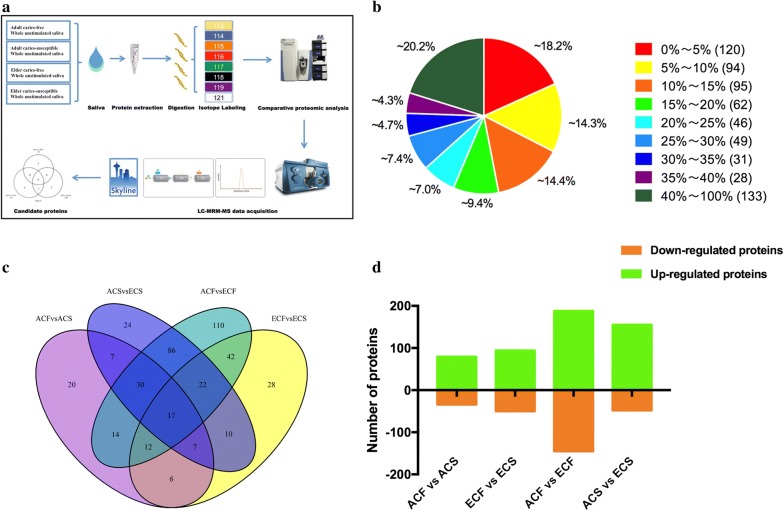
Unstimulated whole saliva samples were collected from 40 caries-free and caries-susceptible young adults and elderly individuals. Salivary proteins were extracted, reduced, alkylated, digested with trypsin and then analyzed using iTRAQ-coupled LC-MS/MS, followed by GO annotation, biological pathway analysis, hierarchical clustering analysis, and protein-protein interaction analysis. Candidate verification was then conducted using MRM-MS.
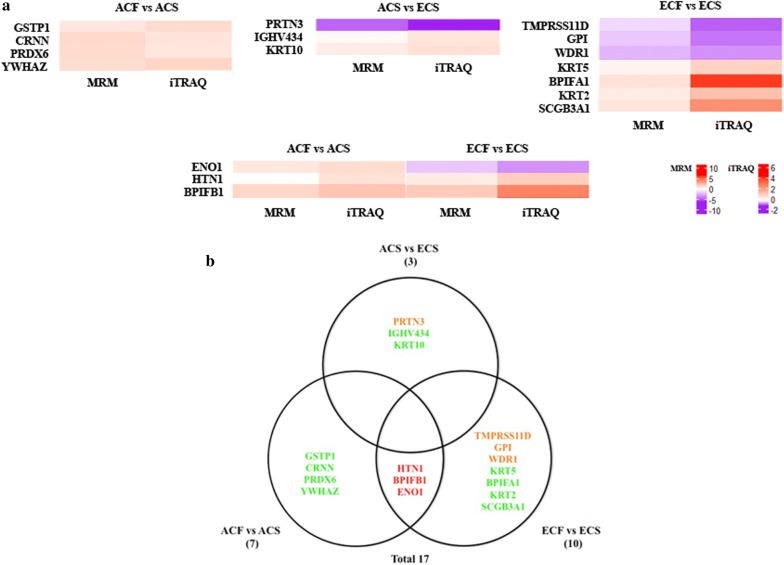
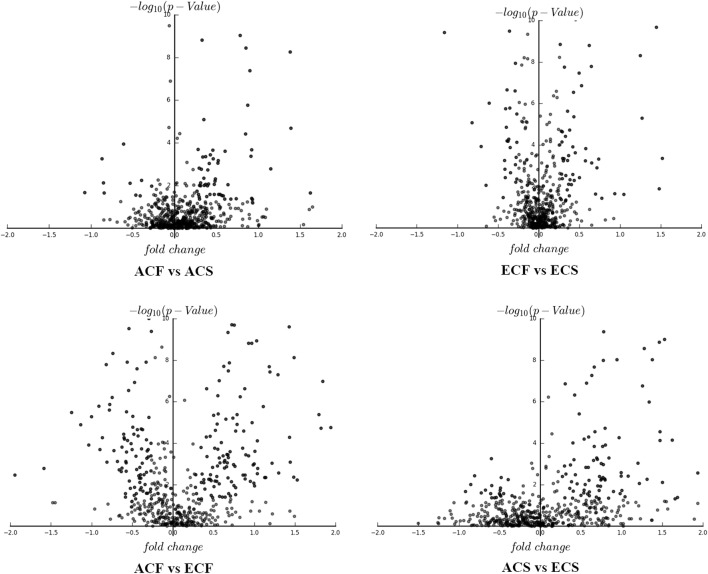
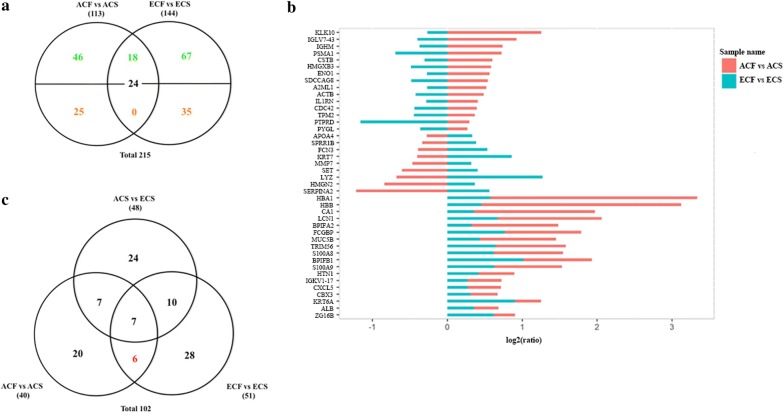
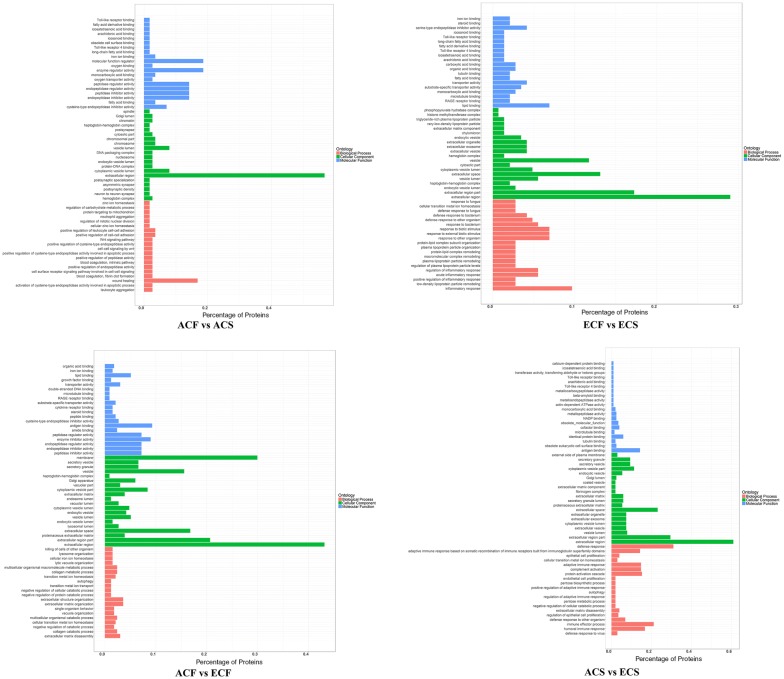
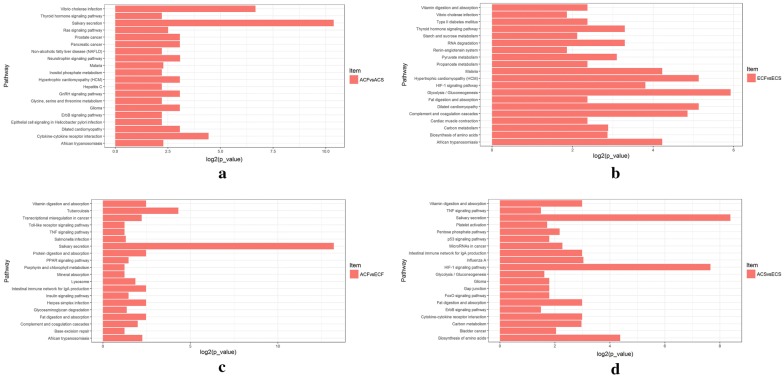
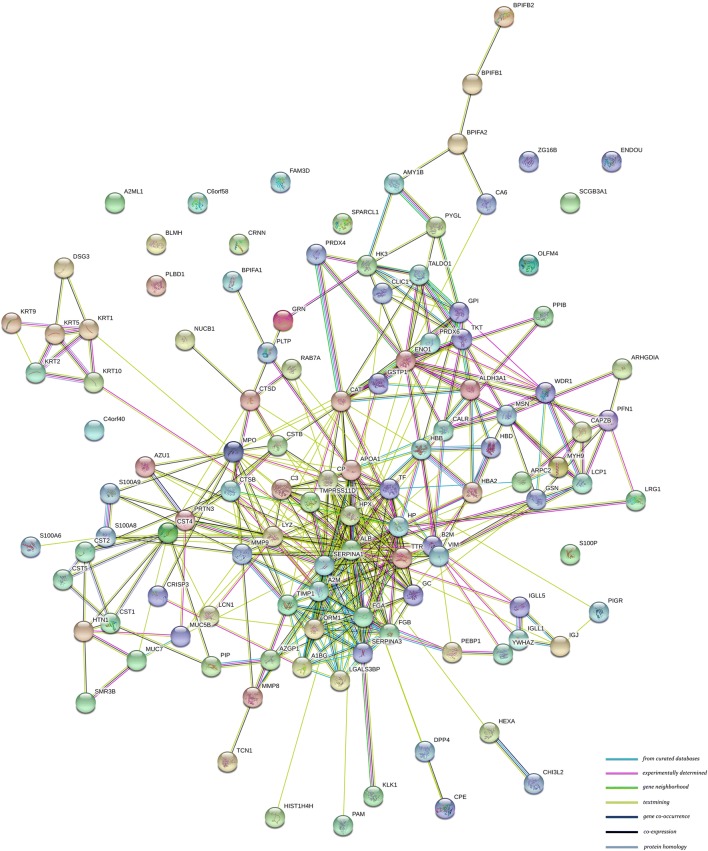
Among 658 salivary proteins identified using tandem mass spectrometry, 435 proteins exhibited altered expression patterns in different age groups with and without caries. Of these proteins, 96 displayed age-specific changes among caries-susceptible adults and elderly individuals, and were mainly associated with salivary secretion pathway, while 110 age-specific proteins were identified among healthy individuals. It was found that the age factor caused significant variations and played an important role in both healthy and cariogenic salivary proteomes. Subsequently, a total of 136 target proteins with complex protein-protein interactions, including 14 age-specific proteins associated with caries, were further successfully validated using MRM analysis. Moreover, non-age-specific proteins (histatin-1 and BPI fold-containing family B member 1) were verified to be important candidate biomarkers for common dental caries.
Our proteomic analysis performed using the discovery-through-verification pipeline revealed distinct variations caused by age factor in both healthy and cariogenic salivary proteomes, highlighting the significance of age in the great potential of saliva for caries diagnosis and biomarker discovery.
人类唾液是一种富含蛋白质的、易于获取的潜在生物标志物来源,可用于诊断口腔和系统性疾病。然而,对于与龋齿患者年龄相关的唾液蛋白质组变化知之甚少。在这里,我们应用相对和绝对定量同位素标记(iTRAQ)联合多重反应监测质谱(MRM-MS)技术,对不同年龄、有或无龋齿的受试者的唾液蛋白质组谱进行了特征描述,旨在鉴定与龋齿相关的年龄标志物。
从 40 名无龋和易患龋齿的年轻成年人和老年人中采集非刺激性全唾液样本。提取唾液蛋白,进行还原、烷基化、胰蛋白酶消化,然后使用 iTRAQ 耦联 LC-MS/MS 进行分析,接着进行 GO 注释、生物途径分析、层次聚类分析和蛋白质-蛋白质相互作用分析。然后使用 MRM-MS 进行候选物验证。
通过串联质谱鉴定了 658 种唾液蛋白,其中 435 种蛋白在有无龋齿的不同年龄组中表现出不同的表达模式。在这些蛋白中,96 种在易患龋齿的成年人和老年人中表现出年龄特异性变化,主要与唾液分泌途径相关,而在健康个体中则鉴定出 110 种年龄特异性蛋白。结果发现,年龄因素导致了显著的变化,在健康和致龋唾液蛋白质组中都发挥了重要作用。随后,使用 MRM 分析共成功验证了 136 种具有复杂蛋白质-蛋白质相互作用的靶蛋白,包括 14 种与龋齿相关的年龄特异性蛋白。此外,非年龄特异性蛋白(组蛋白-1 和 BPI 折叠家族 B 成员 1)被验证为普通龋齿的重要候选生物标志物。
我们使用发现-验证的蛋白质组学分析管道进行的分析表明,年龄因素在健康和致龋唾液蛋白质组中都引起了明显的变化,突出了年龄在唾液用于龋齿诊断和生物标志物发现方面的巨大潜力中的重要性。