Letsiou Eleftheria, Bauer Natalie
Division of Pulmonary Inflammation, Charité-Universitätsmedizin Berlin, corporate member of Freie Universität Berlin, Humboldt-Universität zu Berlin, and Berlin Institute of Health, Berlin, Germany.
Department of Pharmacology & Center for Lung Biology, College of Medicine, University of South Alabama, Mobile, AL, United States.
Curr Top Membr. 2018;82:197-256. doi: 10.1016/bs.ctm.2018.09.002. Epub 2018 Oct 8.
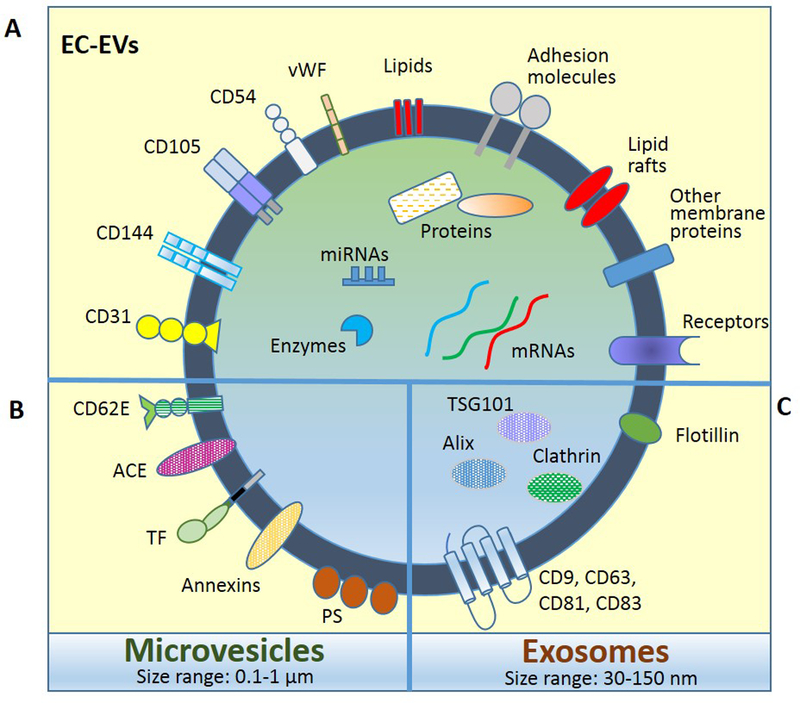
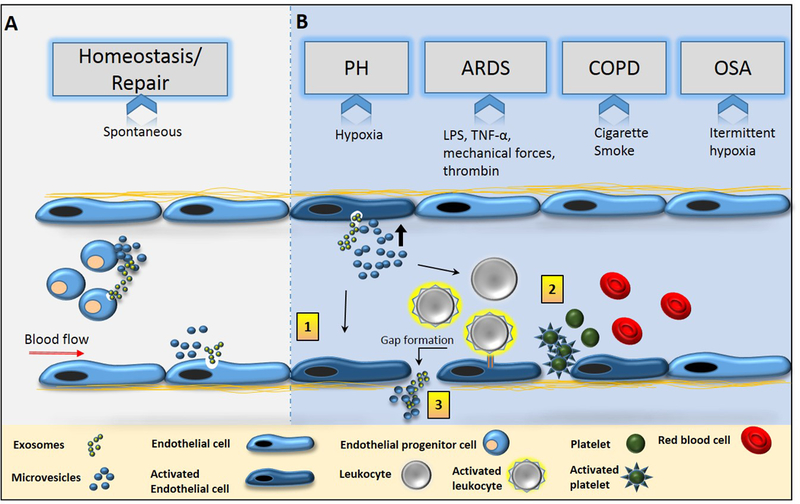
The pulmonary vascular endothelium is involved in the pathogenesis of acute and chronic lung diseases. Endothelial cell (EC)-derived products such as extracellular vesicles (EVs) serve as EC messengers that mediate inflammatory as well as cytoprotective effects. EC-EVs are a broad term, which encompasses exosomes and microvesicles of endothelial origin. EVs are comprised of lipids, nucleic acids, and proteins that reflect not only the cellular origin but also the stimulus that triggered their biogenesis and secretion. This chapter presents an overview of the biology of EC-EVs and summarizes key findings regarding their characteristics, components, and functions. The role of EC-EVs is specifically delineated in pulmonary diseases characterized by endothelial dysfunction, including pulmonary hypertension, acute respiratory distress syndrome and associated conditions, chronic obstructive pulmonary disease, and obstructive sleep apnea.
肺血管内皮参与急慢性肺部疾病的发病机制。内皮细胞(EC)衍生的产物,如细胞外囊泡(EVs),作为EC信使,介导炎症以及细胞保护作用。EC-EVs是一个广义术语,涵盖内皮来源的外泌体和微囊泡。EVs由脂质、核酸和蛋白质组成,不仅反映细胞来源,还反映触发其生物发生和分泌的刺激因素。本章概述了EC-EVs的生物学特性,并总结了有关其特征、成分和功能的主要发现。EC-EVs的作用在以内皮功能障碍为特征的肺部疾病中得到了具体阐述,包括肺动脉高压、急性呼吸窘迫综合征及相关病症、慢性阻塞性肺疾病和阻塞性睡眠呼吸暂停。