Division of Pulmonary, Critical Care, Sleep and Allergy, University of Illinois at Chicago, Chicago, IL 60612, USA.
Division of Pulmonary Inflammation, Charité-Universitätsmedizin Berlin, Corporate Member of Freie Univeristät Berlin and Humboldt-Univeristät zu Berlin, 10117 Berlin, Germany.
Cells. 2021 Dec 18;10(12):3581. doi: 10.3390/cells10123581.
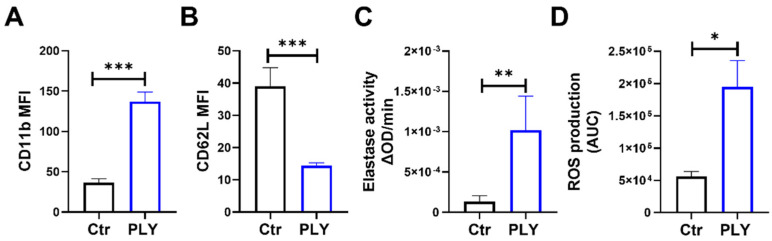
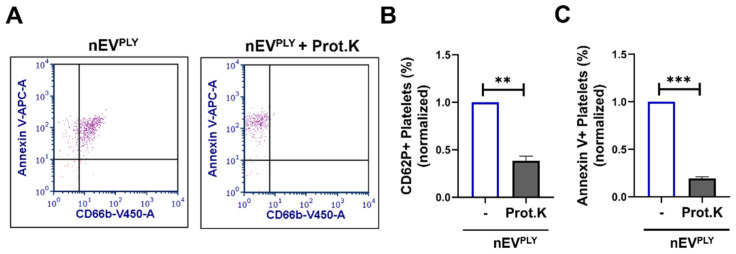
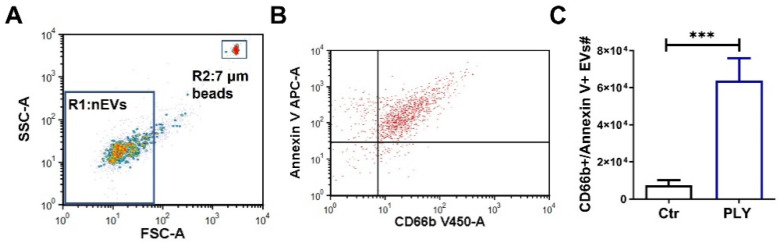
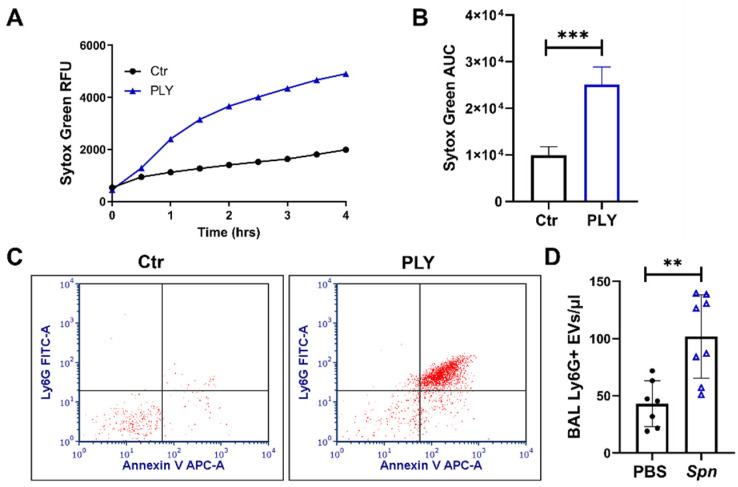
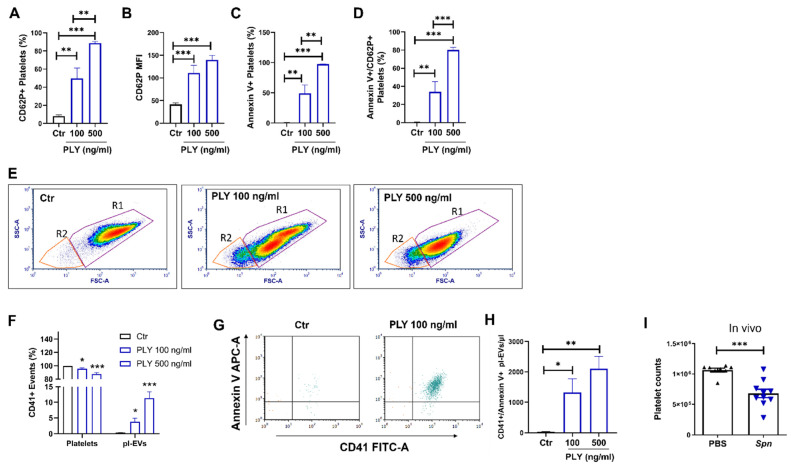
Pneumolysin (PLY) is a pore-forming toxin of that contributes substantially to the inflammatory processes underlying pneumococcal pneumonia and lung injury. Host responses against are regulated in part by neutrophils and platelets, both individually and in cooperative interaction. Previous studies have shown that PLY can target both neutrophils and platelets, however, the mechanisms by which PLY directly affects these cells and alters their interactions are not completely understood. In this study, we characterize the effects of PLY on neutrophils and platelets and explore the mechanisms by which PLY may induce neutrophil-platelet interactions. In vitro studies demonstrated that PLY causes the formation of neutrophil extracellular traps (NETs) and the release of extracellular vesicles (EVs) from both human and murine neutrophils. In vivo, neutrophil EV (nEV) levels were increased in mice infected with . In platelets, treatment with PLY induced the cell surface expression of P-selectin (CD62P) and binding to annexin V and caused a significant release of platelet EVs (pl-EVs). Moreover, PLY-induced nEVs but not NETs promoted platelet activation. The pretreatment of nEVs with proteinase K inhibited platelet activation, indicating that the surface proteins of nEVs play a role in this process. Our findings demonstrate that PLY activates neutrophils and platelets to release EVs and support an important role for neutrophil EVs in modulating platelet functions in pneumococcal infections.
肺炎链球菌溶血素(PLY)是一种成孔毒素,它在肺炎链球菌性肺炎和肺损伤的炎症过程中起重要作用。宿主对肺炎链球菌的反应部分受中性粒细胞和血小板的调节,它们可以单独发挥作用,也可以相互合作。先前的研究表明,PLY 可以靶向中性粒细胞和血小板,然而,PLY 直接影响这些细胞并改变它们相互作用的机制尚不完全清楚。在这项研究中,我们描述了 PLY 对中性粒细胞和血小板的影响,并探讨了 PLY 可能诱导中性粒细胞-血小板相互作用的机制。体外研究表明,PLY 导致人类和鼠类中性粒细胞形成中性粒细胞细胞外陷阱(NETs)和释放细胞外囊泡(EVs)。在体内,感染肺炎链球菌的小鼠中,中性粒细胞 EV(nEV)水平增加。在血小板中,PLY 处理诱导 P 选择素(CD62P)在细胞表面表达,并与 annexin V 结合,并导致血小板 EVs(pl-EVs)的大量释放。此外,PLY 诱导的 nEVs 而不是 NETs 促进血小板活化。用蛋白酶 K 预处理 nEVs 可抑制血小板活化,表明 nEVs 的表面蛋白在此过程中起作用。我们的研究结果表明,PLY 激活中性粒细胞和血小板释放 EVs,并支持中性粒细胞 EVs 在调节肺炎链球菌感染中的血小板功能方面发挥重要作用。