Djavad Mowafaghian Centre for Brain Health, University of British Columbia, 2211 Wesbrook Mall, Vancouver, BC V6T 2B5, Canada.
Department of Zoology, University of British Columbia, 2350 Health Sciences Mall, Vancouver, BC V6T 1Z4, Canada.
Dis Model Mech. 2018 Nov 26;11(12):dmm036517. doi: 10.1242/dmm.036517.
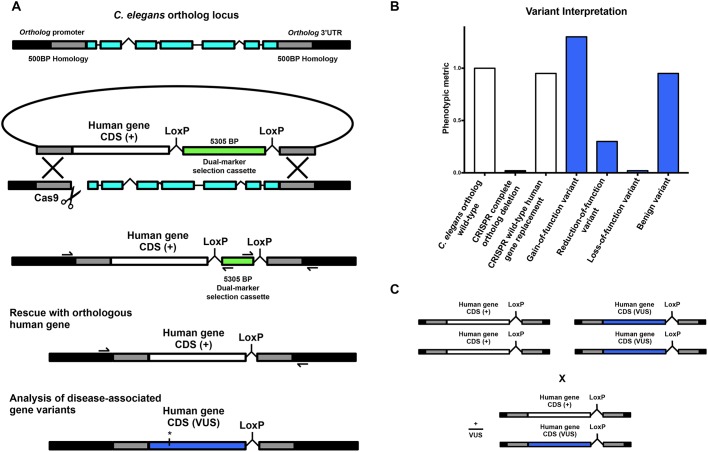
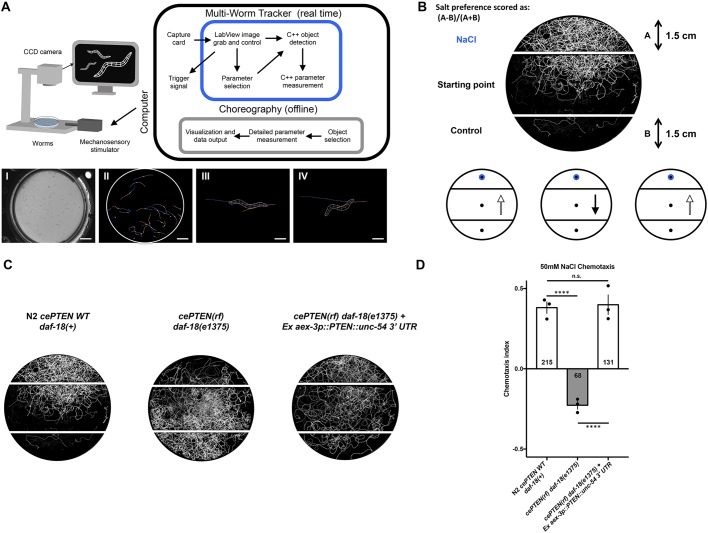
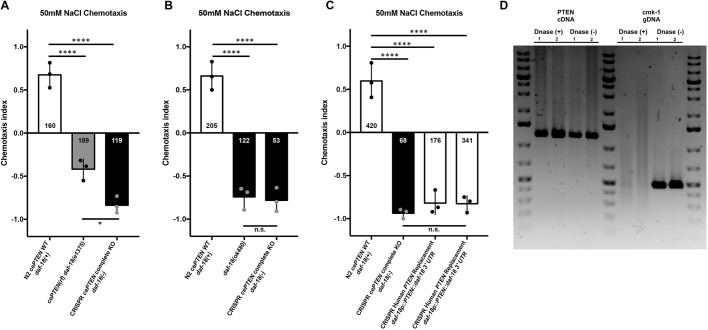
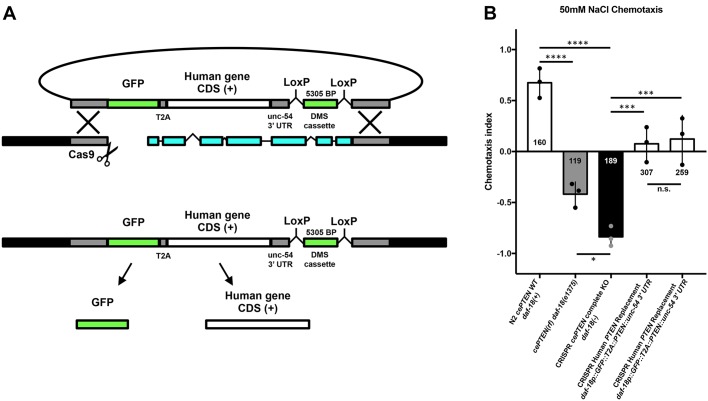
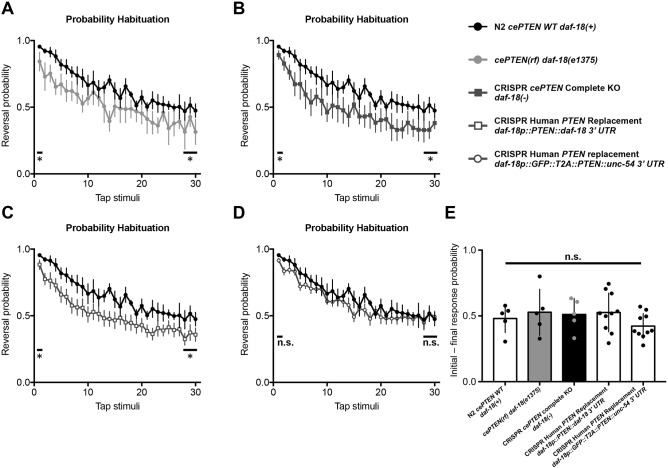
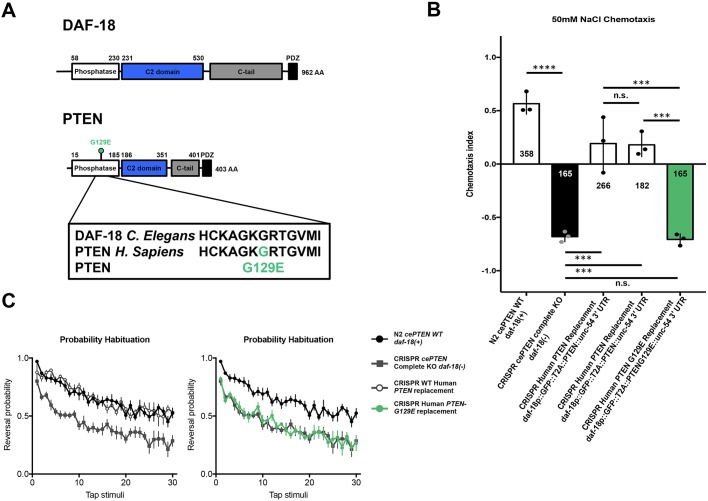
Our ability to sequence genomes has vastly surpassed our ability to interpret the genetic variation we discover. This presents a major challenge in the clinical setting, where the recent application of whole-exome and whole-genome sequencing has uncovered thousands of genetic variants of uncertain significance. Here, we present a strategy for targeted human gene replacement and phenomic characterization, based on CRISPR-Cas9 genome engineering in the genetic model organism , that will facilitate assessment of the functional conservation of human genes and structure-function analysis of disease-associated variants with unprecedented precision. We validate our strategy by demonstrating that direct single-copy replacement of the ortholog () with the critical human disease-associated gene phosphatase and tensin homolog () is sufficient to rescue multiple phenotypic abnormalities caused by complete deletion of , including complex chemosensory and mechanosensory impairments. In addition, we used our strategy to generate animals harboring a single copy of the known pathogenic lipid phosphatase inactive PTEN variant (PTEN-G129E), and showed that our automated phenotypic assays could accurately and efficiently classify this missense variant as loss of function. The integrated nature of the human transgenes allows for analysis of both homozygous and heterozygous variants and greatly facilitates high-throughput precision medicine drug screens. By combining genome engineering with rapid and automated phenotypic characterization, our strategy streamlines the identification of novel conserved gene functions in complex sensory and learning phenotypes that can be used as functional assays to decipher variants of uncertain significance.
我们对基因组进行测序的能力已经大大超过了我们对所发现遗传变异进行解释的能力。这在临床环境中构成了重大挑战,因为全外显子组和全基因组测序的最新应用已经发现了数千种意义不明的遗传变异。在这里,我们提出了一种基于 CRISPR-Cas9 基因组工程的靶向人类基因替换和表型特征分析的策略,该策略将有助于评估人类基因的功能保守性,并以前所未有的精度对与疾病相关的变异进行结构-功能分析。我们通过证明直接单拷贝替换遗传模型生物中的同源物()与关键的人类疾病相关基因磷酸酶和张力蛋白同源物()足以挽救完全缺失引起的多种表型异常,验证了我们的策略,包括复杂的化学感觉和机械感觉障碍。此外,我们还使用我们的策略生成了携带已知致病脂质磷酸酶失活 PTEN 变体(PTEN-G129E)的单个拷贝的动物,并表明我们的自动化表型测定可以准确有效地将这种错义变体分类为功能丧失。人类转基因的集成性质允许分析纯合子和杂合子变体,并极大地促进了高通量精准医学药物筛选。通过将基因组工程与快速和自动化的表型特征分析相结合,我们的策略简化了对复杂感觉和学习表型中新型保守基因功能的鉴定,这些功能可作为功能测定来破译意义不明的变体。