Babor Thomas F, Robaina Katherine, Brown Katherine, Noel Jonathan, Cremonte Mariana, Pantani Daniela, Peltzer Raquel I, Pinsky Ilana
Department of Community Medicine and Health Care, University of Connecticut School of Medicine, Farmington, Connecticut, USA.
Institute of Alcohol Studies (IAS), London, UK.
BMJ Open. 2018 Oct 24;8(10):e024325. doi: 10.1136/bmjopen-2018-024325.
The aims of this study were to: (1) describe alcohol industry corporate social responsibility (CSR) actions conducted across six global geographic regions; (2) identify the benefits accruing to the industry ('doing well'); and (3) estimate the public health impact of the actions ('doing good').
Actions from six global geographic regions.
A web-based compendium of 3551 industry actions, representing the efforts of the alcohol industry to reduce harmful alcohol use, was issued in 2012. The compendium consisted of short descriptions of each action, plus other information about the sponsorship, content and evaluation of the activities. Public health professionals (n=19) rated a sample (n=1046) of the actions using a reliable content rating procedure.
WHO Global strategy target area, estimated population reach, risk of harm, advertising potential, policy impact potential and other aspects of the activity.
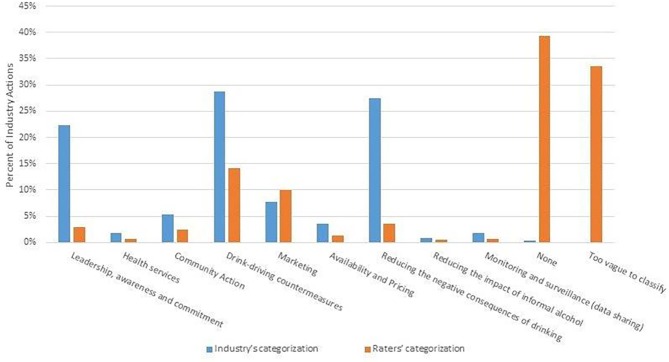
The industry actions were conducted disproportionately in regions with high-income countries (Europe and North America), with lower proportions in Latin America, Africa and Asia. Only 27% conformed to recommended WHO target areas for global action to reduce the harmful use of alcohol. The overwhelming majority (96.8%) of industry actions lacked scientific support (p<0.01) and 11.0% had the potential for doing harm. The benefits accruing to the industry ('doing well') included brand marketing and the use of CSR to manage risk and achieve strategic goals.
Alcohol industry CSR activities are unlikely to reduce harmful alcohol use but they do provide commercial strategic advantage while at the same time appearing to have a public health purpose.
本研究的目的是:(1)描述全球六个地理区域开展的酒精行业企业社会责任(CSR)行动;(2)确定该行业所获得的益处(“做得好”);(3)评估这些行动对公众健康的影响(“做得好”)。
来自全球六个地理区域的行动。
2012年发布了一份基于网络的3551项行业行动纲要,代表了酒精行业为减少有害酒精使用所做的努力。该纲要包括每项行动的简短描述,以及有关活动赞助、内容和评估的其他信息。公共卫生专业人员(n = 19)使用可靠的内容评级程序对一部分行动(n = 1046)进行了评级。
世界卫生组织全球战略目标领域、估计覆盖人群、危害风险、广告潜力、政策影响潜力以及活动的其他方面。
行业行动在高收入国家所在地区(欧洲和北美)开展的比例过高,而在拉丁美洲、非洲和亚洲的比例较低。只有27%符合世界卫生组织关于减少有害酒精使用的全球行动建议目标领域。绝大多数(96.8%)行业行动缺乏科学支持(p<0.01),11.0%有可能造成危害。该行业所获得的益处(“做得好”)包括品牌营销以及利用企业社会责任来管理风险和实现战略目标。
酒精行业的企业社会责任活动不太可能减少有害酒精使用,但它们确实提供了商业战略优势,同时似乎具有公共卫生目的。