Department of Neurosurgery, The First Hospital of China Medical University, NO.155, North Nanjing Street, Heping District, Shenyang City 110001, China.
College of Life and Health Sciences, Northeastern University, Shenyang, China.
EBioMedicine. 2018 Nov;37:78-90. doi: 10.1016/j.ebiom.2018.10.053. Epub 2018 Oct 29.
As a neurotrophic factor, prosaposin (PSAP) can exert neuroprotective and neurotrophic effects. It is involved in the occurrence and development of prostate and breast cancer. However, there is no research about the role of PSAP in glioma.
The PSAP overexpressed or silenced glioma cells or glioma stem cells were established based on Lentiviral vector transfection. Cell viability assay, Edu assay, neurosphere formation assay and xenograft experiments were used to detect the proliferative ability. Western blot, Elisa and luciferase reporter assays were used to detect the possible mechanism.
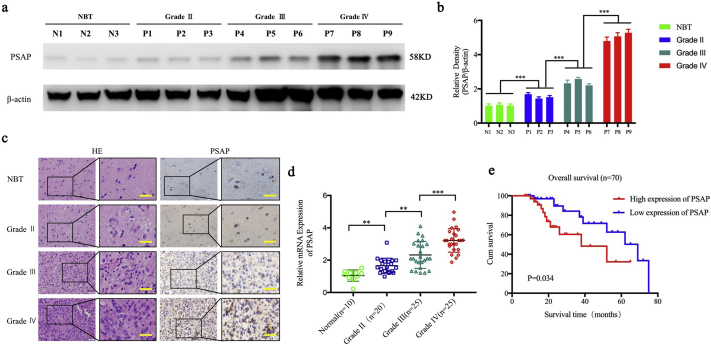
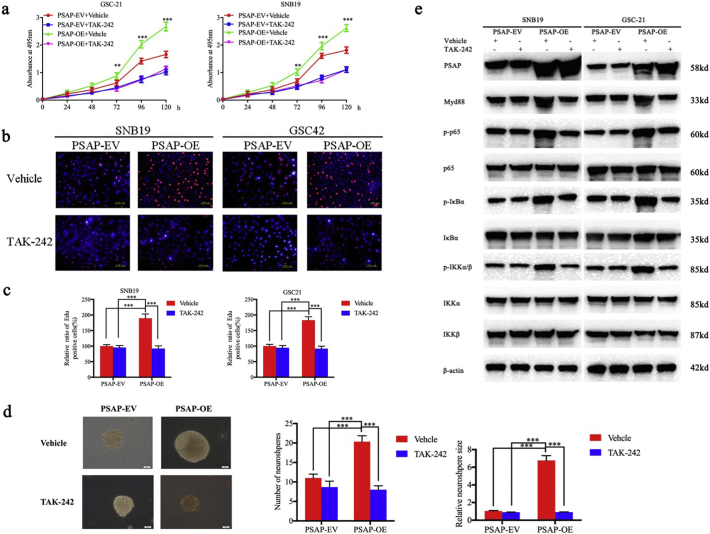
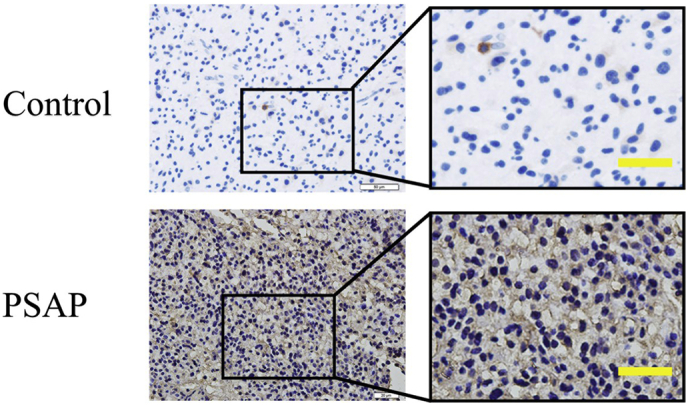
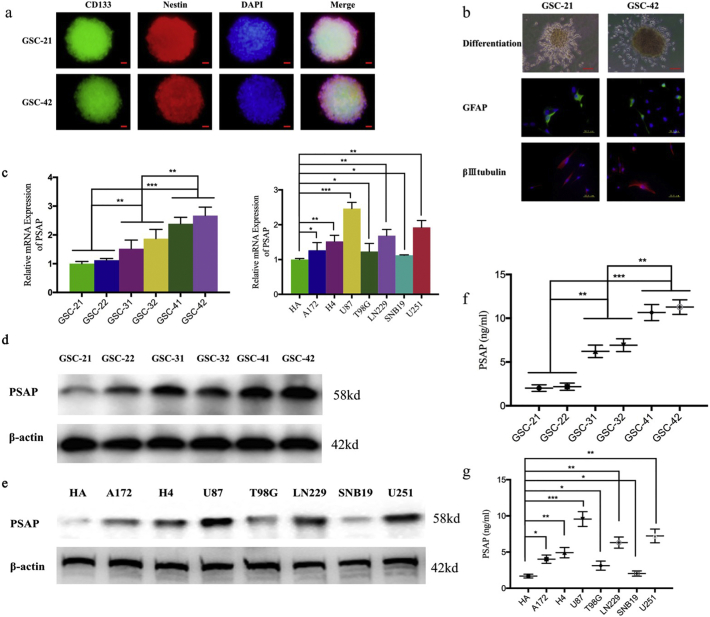
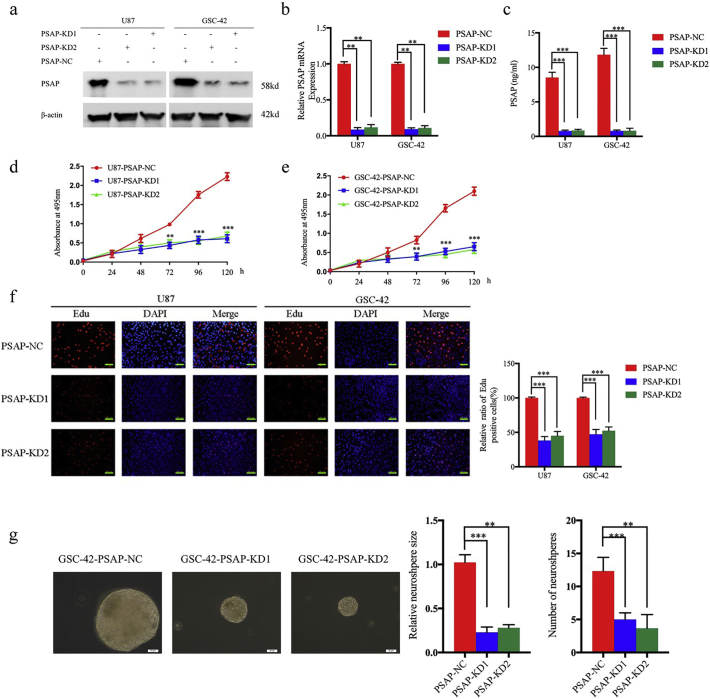
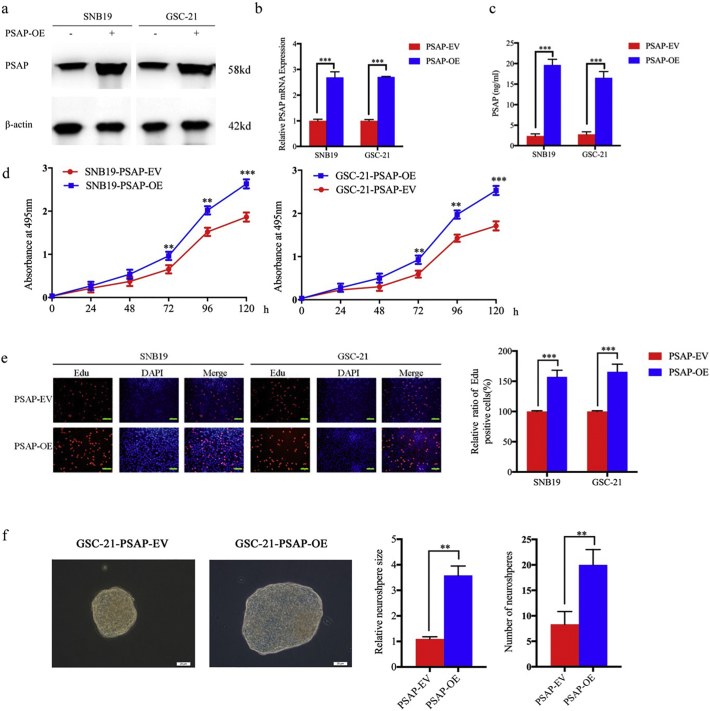
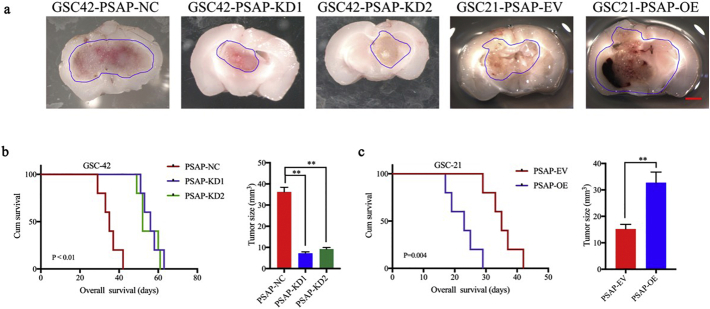
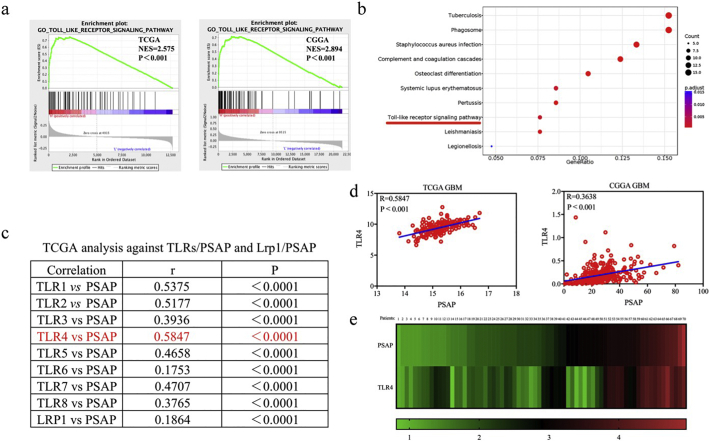
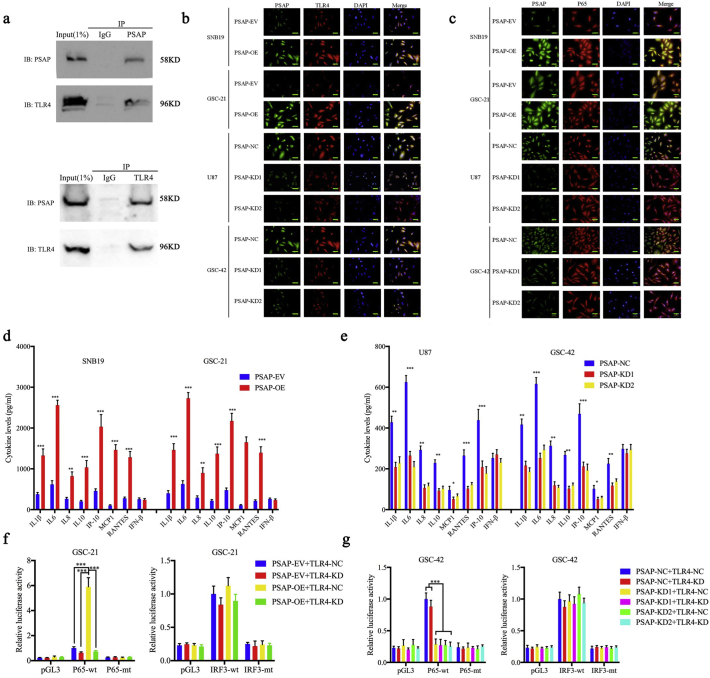
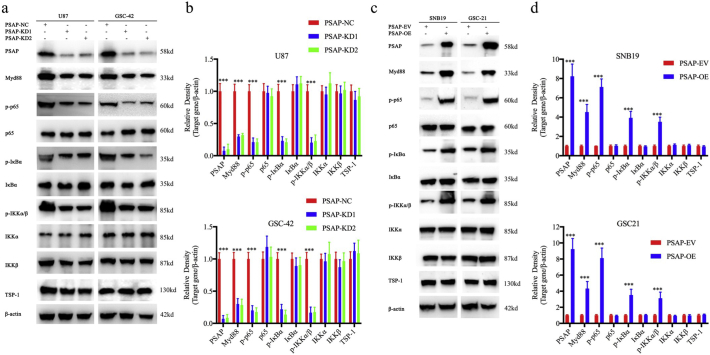
Our study firstly found that PSAP was highly expressed and secreted in clinical glioma specimens, glioma stem cells, and glioma cell lines. It was associated with poor prognosis. We found that PSAP significantly promoted the proliferation of glioma stem cells and cell lines. Moreover, PSAP promoted tumorigenesis in subcutaneous and orthotopic models of this disease. Furthermore, GSEA and KEGG analysis predicted that PSAP acts through the TLR4 and NF-κB signaling pathways, which was confirmed by western blot, immunoprecipitation, immunofluorescence, and use of the TLR4-specific inhibitor TAK-242.
The findings of this study suggest that PSAP can promote glioma cell proliferation via the TLR4/NF-κB signaling pathway and may be an important target for glioma treatment. FUND: This work was funded by National Natural Science Foundation of China (Nos. 81101917, 81270036, 81201802, 81673025), Program for Liaoning Excellent Talents in University (No. LR2014023), and Liaoning Province Natural Science Foundation (Nos. 20170541022, 20172250290). The funders did not play a role in manuscript design, data collection, data analysis, interpretation nor writing of the manuscript.
作为一种神经营养因子,前蛋白转化酶枯草溶菌素 9(prosaposin,PSAP)具有神经保护和神经营养作用,参与前列腺癌和乳腺癌的发生发展。然而,目前尚无 PSAP 在神经胶质瘤中作用的研究。
利用慢病毒载体转染建立 PSAP 过表达或沉默的神经胶质瘤细胞或神经胶质瘤干细胞。通过细胞活力检测、EdU 检测、神经球形成检测和异种移植实验检测细胞的增殖能力。Western blot、Elisa 和荧光素酶报告基因检测用于检测可能的机制。
本研究首次发现 PSAP 在临床神经胶质瘤标本、神经胶质瘤干细胞和神经胶质瘤细胞系中高表达和分泌,与不良预后相关。我们发现 PSAP 可显著促进神经胶质瘤干细胞和细胞系的增殖。此外,PSAP 促进了该疾病的皮下和原位模型的肿瘤发生。进一步的 GSEA 和 KEGG 分析预测 PSAP 通过 TLR4 和 NF-κB 信号通路发挥作用,Western blot、免疫沉淀、免疫荧光和 TLR4 特异性抑制剂 TAK-242 的使用证实了这一点。
本研究结果表明 PSAP 可通过 TLR4/NF-κB 信号通路促进神经胶质瘤细胞增殖,可能是神经胶质瘤治疗的重要靶点。
本研究得到国家自然科学基金(Nos. 81101917, 81270036, 81201802, 81673025)、辽宁省高等学校优秀人才支持计划(No. LR2014023)和辽宁省自然科学基金(Nos. 20170541022, 20172250290)的资助。基金资助者在 manuscript 设计、数据收集、数据分析、解释或撰写方面没有发挥作用。