Vaara Jani P, Oksanen Hermanni, Kyröläinen Heikki, Virmavirta Mikko, Koski Harri, Finni Taija
Department of Leadership and Military Pedagogy, National Defence University, Helsinki, Finland.
Faculty of Sport and Health Sciences, Neuromuscular Research Center, University of Jyväskylä, Jyväskylä, Finland.
Front Physiol. 2018 Oct 16;9:1437. doi: 10.3389/fphys.2018.01437. eCollection 2018.
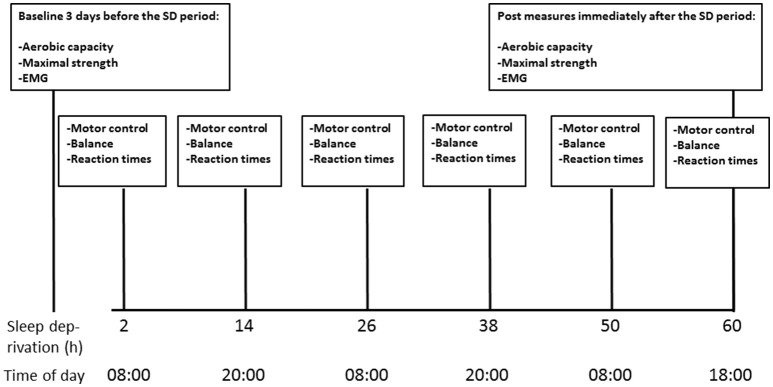
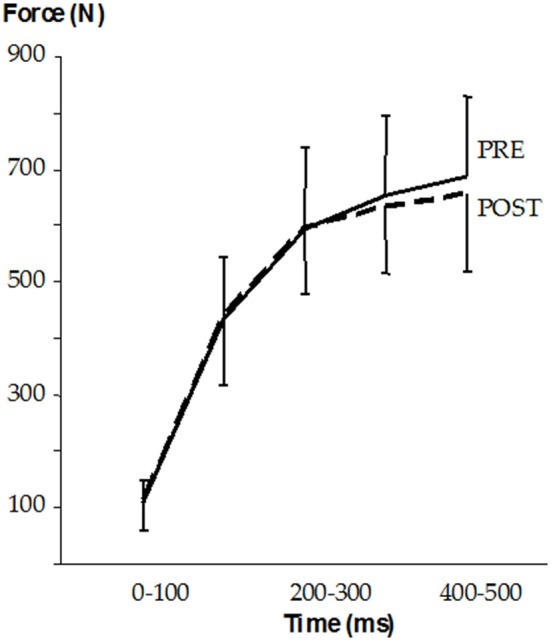
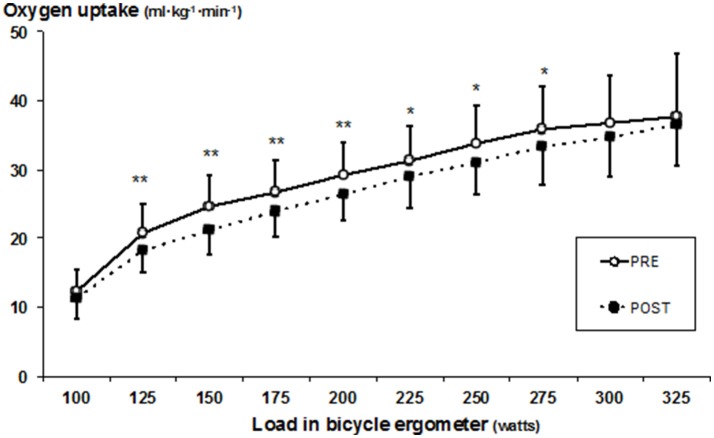
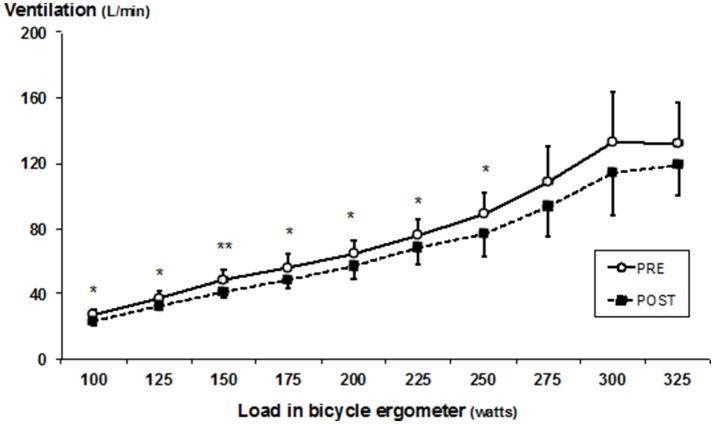
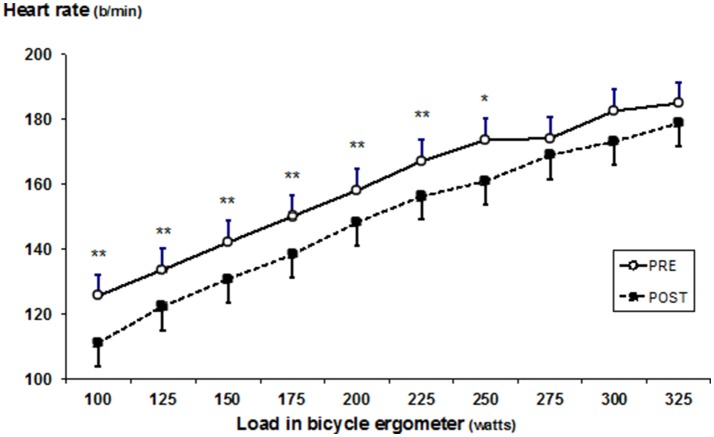
The effect of 60-h sleep deprivation (SD) on physical performance and motor control was studied. Twenty cadets were measured for aerobic performance (VO) before and immediately after the SD period. Maximal strength and EMG of the knee extensor muscles were measured before and after 60 h of SD. Balance, reaction times and motor control were assessed every evening and morning during the SD period. Main effects were observed for heart rate ( = 0.002, partial eta squared: 0.669), VO ( = 0.004, partial eta squared: 0.621), ventilation ( = 0.016, partial eta squared: 0.049), and lactate concentration ( = 0.022, partial eta squared: 0.501), whereas RER remained unaltered ( = 0.213, partial eta squared: 0.166). Pairwise comparisons revealed decreased values at submaximal loads in heart rate, VO, ventilation (all < 0.05) but not in RER, whereas all of their respective maximal values remained unchanged. Moreover, pairwise comparisons revealed decreased lactate concentration at maximal performance but only at 8-min time point during submaximal workloads ( < 0.05). Pairwise comparisons of maximal strength, EMG and rate of force development revealed no change after SD. Main effects were observed for motor and postural control, as well as for reaction times (all < 0.05), whereas pairwise comparison did not reveal a consistent pattern of change. In conclusion, motor control can mostly be maintained during 60-h SD, and maximal neuromuscular and aerobic performances are unaffected. However, submaximal cardiorespiratory responses seem to be attenuated after SD.
研究了60小时睡眠剥夺(SD)对身体机能和运动控制的影响。在SD期之前和之后立即对20名学员进行了有氧能力(VO)测量。在60小时SD前后测量了膝关节伸肌的最大力量和肌电图。在SD期的每天早晚评估平衡、反应时间和运动控制。观察到心率( = 0.002,偏 eta 平方:0.669)、VO( = 0.004,偏 eta 平方:0.621)、通气( = 0.016,偏 eta 平方:0.049)和乳酸浓度( = 0.022,偏 eta 平方:0.501)有主效应,而呼吸交换率(RER)保持不变( = 0.213,偏 eta 平方:0.166)。两两比较显示,在次最大负荷下心率、VO、通气的值降低(均 < 0.05),但RER未降低,而它们各自的最大值均保持不变。此外,两两比较显示,在最大运动表现时乳酸浓度降低,但仅在次最大工作量的8分钟时间点降低( < 0.05)。最大力量、肌电图和力量发展速率的两两比较显示SD后无变化。观察到运动和姿势控制以及反应时间有主效应(均 < 0.05),而两两比较未显示一致的变化模式。总之,在60小时SD期间运动控制大多可以维持,最大神经肌肉和有氧能力不受影响。然而,SD后次最大心肺反应似乎减弱。