Laboratory of Vector Control Research, Environment and Health Unit, Institut Pasteur de la Guadeloupe, 97183, Les Abymes, Guadeloupe, France.
CIRAD, UMR ASTRE, F-97170, Petit Bourg, Guadeloupe, France.
Parasit Vectors. 2018 Nov 3;11(1):574. doi: 10.1186/s13071-018-3157-1.
Matrix-assisted laser desorption/ionization time-of-flight mass spectrometry technology (MALDI-TOF MS) is an innovative tool that has been shown to be effective for the identification of numerous arthropod groups including mosquitoes. A critical step in the implementation of MALDI-TOF MS identification is the creation of spectra databases (DB) for the species of interest. Mosquito legs were the body part most frequently used to create identification DB. However, legs are one of the most fragile mosquito compartments, which can put identification at risk. Here, we assessed whether mosquito thoraxes could also be used as a relevant body part for mosquito species identification using a MALDI-TOF MS biotyping strategy; we propose a double DB query strategy to reinforce identification success.
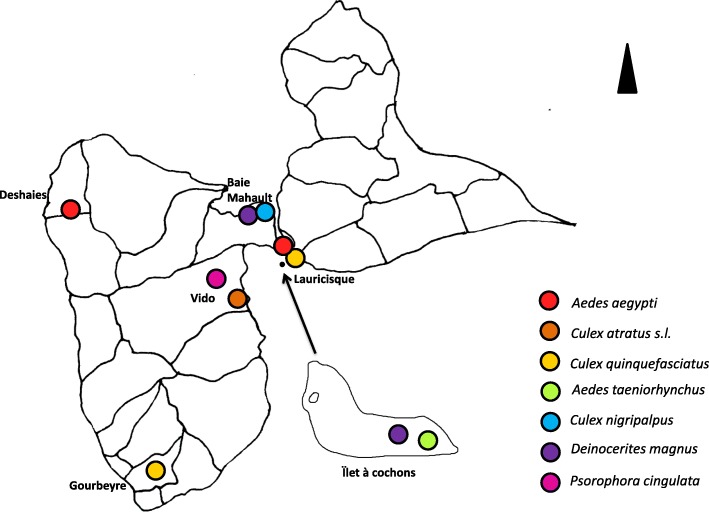
Thoraxes and legs from 91 mosquito specimens belonging to seven mosquito species collected in six localities from Guadeloupe, and two laboratory strains, Aedes aegypti BORA and Aedes albopictus Marseille, were dissected and analyzed by MALDI-TOF MS. Molecular identification using cox1 gene sequencing was also conducted on representative specimens to confirm their identification.
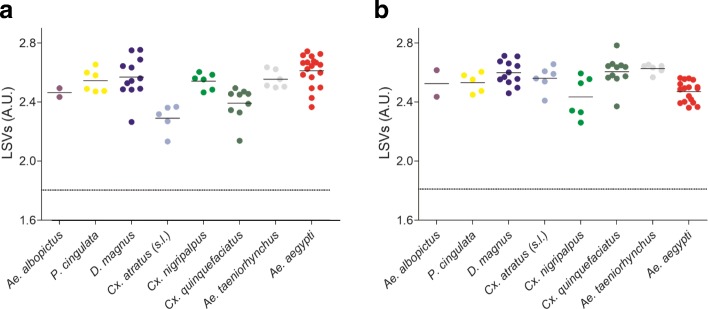
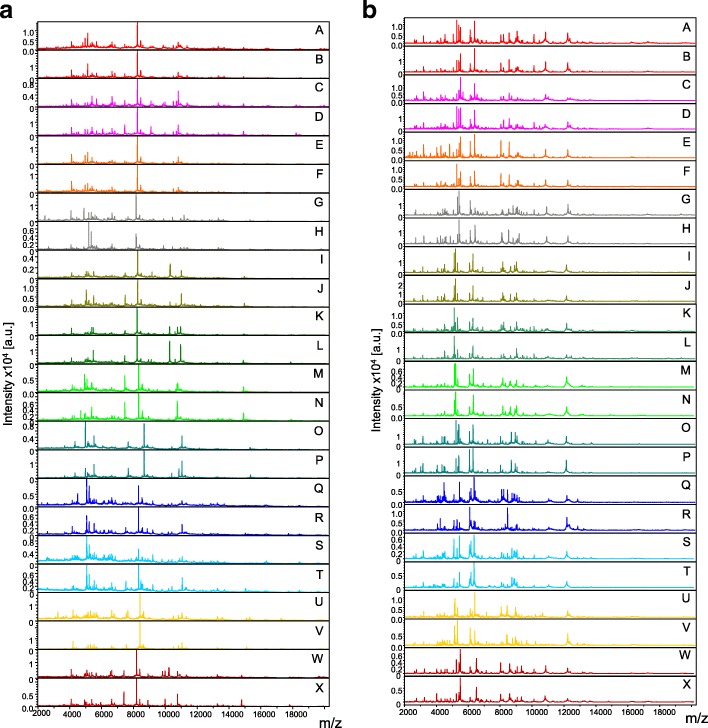
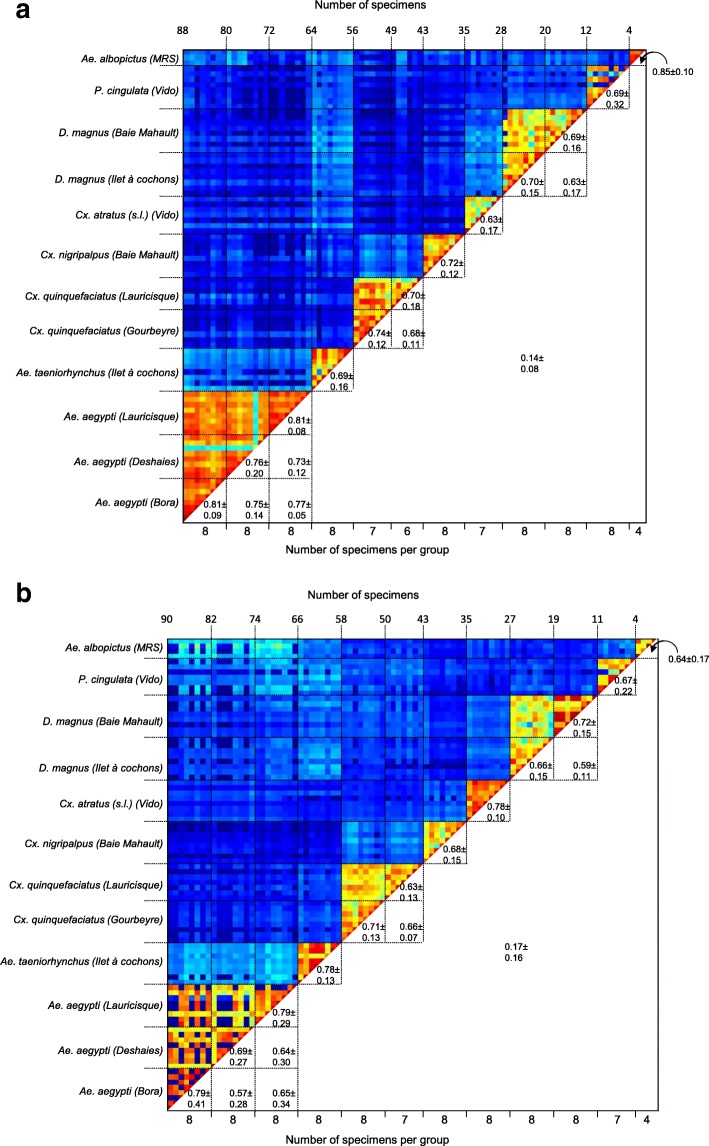
MS profiles obtained with both thoraxes and legs were highly compartment-specific, species-specific and species-reproducible, allowing high identification scores (log-score values, LSVs) when queried against the in-house MS reference spectra DB (thorax LSVs range: 2.260-2.783, leg LSVs range: 2.132-2.753).
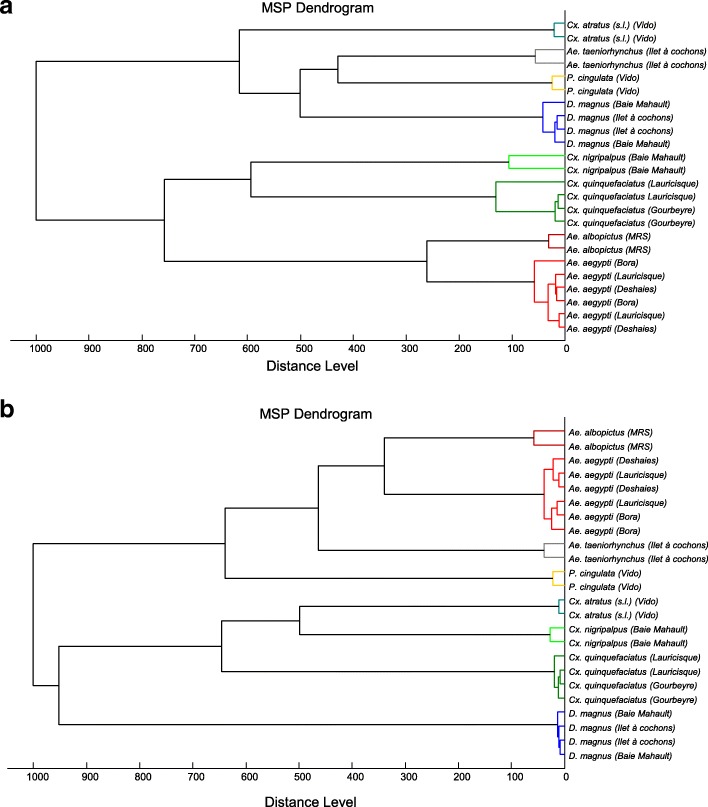
Both thoraxes and legs could be used for a double DB query in order to reinforce the success and accuracy of MALDI-TOF MS identification.
基质辅助激光解吸电离飞行时间质谱技术(MALDI-TOF MS)是一种创新工具,已被证明对包括蚊子在内的许多节肢动物群体的鉴定有效。MALDI-TOF MS 鉴定实施的关键步骤是为感兴趣的物种创建谱数据库(DB)。蚊子的腿是用于创建鉴定 DB 的最常用的身体部位。然而,腿是蚊子最脆弱的部位之一,这可能会使鉴定面临风险。在这里,我们评估了使用 MALDI-TOF MS 生物分型策略,蚊子的胸部是否也可以作为一种相关的蚊子物种鉴定的身体部位;我们提出了一种双 DB 查询策略来加强鉴定的成功率。
从瓜德罗普岛六个地方收集的 91 个蚊子标本的胸部和腿部,以及两个实验室品系,埃及伊蚊 BORA 和白纹伊蚊马赛,被解剖并通过 MALDI-TOF MS 进行分析。还对代表性标本进行了 cox1 基因测序的分子鉴定,以确认其鉴定。
使用胸部和腿部获得的 MS 图谱高度特定于隔间、物种特异性和物种可重复性,当对内部 MS 参考图谱 DB 进行查询时,允许获得高鉴定分数(对数得分,LSV)(胸 LSV 范围:2.260-2.783,腿 LSV 范围:2.132-2.753)。
胸部和腿部都可以用于双 DB 查询,以加强 MALDI-TOF MS 鉴定的成功率和准确性。