Department of Internal Medicine, Hospital Clinic, Institut d'Investigació Biomèdica August Pi i Sunyer (IDIBAPS), University of Barcelona, Villarroel, 170, 08036 Barcelona, Spain.
CIBER 06/03: Fisiopatología de la Obesidad y la Nutrición, Instituto de Salud Carlos III, 28029 Madrid, Spain.
Nutrients. 2018 Nov 2;10(11):1630. doi: 10.3390/nu10111630.
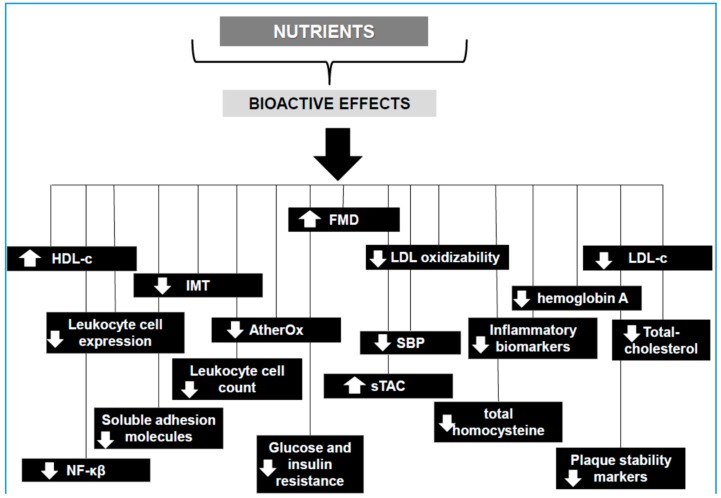
The protective effects of a dietary intervention as a useful tool in the prevention of atherosclerosis disease has gained greater attention in recent years. Several epidemiological studies have demonstrated the importance of diet in reducing expensive treatments or possible undesirable side effects. The main aim of this review is to examine the effects of specific nutrients on the development and progression of atherosclerosis in patients with cardiovascular disease. Various mechanisms have been proposed to explain the cardioprotective effect of different nutrients. In this sense, results have shown stabilization of vulnerable atherosclerotic plaques or downregulation of biomarkers related to inflammation through nutrients such as Omega-3 polyunsaturated fatty acids, hydroxytyrosol of extra virgin olive oil, lycopen, phytosterols of plants, or flavonols of fruits and vegetables, among others. The accumulated evidence on the anti-inflammatory effects related to these nutrients is summarized in the present review.
近年来,饮食干预作为预防动脉粥样硬化疾病的一种有用工具,其保护作用引起了更多的关注。几项流行病学研究表明,饮食在减少昂贵的治疗或可能产生不良副作用方面具有重要意义。本综述的主要目的是研究特定营养素对心血管疾病患者动脉粥样硬化发展和进展的影响。已经提出了各种机制来解释不同营养素的心脏保护作用。在这方面,研究结果表明,通过 omega-3 多不饱和脂肪酸、特级初榨橄榄油中的羟基酪醇、番茄红素、植物甾醇或水果和蔬菜中的类黄酮等营养素,可以稳定易损的动脉粥样硬化斑块或下调与炎症相关的生物标志物。本综述总结了与这些营养素相关的抗炎作用的累积证据。