Walji Noosheen, MacDonald Brendan D
Faculty of Engineering and Applied Science, University of Ontario Institute of Technology, 2000 Simcoe Street North, Oshawa, ON L1H 7K4, Canada.
Micromachines (Basel). 2016 Apr 25;7(5):73. doi: 10.3390/mi7050073.
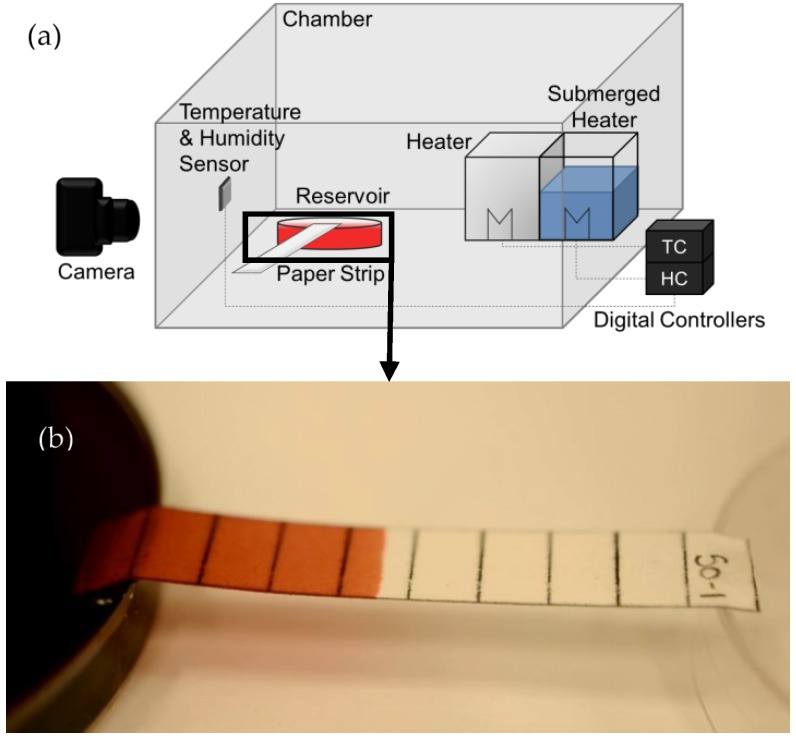
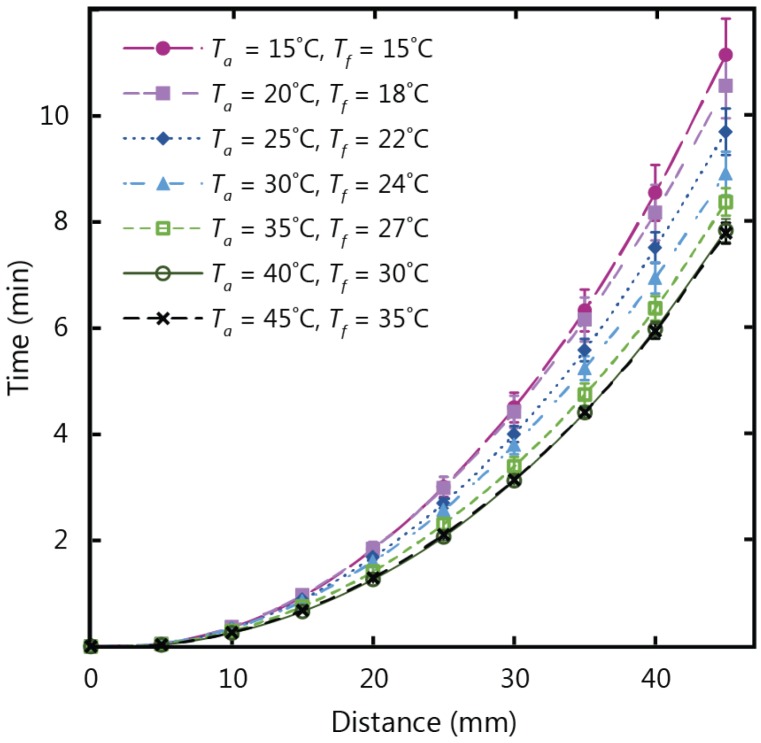
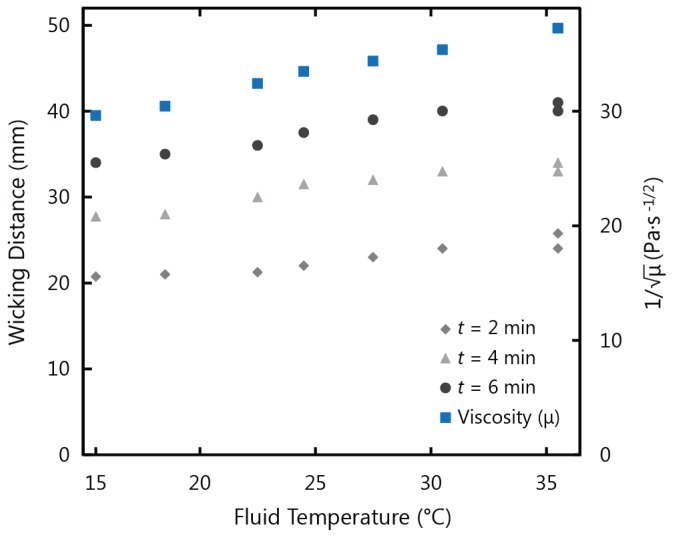
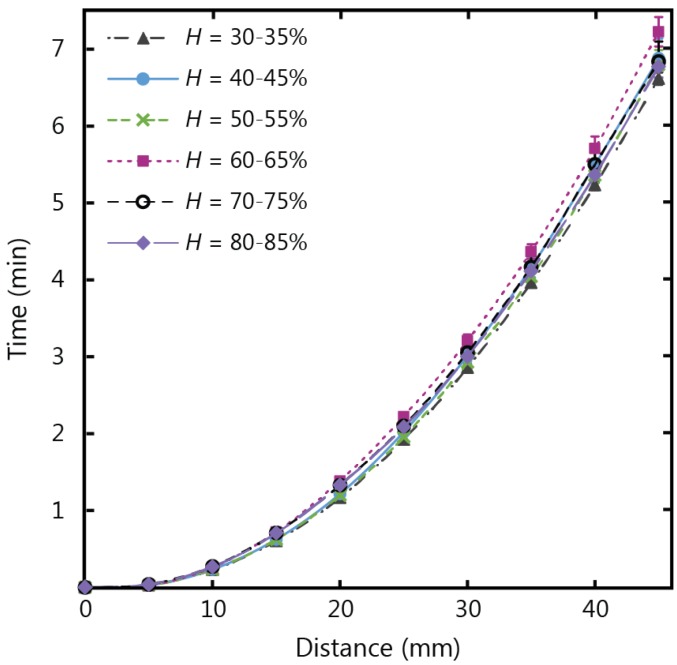
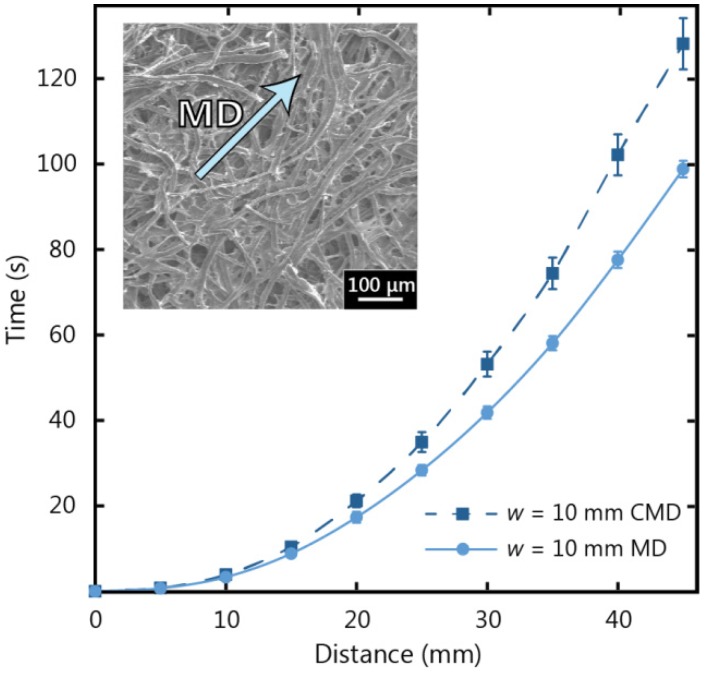
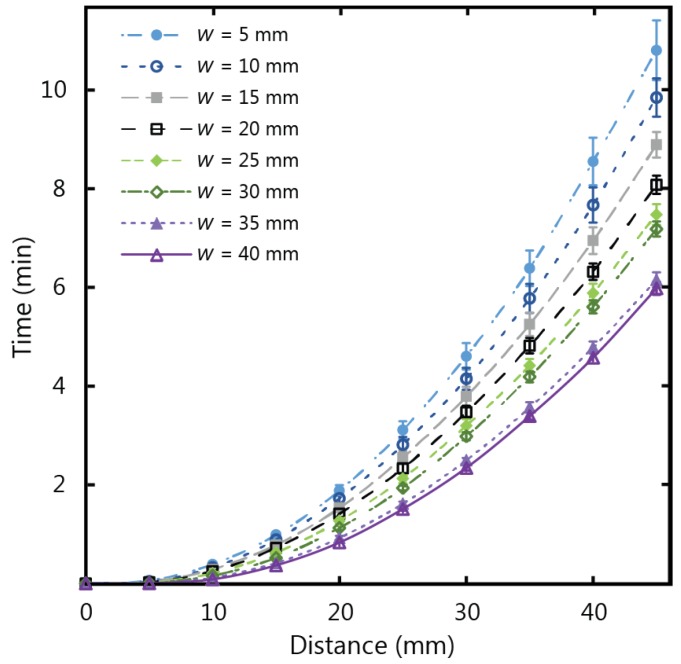
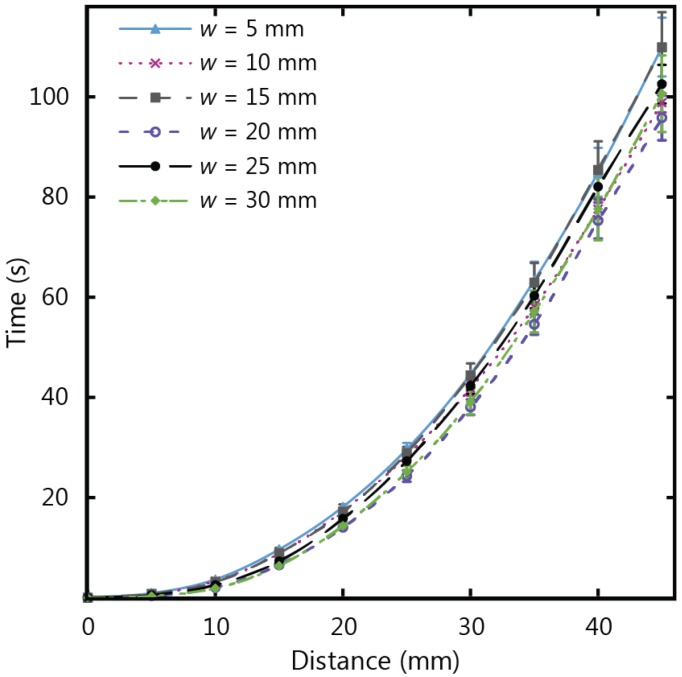
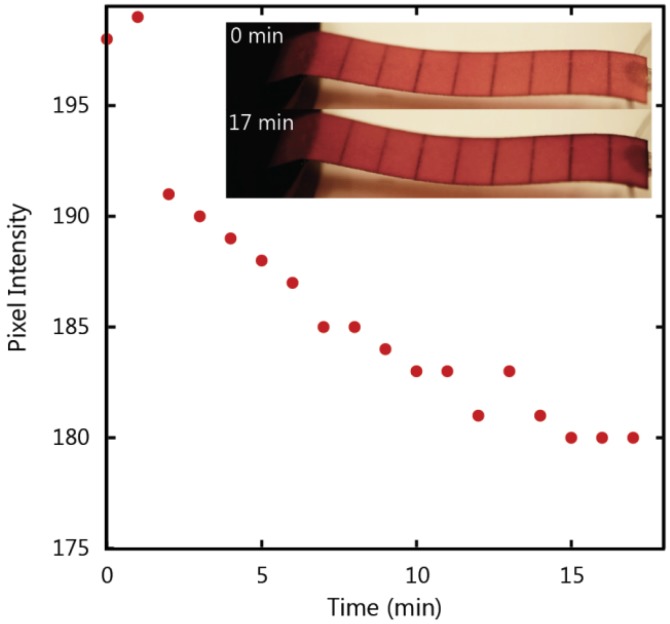
Fluid flow behaviour in paper is of increasing interest due to the advantages and expanding use of microfluidic paper-based analytical devices (known as µPADs). Applications are expanding from those which often have low sample fluid volumes, such as diagnostic testing, to those with an abundance of sample fluid, such as water quality testing. The rapid development of enhanced features in μPADs, along with a need for increased sensitivity and specificity in the embedded chemistry requires understanding the passively-driven fluid motion in paper to enable precise control and consistency of the devices. It is particularly important to understand the influence of parameters associated with larger fluid volumes and to quantify their impact. Here, we experimentally investigate the impacts of several properties during imbibition in paper, including geometry (larger width and length) and the surrounding conditions (humidity and temperature) using abundant fluid reservoirs. Fluid flow velocity in paper was found to vary with temperature and width, but not with length of the paper strip and humidity for the conditions we tested. We observed substantial post-wetting flow for paper strips in contact with a large fluid reservoir.
由于微流控纸基分析设备(称为μPADs)的优势及其应用范围的不断扩大,纸张中的流体流动行为越来越受到关注。其应用正在从通常样品流体体积较小的领域(如诊断测试)扩展到样品流体丰富的领域(如水质量检测)。μPADs增强功能的快速发展,以及对嵌入式化学中提高灵敏度和特异性的需求,要求了解纸张中被动驱动的流体运动,以实现设备的精确控制和一致性。了解与较大流体体积相关的参数的影响并量化其影响尤为重要。在这里,我们使用大量流体储库,通过实验研究了纸张吸收过程中几个属性的影响,包括几何形状(更大的宽度和长度)和周围条件(湿度和温度)。在我们测试的条件下,发现纸张中的流体流速随温度和宽度而变化,但不随纸条长度和湿度而变化。我们观察到与大型流体储库接触的纸条有大量的湿后流动。