Park Byeongho, Park Hyung Goo, Ji Jae-Hoon, Cho Jinsoo, Jun Seong Chan
School of Mechanical Engineering, Yonsei University, 50 Yonsei-ro, Seodaemun-gu, Seoul 120-749, Korea.
Department of Computer Engineering, Gachon University, Gyeonggi-do 461-701, Korea.
Micromachines (Basel). 2016 Aug 5;7(8):136. doi: 10.3390/mi7080136.
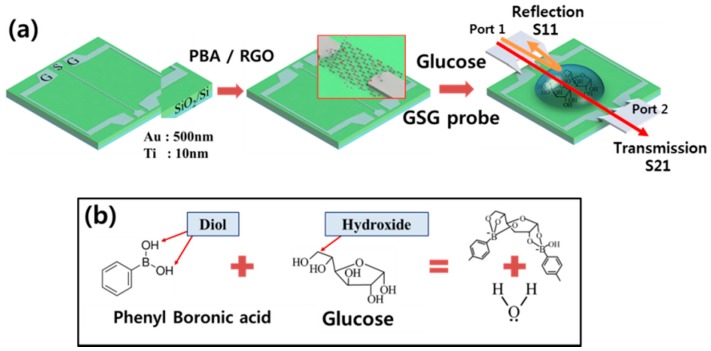
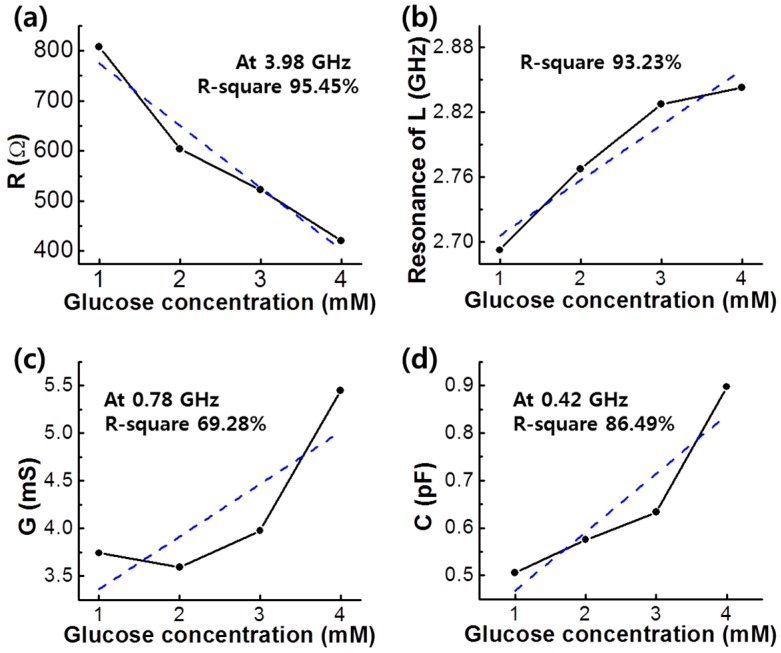
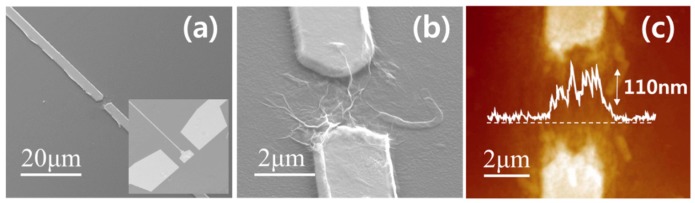
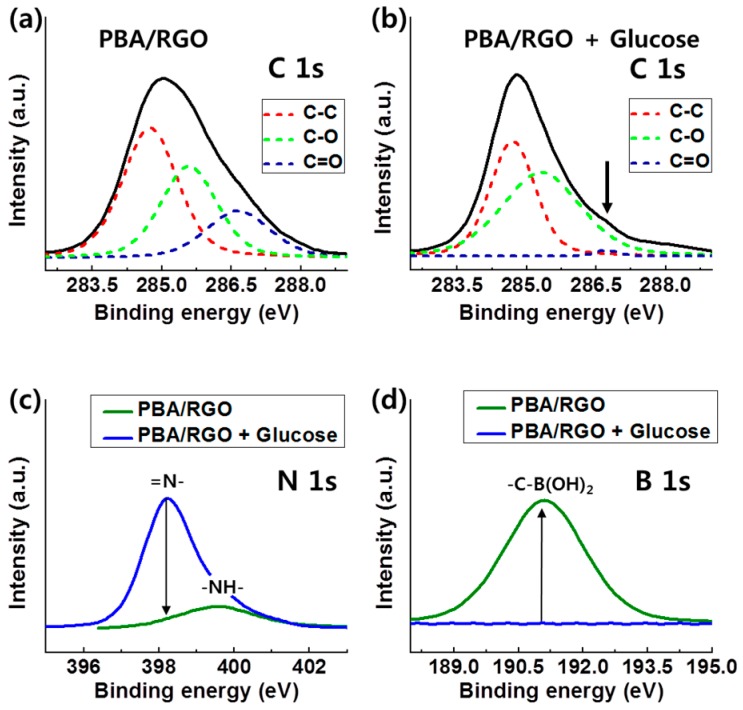
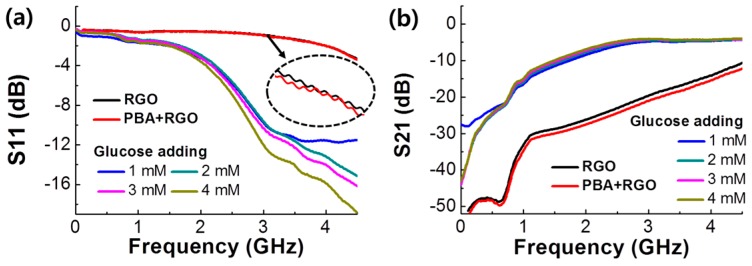
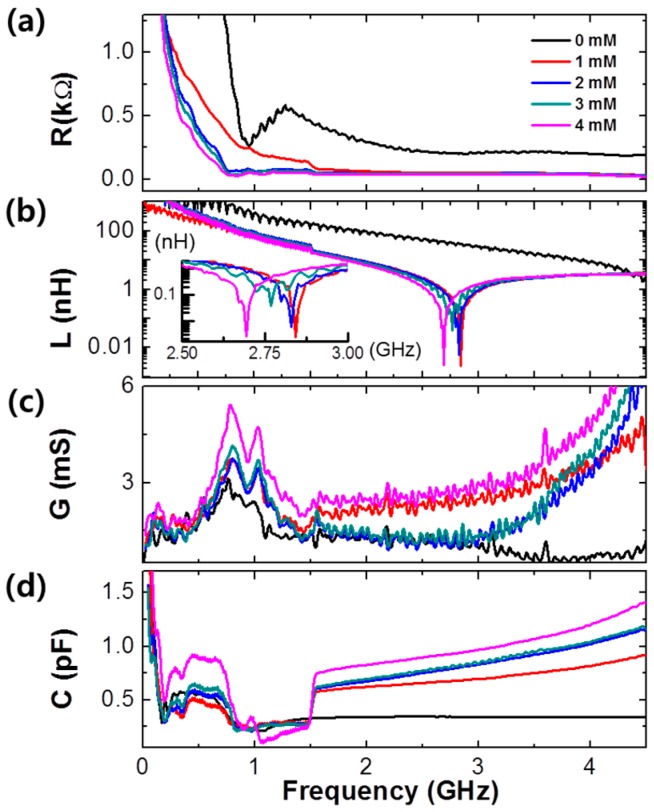
A reduced graphene oxide (RGO) based glucose sensor using a radio frequency (RF) signal is demonstrated. An RGO with outstanding electrical property was employed as the interconnector material between signal electrodes in an RF electric circuit, and it was functionalized with phenylbutyric acid (PBA) as a linker molecule to bind glucoses. By adding glucose solution, the fabricated sensor with RGO and PBA showed detecting characteristics in RF signal transmission and reflection. Frequency dependent electrical parameters such as resistance, inductance, shunt conductance and shunt capacitance were extracted from the RF results under the equivalent circuit model. These parameters also provided sensing characteristics of glucose with different concentrations. Using these multi-dimensional parameters, the RF sensor device detected glucose levels in the range of 1⁻4 mM, which ordinarily covers the testing range for diabetes or medical examination. The RGO based RF sensor, which fits well to a linear curve with fine stability, holds considerable promise for biomaterials detection, including glucose.
展示了一种基于还原氧化石墨烯(RGO)的利用射频(RF)信号的葡萄糖传感器。具有出色电学性能的RGO被用作射频电路中信号电极之间的互连材料,并用苯丁酸(PBA)作为连接分子进行功能化以结合葡萄糖。通过添加葡萄糖溶液,制备的含RGO和PBA的传感器在射频信号传输和反射方面表现出检测特性。在等效电路模型下,从射频结果中提取了诸如电阻、电感、并联电导和并联电容等频率相关的电学参数。这些参数也提供了不同浓度葡萄糖的传感特性。利用这些多维参数,该射频传感器装置检测到1⁻4 mM范围内的葡萄糖水平,这通常涵盖糖尿病或医学检查的测试范围。基于RGO的射频传感器与线性曲线拟合良好且稳定性良好,在包括葡萄糖在内的生物材料检测方面具有很大的前景。