Department of Chemistry, Berry College, 2277 Martha Berry Highway, PO Box 5016, Mt. Berry, GA 20149, USA.
Sensors (Basel). 2010;10(9):8248-74. doi: 10.3390/s100908248. Epub 2010 Sep 2.
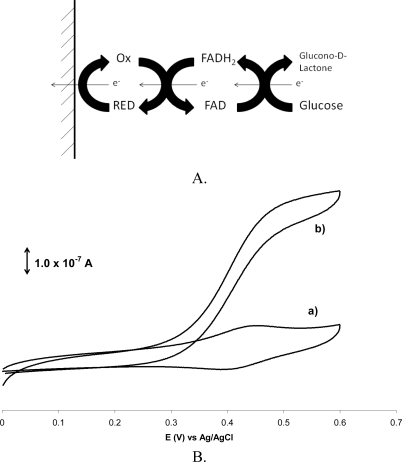
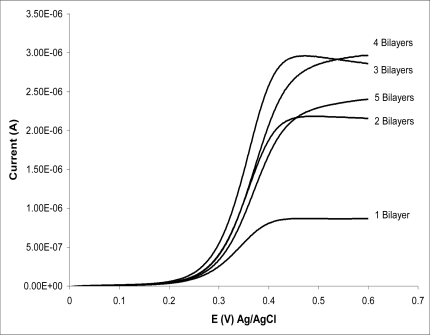
In 1962, Clark and Lyons proposed incorporating the enzyme glucose oxidase in the construction of an electrochemical sensor for glucose in blood plasma. In their application, Clark and Lyons describe an electrode in which a membrane permeable to glucose traps a small volume of solution containing the enzyme adjacent to a pH electrode, and the presence of glucose is detected by the change in the electrode potential that occurs when glucose reacts with the enzyme in this volume of solution. Although described nearly 50 years ago, this seminal development provides the general structure for constructing electrochemical glucose sensors that is still used today. Despite the maturity of the field, new developments that explore solutions to the fundamental limitations of electrochemical glucose sensors continue to emerge. Here we discuss two developments of the last 15 years; confining the enzyme and a redox mediator to a very thin molecular films at electrode surfaces by electrostatic assembly, and the use of electrodes modified by carbon nanotubes (CNTs) to leverage the electrocatalytic effect of the CNTs to reduce the oxidation overpotential of the electrode reaction or for the direct electron transport to the enzyme.
1962 年,Clark 和 Lyons 提出在构建用于检测血浆中葡萄糖的电化学传感器时加入葡萄糖氧化酶。在他们的应用中,Clark 和 Lyons 描述了一种电极,其中葡萄糖可透过的膜将包含酶的小体积溶液捕获在 pH 电极附近,当葡萄糖与该体积溶液中的酶反应时,电极电位的变化可检测到葡萄糖的存在。尽管该开创性发展已有近 50 年的历史,但仍沿用至今,为构建电化学葡萄糖传感器提供了通用结构。尽管该领域已经成熟,但仍不断出现探索解决电化学葡萄糖传感器基本限制的新发展。在这里,我们讨论过去 15 年中的两个发展;通过静电组装将酶和氧化还原介质限制在电极表面的非常薄的分子膜中,以及使用经碳纳米管 (CNT) 修饰的电极来利用 CNT 的电催化作用来降低电极反应的氧化超电势或实现酶的直接电子传递。