1st Department of Pathology and Experimental Cancer Research, Semmelweis University, Üllői út 26, Budapest, 1085, Hungary.
Department of Medical Biochemistry, MTA-SE Laboratory for Neurobiochemistry, Semmelweis University, Budapest, 1444, Hungary.
J Exp Clin Cancer Res. 2018 Nov 7;37(1):271. doi: 10.1186/s13046-018-0946-5.
Bioenergetic characterisation of malignant tissues revealed that different tumour cells can catabolise multiple substrates as salvage pathways, in response to metabolic stress. Altered metabolism in gliomas has received a lot of attention, especially in relation to IDH mutations, and the associated oncometabolite D-2-hydroxyglutarate (2-HG) that impact on metabolism, epigenetics and redox status. Astrocytomas and oligodendrogliomas, collectively called diffuse gliomas, are derived from astrocytes and oligodendrocytes that are in metabolic symbiosis with neurons; astrocytes can catabolise neuron-derived glutamate and gamma-aminobutyric acid (GABA) for supporting and regulating neuronal functions.
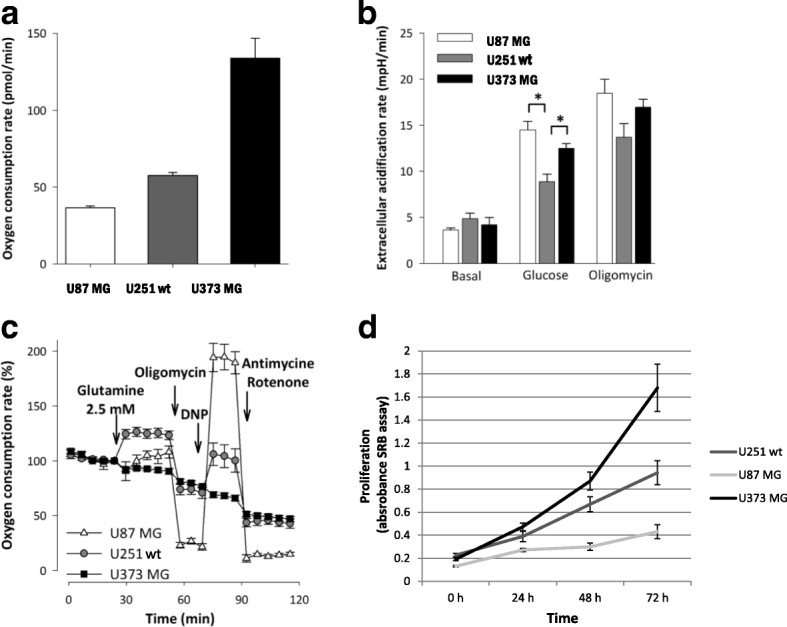
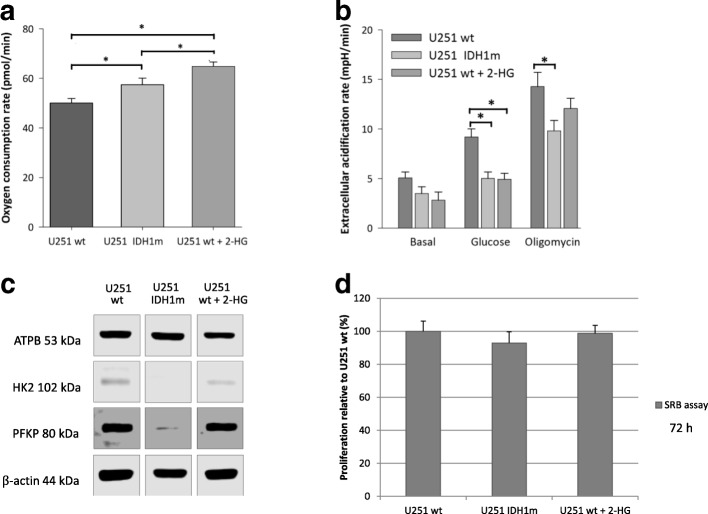
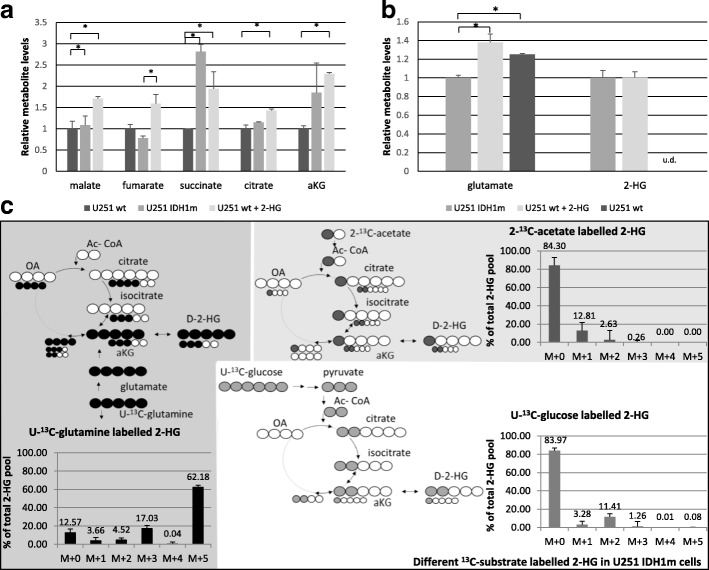
Metabolic characteristics of human glioma cell models - including mitochondrial function, glycolytic pathway and energy substrate oxidation - in relation to IDH mutation status and after 2-HG incubation were studied to understand the Janus-faced role of IDH1 mutations in the progression of gliomas/astrocytomas. The metabolic and bioenergetic features were identified in glioma cells using wild-type and genetically engineered IDH1-mutant glioblastoma cell lines by metabolic analyses with Seahorse, protein expression studies and liquid chromatography-mass spectrometry.
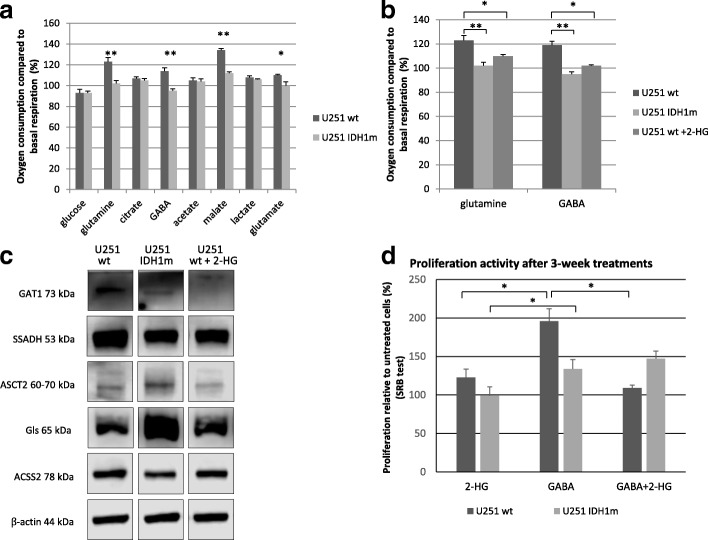
U251 glioma cells were characterised by high levels of glutamine, glutamate and GABA oxidation. Succinic semialdehyde dehydrogenase (SSADH) expression was correlated to GABA oxidation. GABA addition to glioma cells increased proliferation rates. Expression of mutated IDH1 and treatment with 2-HG reduced glutamine and GABA oxidation, diminished the pro-proliferative effect of GABA in SSADH expressing cells. SSADH protein overexpression was found in almost all studied human cases with no significant association between SSADH expression and clinicopathological parameters (e.g. IDH mutation).
Our findings demonstrate that SSADH expression may participate in the oxidation and/or consumption of GABA in gliomas, furthermore, GABA oxidation capacity may contribute to proliferation and worse prognosis of gliomas. Moreover, IDH mutation and 2-HG production inhibit GABA oxidation in glioma cells. Based on these data, GABA oxidation and SSADH activity could be additional therapeutic targets in gliomas/glioblastomas.
恶性组织的生物能量特征表明,不同的肿瘤细胞可以作为补救途径分解多种底物,以响应代谢应激。胶质瘤的代谢改变受到了广泛关注,特别是与 IDH 突变有关,以及相关的代谢物 D-2-羟戊二酸(2-HG),它影响代谢、表观遗传学和氧化还原状态。星形细胞瘤和少突胶质细胞瘤统称为弥漫性胶质瘤,源自与神经元处于代谢共生状态的星形胶质细胞和少突胶质细胞;星形胶质细胞可以分解神经元衍生的谷氨酸和γ-氨基丁酸(GABA),以支持和调节神经元功能。
研究了人类神经胶质瘤细胞模型的代谢特征 - 包括线粒体功能、糖酵解途径和能量底物氧化 - 与 IDH 突变状态和 2-HG 孵育后的关系,以了解 IDH1 突变在胶质瘤/星形细胞瘤进展中的双刃剑作用。通过代谢分析、蛋白质表达研究和液相色谱-质谱联用,在野生型和基因工程 IDH1 突变型神经胶质瘤细胞系中鉴定了神经胶质瘤细胞的代谢和生物能量特征。
U251 神经胶质瘤细胞的特征是高水平的谷氨酰胺、谷氨酸和 GABA 氧化。琥珀酸半醛脱氢酶(SSADH)表达与 GABA 氧化相关。GABA 添加到神经胶质瘤细胞中增加了增殖率。表达突变型 IDH1 和用 2-HG 处理减少了谷氨酰胺和 GABA 氧化,减弱了 SSADH 表达细胞中 GABA 的促增殖作用。在几乎所有研究的人类病例中都发现了 SSADH 蛋白过表达,但 SSADH 表达与临床病理参数(如 IDH 突变)之间没有显著关联。
我们的研究结果表明,SSADH 表达可能参与了胶质瘤中 GABA 的氧化和/或消耗,此外,GABA 氧化能力可能有助于神经胶质瘤的增殖和预后不良。此外,IDH 突变和 2-HG 产生抑制了神经胶质瘤细胞中的 GABA 氧化。基于这些数据,GABA 氧化和 SSADH 活性可能是神经胶质瘤/神经胶质母细胞瘤的额外治疗靶点。