Department of Microbiology, Institute of Biomedical Sciences, University of São Paulo, São Paulo, SP 05508-000, Brazil.
Medical School Clinic Hospital, University of São Paulo, São Paulo, SP 05403-000, Brazil.
Viruses. 2018 Nov 7;10(11):615. doi: 10.3390/v10110615.
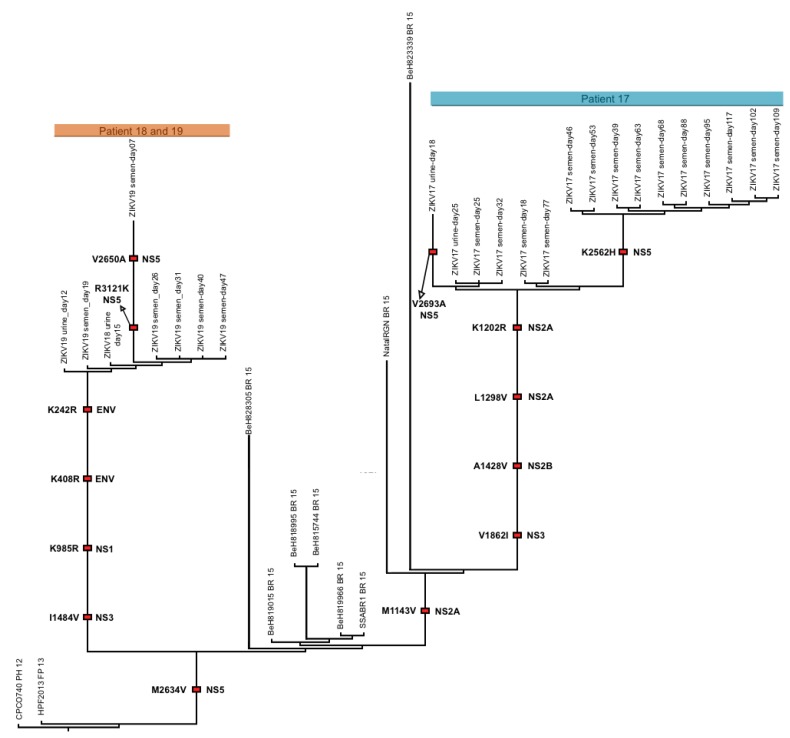
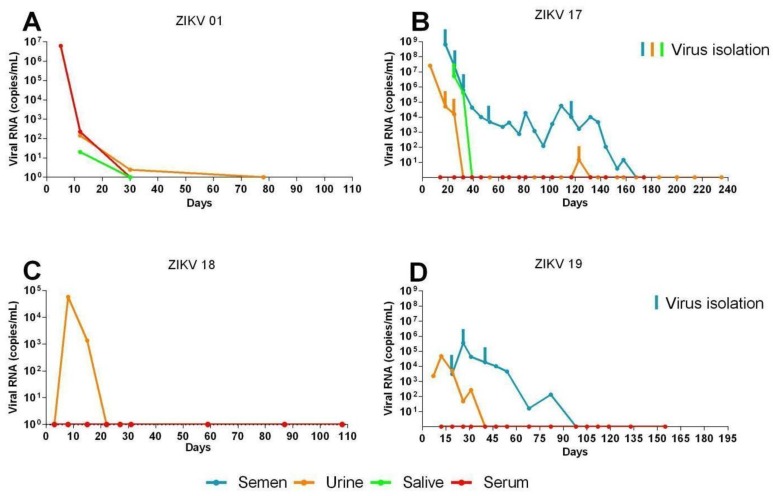
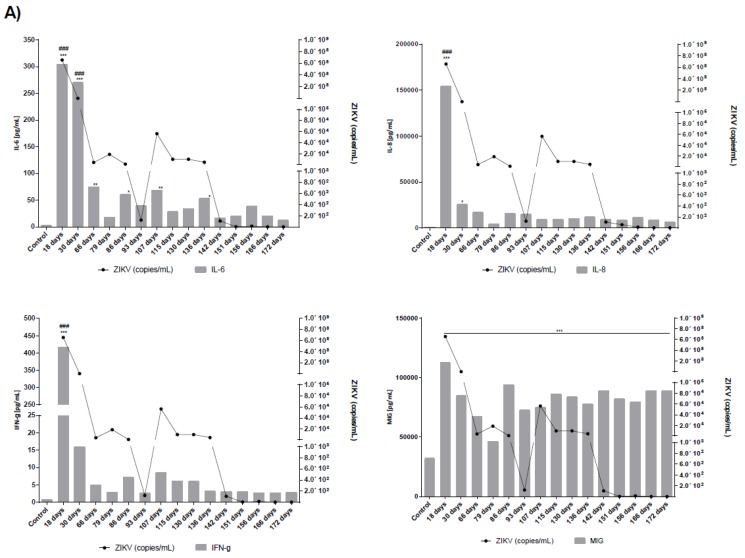
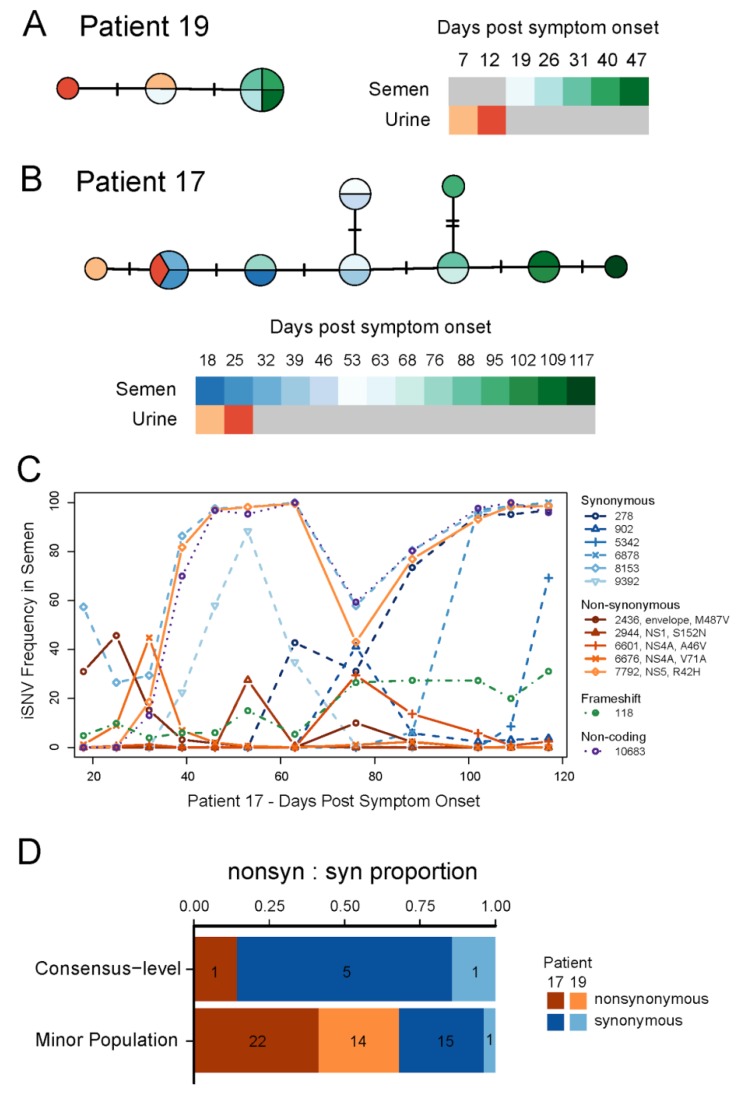
We followed the presence of Zika virus (ZIKV) in four healthy adults (two men and two women), for periods ranging from 78 to 298 days post symptom onset. The patients were evaluated regarding the presence of the virus in different body fluids (blood, saliva, urine and semen), development of immune responses (including antibodies, cytokines and chemokines), and virus genetic variation within samples collected from semen and urine during the infection course. The analysis was focused primarily on the two male patients who shed the virus for up to 158 days after the initial symptoms. ZIKV particles were detected in the spermatozoa cytoplasm and flagella, in immature sperm cells and could also be isolated from semen in cell culture, confirming that the virus is able to preserve integrity and infectivity during replication in the male reproductive system (MRS). Despite the damage caused by ZIKV infection within the MRS, our data showed that ZIKV infection did not result in infertility at least in one of the male patients. This patient was able to conceive a child after the infection. We also detected alterations in the male genital cytokine milieu, which could play an important role in the replication and transmission of the virus which could considerably increase the risk of ZIKV sexual spread. In addition, full genome ZIKV sequences were obtained from several samples (mainly semen), which allowed us to monitor the evolution of the virus within a patient during the infection course. We observed genetic changes over time in consensus sequences and lower frequency intra-host single nucleotide variants (iSNV), that suggested independent compartmentalization of ZIKV populations in the reproductive and urinary systems. Altogether, the present observations confirm the risks associated with the long-term replication and shedding of ZIKV in the MRS and help to elucidate patterns of intra-host genetic evolution during long term replication of the virus.
我们跟踪了 4 位健康成年人(2 男 2 女)体内寨卡病毒(ZIKV)的存在情况,时间跨度从症状出现后 78 天至 298 天不等。对患者进行了评估,以确定病毒在不同体液(血液、唾液、尿液和精液)中的存在情况、免疫反应(包括抗体、细胞因子和趋化因子)的发展情况,以及在感染过程中从精液和尿液中采集的样本中病毒的遗传变异情况。分析主要集中在两名男性患者身上,他们在最初症状出现后最多 158 天内排出病毒。在不成熟的精子细胞中,ZIKV 颗粒被检测到存在于精子的细胞质和鞭毛中,也可以从细胞培养的精液中分离出来,这证实了病毒在男性生殖系统(MRS)内复制过程中能够保持完整性和感染力。尽管 MRS 内的 ZIKV 感染造成了损害,但我们的数据表明,至少在一名男性患者中,ZIKV 感染并未导致不育。该患者在感染后成功孕育了一个孩子。我们还检测到男性生殖器细胞因子环境的改变,这可能在病毒的复制和传播中发挥重要作用,从而大大增加 ZIKV 性传播的风险。此外,我们从多个样本(主要是精液)中获得了完整的 ZIKV 基因组序列,这使我们能够在感染过程中监测病毒在患者体内的演变。我们观察到随着时间的推移,共识序列和低频率的个体内单核苷酸变异(iSNV)发生了遗传变化,这表明 ZIKV 群体在生殖系统和泌尿系统中存在独立的分隔。总的来说,这些观察结果证实了 MRS 内 ZIKV 长期复制和排出所带来的风险,并有助于阐明病毒长期复制过程中个体内遗传进化的模式。